




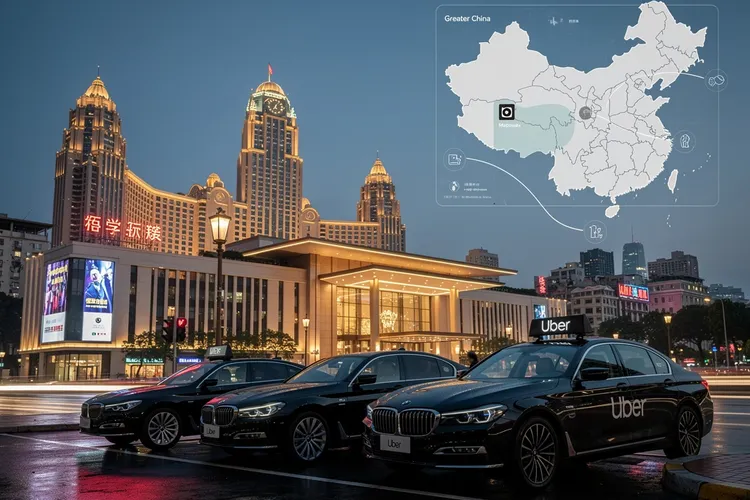
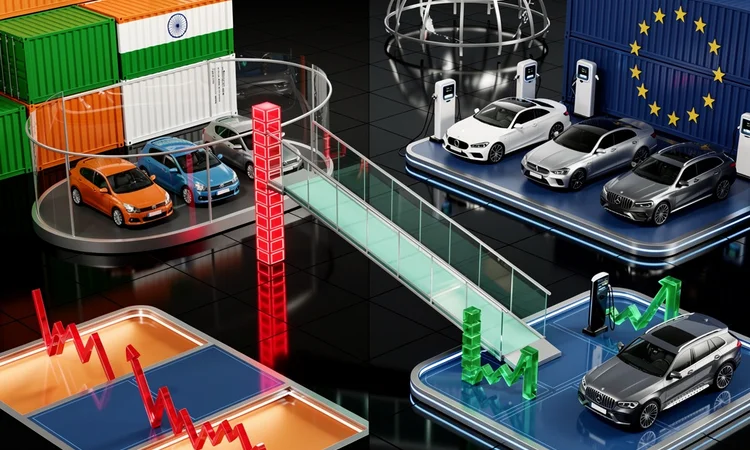
NEW DELHI—India’s landmark free trade agreement with the European Union, sealed on January 27, 2026, marks a seismic shift in global auto trade dynamics, slashing import duties on high-end European cars from as high as 110% to a phased low of 10%. Dubbed the “mother of all deals” by European Commission President Ursula von der Leyen and Prime Minister Narendra Modi, the pact grants EU carmakers unprecedented quota-based access to the world’s third-largest passenger vehicle market, where total sales hit 4.3 million units in the fiscal year ended March 2025.
Under the agreement, duties on fully built cars priced above €15,000 ($17,952)—targeting premium models from Mercedes-Benz, BMW, Audi, Jaguar Land Rover, and Volvo—will drop immediately to around 30%-40% for an annual quota of up to 250,000 vehicles, with further reductions to 10% over five years for internal combustion engines. Electric vehicles face a five-year delay before similar cuts, protecting domestic players like Tata Motors and Mahindra & Mahindra in the nascent EV segment. CNBC highlighted how this gives EU brands a “premium pass” to India’s market, while U.S. rivals like Tesla remain burdened by unchanged high levies.
“EU brands now have a premium pass to the world’s third largest car market, while US companies are currently facing a huge levy,” said Diwaker Murugan, auto analyst at Omdia, as reported by CNBC . The deal, expected to enter force later in 2026 after ratification, also eliminates duties on car parts over 5-10 years, potentially spurring deeper supply-chain ties.
Historical Protection Meets Strategic Opening
India has long fortified its auto sector with steep tariffs—70% for cars under $40,000 and 110% above—to nurture local champions like Maruti Suzuki, Hyundai India, Tata, and Mahindra, which dominate the mass market where 95% of FY2025 sales fell below ₹2 million ($21,756). European luxury brands sold just 49,000 units that year, a mere 1.1% share, despite leading the premium segment. Reuters noted immediate cuts to 30% on 100,000 ICE cars across price bands, with quotas rising to 160,000 units over 10 years.
The EU edge over the U.S. stems from years of negotiations accelerated by U.S. tariff threats under President Donald Trump, who has lambasted India’s barriers as “very unfair.” While Washington pushes for similar concessions, Brussels secured first-mover advantage, including 75,000 CKD kits annually at reduced 8.25% duties from 16.5%. Puneet Gupta, director of technical research at S&P Global Mobility, warned that European positions remain “increasingly under pressure” from aggressive local scaling, per CNBC .
This calibrated liberalization balances market access with safeguards: non-EU makers can’t exploit quotas, and mass-market cars below the price threshold stay protected. The European Automobile Manufacturers’ Association praised the entry to a 4-million-unit market but flagged quota limits, as detailed in India Briefing .
Luxury Brands Eye Niche Expansion
BMW Group India, manufacturing 95% locally yet selling only 18,000 units in 2025—its record—stands to gain most. “FTA could create opportunities to introduce new and niche products and, if demand scales, support deeper localization over time,” said Hardeep Singh Brar, president and CEO, BMW Group India, in CNBC . Mercedes-Benz India echoed positives for customer sentiment without immediate price cuts, given 90% local production.
Mass-market EU players like Volkswagen, Renault, and Stellantis benefit too, testing broader portfolios before local investments. Renault CEO Fabrice Cambolive called India a rising priority, per Reuters . Luxury imports, even post-cuts, will land above ₹25-26 lakh after GST and cess, targeting premium SUVs where “the true battleground” lies, Murugan added.
Consumer buzz on X reflects excitement: one user quipped about cheaper BMWs and Mercedes via the 110%-to-40% cut, while analysts note limited overall disruption given locals’ two-thirds dominance alongside Suzuki.
Domestic Ripples and Investor Jitters
Indian auto stocks tumbled post-announcement—Mahindra & Mahindra down 1.5%-4%, Maruti Suzuki 1.5%, Hyundai Motor India 3.6%, Tata Motors similarly—as the gap narrows between flagships like Mahindra Scorpio (₹2.5 million) and entry EU imports. Citi flagged intensified premium SUV rivalry between “European badge-value and Indian flagship SUVs,” via CNBC .
Yet optimism prevails: Anish Shah, Mahindra Group CEO, deemed it a “huge positive for the auto sector,” gaining duty-free EU access and attracting investment. Auto ancillaries benefit from zero parts duties, boosting exports—India holds 5-6% of EU’s $125 billion textiles/apparel imports, per Jefferies. The deal doubles EU exports to India by 2032, saving €4 billion annually, Reuters reported.
Broader impacts span zero duties on EU chemicals, pharma, and machinery, with India securing 99.5% tariff-free access for textiles, gems, and marine products. Exclusions safeguard sensitivities: no dairy, rice, or cheap cars below thresholds.
Global Realignment Amid U.S. Shadows
Trump’s tariffs—50% on Indian textiles/jewelry—propelled this pact, hedging against U.S. volatility. EU exports machinery (€16.3 billion in 2024) face cuts from 44%, chemicals from 22%. India’s Commerce Minister Piyush Goyal eyes 2026 enforcement, per CNBC .
Challenges persist: EU brands hold <4% share in a market eyeing 6 million units by 2030, dominated by affordable, reliable locals and Japanese kei cars. Volkswagen CEO Oliver Blume pledged scrutiny of details, Reuters . For insiders, success hinges on localization, EV timelines, and premium demand amid evolving tastes.
The FTA redefines EU-India ties, blending opportunity with caution in a protectionist world. As Ashita Gupta, a New Delhi tech founder, mused to CNBC , cheaper Audis could tempt upgrades, signaling shifting aspirations in a booming economy.






Leave a Reply
Your email address will not be published.