









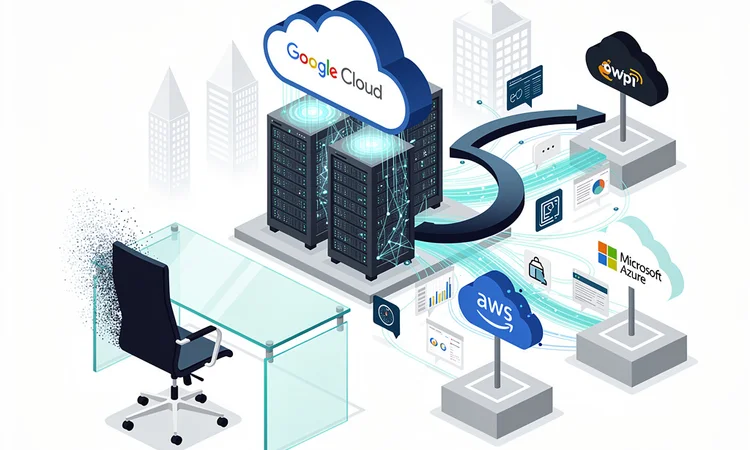
Google Cloud is undergoing a significant leadership transition as Hayete Gallot, the company’s Customer Experience President, has departed from her role after less than two years in the position. The move comes at a critical juncture for Google’s cloud computing division as it continues to battle Amazon Web Services and Microsoft Azure for enterprise market share, raising questions about the tech giant’s strategy for customer retention and satisfaction in an increasingly competitive environment.
According to Business Insider , Gallot’s exit represents a notable shift in Google Cloud’s executive ranks during a period when customer experience has become a central differentiator in the cloud services industry. The departure follows a broader pattern of executive changes within Google’s cloud division as the company seeks to refine its approach to enterprise clients and accelerate revenue growth in a market projected to exceed $600 billion by 2025.
Gallot joined Google Cloud in 2024 with a mandate to transform how the division engaged with its enterprise customers, bringing experience from previous roles in technology and customer success leadership. Her tenure focused on building frameworks for customer engagement, implementing feedback mechanisms, and developing strategies to reduce churn among enterprise accounts. The timing of her departure, however, suggests potential misalignment between her vision and Google Cloud’s evolving priorities under CEO Thomas Kurian’s leadership.
The Strategic Importance of Customer Experience in Cloud Computing
The customer experience role at Google Cloud has taken on heightened significance as the company attempts to differentiate itself from competitors who have established deeper relationships with enterprise clients over longer periods. While Google Cloud has made substantial gains in market share, growing its revenue by 35% year-over-year in recent quarters, the company still trails significantly behind AWS and Microsoft Azure in terms of overall market penetration and customer loyalty metrics.
Industry analysts have noted that customer retention in the cloud computing sector has become increasingly challenging as businesses demand more sophisticated support structures, faster response times, and deeper integration assistance. The role of a Customer Experience President extends beyond traditional customer service, encompassing strategic account management, technical support infrastructure, and the development of programs that help clients maximize their cloud investments. Gallot’s position was designed to address these multifaceted challenges, making her departure particularly noteworthy for industry observers.
Google Cloud’s approach to customer experience has historically differed from its competitors, with the company emphasizing technical innovation and product capabilities over relationship-driven sales models. This engineering-first mentality, while producing cutting-edge technologies in areas like artificial intelligence and machine learning, has sometimes resulted in friction with enterprise customers who expect more hands-on support and partnership. The customer experience function was intended to bridge this gap, suggesting that Gallot’s exit may indicate a recalibration of this strategy.
Executive Turnover and Its Implications for Cloud Strategy
The departure adds to a series of leadership changes within Google Cloud that have occurred since Thomas Kurian took the helm in 2019. While Kurian has successfully transformed Google Cloud from a distant third-place competitor into a formidable challenger, the path has included numerous organizational restructurings and executive transitions. These changes reflect the ongoing challenge of building a cloud business that can compete effectively with AWS’s operational excellence and Microsoft’s enterprise relationships.
Sources familiar with Google Cloud’s operations suggest that the company is reassessing how it structures its customer-facing organizations, potentially consolidating functions or redistributing responsibilities among existing leadership. This type of organizational evolution is common in rapidly growing business units, particularly in the technology sector where strategic priorities can shift quickly in response to market conditions and competitive pressures. However, frequent leadership changes can also create uncertainty among employees and customers, potentially impacting morale and business continuity.
The customer experience function at major cloud providers typically encompasses multiple sub-organizations, including technical account management, customer success programs, support operations, and feedback integration with product development teams. The complexity of managing these interconnected functions while maintaining consistency across global operations presents significant challenges, particularly for a company like Google that is simultaneously trying to scale its cloud business while maintaining its reputation for technical excellence.
Market Dynamics and Competitive Pressures
Google Cloud’s position in the market has evolved considerably in recent years, with the division now representing a significant growth driver for Alphabet’s overall business. The company has invested billions of dollars in expanding its data center infrastructure, developing industry-specific solutions, and building out its sales and support organizations. These investments have yielded results, with Google Cloud achieving profitability on an operating basis and demonstrating sustained revenue growth that exceeds overall market expansion rates.
However, the competitive dynamics in cloud computing remain intense. AWS continues to dominate with approximately 32% market share, while Microsoft Azure has leveraged its enterprise relationships and Office 365 integration to capture roughly 23% of the market. Google Cloud, with approximately 11% market share, has carved out particular strength in areas like data analytics, artificial intelligence, and containerized applications through its Kubernetes heritage. Maintaining and expanding this position requires not only technical differentiation but also exceptional customer experience that encourages adoption and prevents migration to competing platforms.
The emphasis on customer experience reflects broader trends in the enterprise software industry, where subscription-based models have made customer retention as important as new customer acquisition. Cloud providers face constant pressure to demonstrate value, justify pricing, and provide support that helps customers achieve their business objectives. Companies that excel in these areas typically enjoy higher customer lifetime values, stronger word-of-mouth referrals, and more stable revenue streams. Conversely, weaknesses in customer experience can lead to churn, negative reviews, and difficulty competing for new business.
The Evolving Role of Customer-Centric Leadership
The Customer Experience President role at a major cloud provider encompasses responsibilities that extend far beyond traditional customer service. These leaders must balance competing priorities including customer satisfaction, operational efficiency, revenue protection, and strategic account growth. They serve as the voice of the customer within product development discussions, advocate for resources to address customer pain points, and develop programs that help clients maximize their return on cloud investments.
In Google Cloud’s case, the customer experience function must also navigate the unique challenges of serving a diverse customer base that ranges from startups and digital-native companies to large enterprises and government agencies. Each customer segment has different expectations, support requirements, and success metrics. Building scalable programs that address these varied needs while maintaining cost efficiency requires sophisticated operational capabilities and strong cross-functional collaboration.
The departure of a senior leader in this critical function inevitably raises questions about continuity and strategic direction. Customers may wonder whether their feedback channels will remain effective, whether support quality will be maintained, and whether ongoing initiatives will continue to receive executive sponsorship. Google Cloud will need to address these concerns quickly, likely through internal communications to employees and outreach to strategic accounts to reassure them of continued commitment to customer success.
Looking Ahead: Google Cloud’s Path Forward
As Google Cloud navigates this leadership transition, the company faces both challenges and opportunities in how it structures its customer-facing organizations. The cloud computing market continues to evolve rapidly, with emerging technologies like generative AI creating new use cases and customer requirements. Google Cloud has positioned itself as a leader in AI capabilities, but translating technical advantages into customer adoption requires strong execution across the entire customer journey, from initial sales engagement through ongoing support and expansion.
The company’s response to Gallot’s departure will provide insights into its strategic priorities for customer engagement. Whether Google Cloud consolidates the customer experience function under existing leadership, conducts an external search for a replacement, or restructures the organization entirely will signal how the company views the importance of dedicated customer experience leadership. Each approach carries different implications for organizational culture, operational continuity, and strategic emphasis.
For the broader cloud computing industry, this leadership change underscores the ongoing challenge of building customer-centric organizations within technology companies that have historically prioritized product innovation over relationship management. As cloud services become increasingly commoditized in certain areas, the quality of customer experience may become the primary differentiator among major providers. Companies that successfully build cultures and operations centered on customer success will likely gain competitive advantages that compound over time, while those that struggle with customer experience may find it increasingly difficult to retain and expand their customer bases regardless of technical capabilities.
The coming months will reveal how Google Cloud adapts its customer experience strategy and whether the company can maintain momentum in customer satisfaction and retention during this transition period. For enterprise customers evaluating cloud providers or considering multi-cloud strategies, Google Cloud’s handling of this leadership change will provide valuable signals about organizational stability and commitment to customer partnership. As the cloud computing market continues its rapid evolution, the ability to deliver exceptional customer experiences while maintaining technical innovation will increasingly determine which providers thrive and which struggle to compete effectively.






Leave a Reply
Your email address will not be published.