








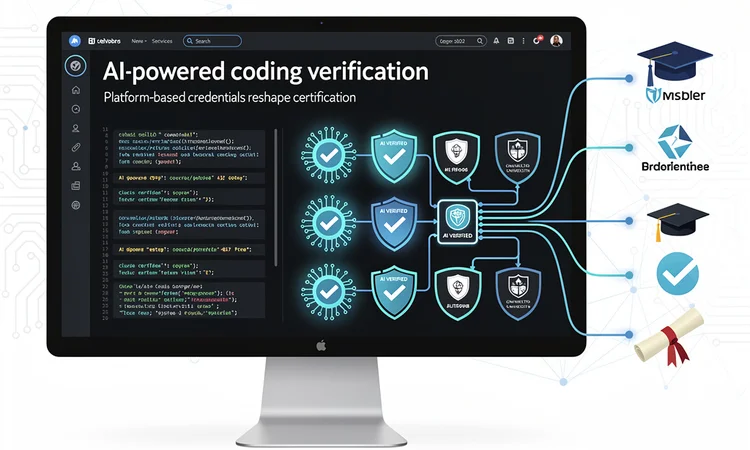
LinkedIn is rolling out a new artificial intelligence-powered feature that allows users to verify their coding abilities through interactive assessments, marking the latest evolution in how professional networks authenticate expertise in an era where resume embellishment has become increasingly sophisticated. The Microsoft-owned platform’s move to let members “show off their vibe coding expertise,” as Engadget reported , represents more than just another badge system—it signals a fundamental transformation in how professional credentials are validated in digital spaces.
The new verification system leverages AI to create personalized coding challenges that assess practical skills rather than relying on self-reported proficiencies or endorsements from connections who may lack the technical knowledge to validate claims. This approach addresses a growing concern among recruiters and hiring managers: the proliferation of inflated skill listings that have made LinkedIn profiles increasingly unreliable indicators of actual capability. According to research from the platform itself, skills sections have expanded dramatically over the past five years, with the average technology professional now listing more than 30 distinct competencies.
The timing of LinkedIn’s initiative reflects broader anxiety within the technology sector about credential inflation and the difficulty of distinguishing genuine expertise from superficial familiarity. As artificial intelligence tools like GitHub Copilot and ChatGPT have made it easier for individuals to produce code without deep understanding, the need for robust verification mechanisms has intensified. The platform’s verification badges aim to provide employers with a reliable signal amid the noise, though questions remain about whether these assessments can truly capture the nuanced problem-solving abilities that define exceptional developers.
The Mechanics Behind LinkedIn’s Verification Architecture
Unlike traditional certification programs that rely on standardized tests, LinkedIn’s AI-driven approach generates unique challenges tailored to each user’s claimed proficiency level and specific programming languages. The system evaluates not just whether code executes correctly, but also considers efficiency, readability, and adherence to best practices—factors that distinguish competent programmers from those who can merely cobble together functional solutions. This multidimensional assessment methodology represents a significant departure from the binary pass-fail model that has dominated skills testing for decades.
The verification process integrates directly into LinkedIn’s existing infrastructure, allowing users to complete assessments without leaving the platform or navigating to third-party testing services. This seamless integration reduces friction and increases participation rates, which is critical for establishing verification badges as a meaningful differentiator in competitive job markets. Microsoft’s investment in OpenAI and its integration of AI capabilities across its product suite has positioned LinkedIn to deploy sophisticated assessment tools that would have been prohibitively expensive or technically unfeasible just a few years ago.
Industry observers note that LinkedIn’s approach differs substantially from established coding assessment platforms like HackerRank or LeetCode, which focus primarily on algorithmic problem-solving and interview preparation. Instead, LinkedIn appears to be emphasizing practical, job-relevant skills that employers can immediately understand and value. This pragmatic orientation aligns with the platform’s core mission of connecting talent with opportunity, though it may sacrifice some of the depth and rigor that specialized technical assessment platforms provide.
Market Dynamics Driving Professional Verification Demand
The push toward verified credentials comes as employers report increasing difficulty in evaluating candidates based on traditional resume signals. A survey of technology recruiters conducted earlier this year found that more than 70 percent believe skill inflation has worsened significantly since the pandemic, with remote work making it easier for candidates to exaggerate capabilities they might have been forced to demonstrate in person. This credibility crisis has created market demand for trustworthy verification mechanisms that can reduce hiring risk and streamline candidate evaluation.
LinkedIn’s massive user base—which exceeds 900 million professionals globally—gives it unique advantages in establishing verification standards that could become industry norms. When a platform of this scale introduces a credentialing system, it can quickly achieve the network effects necessary to make badges meaningful to employers. If a critical mass of qualified developers obtain verification, employers will increasingly expect to see these badges on competitive applications, creating a virtuous cycle that drives adoption and enhances the signal value of verification.
However, the platform faces significant challenges in maintaining the integrity and relevance of its verification system over time. As assessment methodologies become known, determined individuals will inevitably find ways to game the system or prepare specifically for LinkedIn’s tests rather than developing genuine expertise. The company will need to continuously evolve its assessment algorithms and question banks to stay ahead of these efforts, requiring sustained investment in both AI capabilities and subject matter expertise across numerous programming languages and technical domains.
Implications for the Broader Credentialing Ecosystem
LinkedIn’s entry into skills verification intensifies competition with established players in the professional certification market, from vendor-specific programs like AWS certifications to independent organizations like CompTIA. These traditional credentialing bodies have built their reputations over decades, but they often struggle with accessibility, cost, and relevance to rapidly evolving technologies. LinkedIn’s free, integrated approach could democratize access to credible skills verification, particularly for self-taught developers and professionals in emerging markets who cannot afford expensive certification programs.
The move also raises questions about the future role of formal education in signaling professional competence. If employers come to trust platform-based verification as much as or more than traditional degrees, it could accelerate the ongoing shift toward skills-based hiring and away from credential-based screening. This transformation would have profound implications for higher education institutions, which have long served as the primary gatekeepers of professional credentialing, and could contribute to the unbundling of education’s various functions—teaching, assessment, and certification.
Privacy advocates have expressed concerns about the data implications of LinkedIn’s verification system, particularly regarding how assessment performance might be used by the platform’s algorithms or shared with potential employers. While LinkedIn has stated that users control whether verification badges appear on their profiles, the platform’s business model depends on data-driven insights that help recruiters identify promising candidates. The tension between user privacy and platform utility will likely intensify as verification systems become more sophisticated and generate increasingly granular data about individual capabilities.
Technical Limitations and Assessment Validity Questions
Despite the sophisticated AI powering LinkedIn’s verification system, fundamental questions remain about whether any automated assessment can truly capture the complex, context-dependent nature of professional software development. Real-world programming involves navigating ambiguous requirements, collaborating with diverse teams, managing technical debt, and making pragmatic tradeoffs—dimensions that are difficult to evaluate through isolated coding challenges. Critics argue that verification badges may create a false sense of certainty about capabilities that are inherently difficult to reduce to simple pass-fail metrics.
The system’s ability to prevent cheating represents another significant challenge, particularly as AI coding assistants become more powerful and accessible. If users can leverage ChatGPT or similar tools to complete verification assessments, the badges lose their signal value and potentially become counterproductive by certifying AI-assisted performance rather than independent capability. LinkedIn will need to implement sophisticated proctoring and detection mechanisms to address this concern, though such measures may compromise the accessibility and user-friendliness that make the platform’s approach attractive in the first place.
Additionally, the rapid pace of technological change creates ongoing validity challenges for any skills assessment system. Programming languages, frameworks, and best practices evolve continuously, meaning that verification badges can quickly become outdated if not regularly renewed. LinkedIn will need to balance the administrative burden of frequent reverification against the risk that stale badges mislead employers about current capabilities. This challenge is particularly acute in fast-moving domains like machine learning and cloud architecture, where meaningful changes occur over months rather than years.
Strategic Positioning in the AI-Driven Professional Services Market
LinkedIn’s verification initiative should be understood within the broader context of Microsoft’s strategy to integrate AI capabilities across its professional productivity suite. The company has invested heavily in GitHub Copilot, Azure AI services, and enterprise AI tools, creating an ecosystem where professional development, skill verification, and job matching are increasingly automated and interconnected. Verification badges represent one component of this larger vision, potentially feeding data into recommendation algorithms that match verified talent with appropriate opportunities.
The platform’s ability to monetize verification could take several forms, from premium features that provide detailed performance analytics to recruiter tools that filter candidates based on verified skills. While the basic verification appears to be free for users, LinkedIn has a history of layering paid features atop free functionality, and skills verification could become a significant revenue driver if it achieves widespread adoption. The company’s dual-sided market position—serving both job seekers and employers—creates opportunities to capture value from multiple stakeholders in the hiring process.
As LinkedIn expands its verification offerings beyond coding to encompass other professional domains, it positions itself as a comprehensive credentialing platform that could challenge traditional certification bodies across numerous industries. This ambition faces regulatory and professional resistance in fields with established licensing requirements, but in technology and other rapidly evolving sectors, LinkedIn’s scale and integration advantages may prove decisive. The success or failure of coding verification will likely determine how aggressively the company pursues this broader credentialing strategy and whether other professional networks follow suit.






Leave a Reply
Your email address will not be published.