

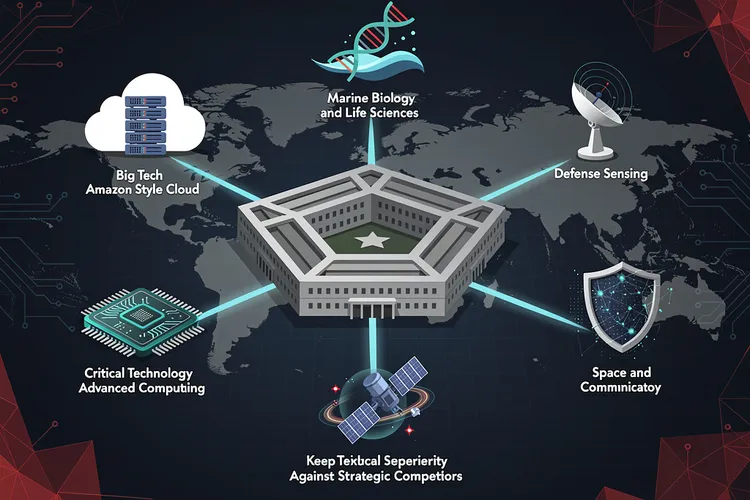




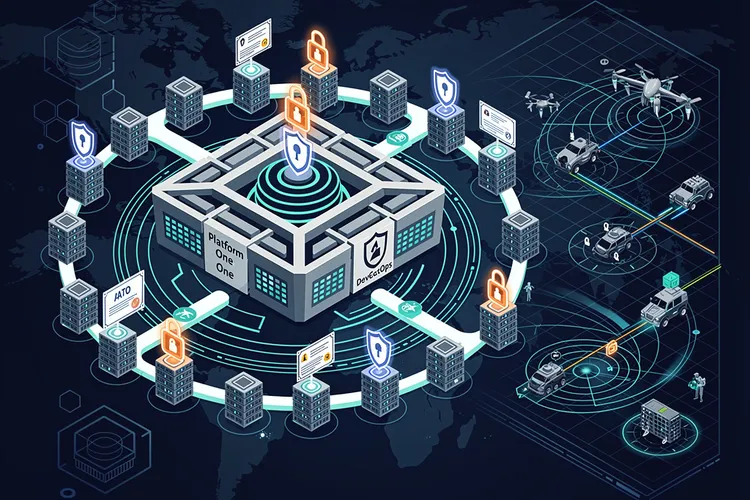



As artificial intelligence development accelerates globally, the United States faces an existential question: How can it maintain technological leadership against China’s formidable AI ambitions? While much attention focuses on model development and computational power, a growing chorus of experts argues that America’s true competitive advantage lies not in algorithmic sophistication alone, but in the trustworthiness and security of its AI infrastructure. This paradigm shift positions cybersecurity as the fulcrum upon which the AI race will ultimately pivot.
The conventional wisdom surrounding the U.S.-China AI competition has centered on metrics like parameter counts, training data volumes, and semiconductor capabilities. Yet this narrow focus overlooks a fundamental reality: artificial intelligence systems are only as valuable as they are trusted. According to analysis published in CyberScoop , the integration of robust cybersecurity measures into cloud-based AI platforms represents America’s potential “secret weapon” in maintaining global AI leadership. The argument hinges on a simple premise—organizations worldwide will gravitate toward AI systems they can trust with their most sensitive data and critical operations.
China’s approach to AI development has been characterized by massive state investment, centralized data collection, and rapid deployment across government and commercial sectors. The country’s AI initiatives benefit from fewer privacy constraints and more direct government coordination. However, these same characteristics that enable speed also introduce vulnerabilities that the United States can exploit through superior cybersecurity architecture. The question isn’t whether American AI models can outperform Chinese ones in isolated benchmarks, but whether American AI infrastructure can offer something China cannot: verifiable security and transparent operations that earn global trust.
The Trust Deficit in Global AI Adoption
International enterprises face a critical dilemma when selecting AI platforms: choosing between cutting-edge capabilities and trustworthy operations. This tension has become particularly acute as AI systems handle increasingly sensitive functions, from financial transactions to healthcare diagnostics. The security posture of AI infrastructure directly impacts adoption rates among risk-averse sectors like banking, defense, and critical infrastructure—precisely the domains where AI promises the greatest economic and strategic value.
American cloud providers have invested billions in security infrastructure, compliance frameworks, and transparency initiatives that Chinese competitors struggle to match. These investments create a moat around U.S. AI platforms that extends beyond technical performance. When European financial institutions or Japanese manufacturers evaluate AI solutions, security certifications, audit trails, and data sovereignty guarantees often outweigh raw computational advantages. This dynamic suggests that cybersecurity excellence could prove more decisive than model performance in capturing global AI market share.
AI-Powered Cybersecurity: A Recursive Advantage
The relationship between AI and cybersecurity operates bidirectionally, creating a potential virtuous cycle for American technology leadership. While secure infrastructure makes AI more trustworthy, AI itself revolutionizes cybersecurity capabilities. Machine learning algorithms now detect threats, predict vulnerabilities, and respond to incidents at speeds impossible for human analysts. This recursive relationship—where AI strengthens cybersecurity, which in turn enables more trusted AI deployment—represents a compounding advantage for nations that excel at both disciplines simultaneously.
American cybersecurity firms have pioneered AI-driven threat detection systems that analyze billions of events across global networks in real-time. These systems identify attack patterns, zero-day exploits, and advanced persistent threats with unprecedented accuracy. By embedding these AI-powered security capabilities directly into cloud platforms, U.S. providers offer a integrated value proposition: not just AI tools, but AI tools protected by the most sophisticated defenses available. This bundling of capability and security creates differentiation that pure model performance cannot replicate.
Regulatory Frameworks and Competitive Positioning
The emerging global regulatory environment for AI increasingly emphasizes security, transparency, and accountability—areas where American legal and technical frameworks provide structural advantages. The European Union’s AI Act, for instance, imposes strict requirements on high-risk AI systems, including mandatory security assessments and transparency obligations. American companies, operating within established cybersecurity compliance regimes and transparency norms, can more readily adapt to these requirements than Chinese firms operating under fundamentally different governance models.
This regulatory alignment creates network effects that favor American AI platforms. As international standards coalesce around principles of explainability, auditability, and security, systems designed with these principles from inception gain advantages over those retrofitting compliance. The U.S. tradition of independent audits, third-party certifications, and public security research—while sometimes commercially inconvenient—builds credibility that becomes increasingly valuable as AI stakes rise. China’s more opaque approach to AI governance, whatever its domestic advantages, creates friction in markets where transparency carries premium value.
The Cloud Infrastructure Battleground
Cloud computing platforms serve as the primary delivery mechanism for AI capabilities, making cloud security synonymous with AI security for most organizations. The major American cloud providers—Amazon Web Services, Microsoft Azure, and Google Cloud—have established global infrastructure footprints with security architectures refined over decades of defending against sophisticated attacks. This operational experience in securing distributed systems at scale represents institutional knowledge difficult to replicate quickly, even with substantial capital investment.
Chinese cloud providers, while growing rapidly, face persistent questions about data handling practices, government access, and security protocols that limit their appeal outside China’s sphere of influence. These concerns aren’t merely perceptual; they reflect genuine differences in legal frameworks, operational transparency, and accountability mechanisms. American providers leverage these differences by offering contractual guarantees, compliance certifications, and technical architectures that demonstrably limit access—even from their own governments under most circumstances. This structural advantage in trustworthiness could prove more durable than any specific technical lead in AI capabilities.
Strategic Implications for U.S. Policy
Recognizing cybersecurity as central to AI competitiveness demands policy adjustments beyond traditional research funding or export controls. It requires sustained investment in the cybersecurity workforce, continued support for security research, and maintenance of technical standards that prioritize security without stifling innovation. The United States must resist the temptation to sacrifice security for speed in AI deployment, as doing so would undermine the very advantage this analysis identifies as decisive.
Government procurement policies could accelerate this advantage by explicitly valuing security in AI acquisitions, creating market signals that reward robust cybersecurity integration. Public-private partnerships focused on AI security research could maintain American leadership in both offensive and defensive capabilities. Export promotion efforts might emphasize the security and trustworthiness of American AI platforms rather than focusing exclusively on technical performance metrics where advantages may prove more fleeting.
The Path Forward: Integration Over Isolation
The vision of cybersecurity as America’s AI secret weapon depends on integration rather than separation of these domains. Too often, security is treated as a constraint on AI development rather than an enabler of AI adoption. This mindset must shift toward viewing security as a core feature that enhances value rather than a compliance burden that reduces it. Organizations that embed security expertise directly into AI development teams, rather than treating it as a separate function, will create more trustworthy systems that capture greater market share.
The competitive dynamics of the AI race may ultimately favor not the fastest mover but the most trusted one. While China can mandate domestic AI adoption regardless of security concerns, American companies must earn adoption through demonstrated reliability and security. This higher bar, though challenging, creates products better suited for global markets where trust cannot be mandated. The discipline imposed by security requirements may slow initial deployment but produces more robust, defensible, and ultimately more valuable AI systems.
As artificial intelligence becomes increasingly central to economic competitiveness and national security, the infrastructure supporting AI matters as much as the algorithms themselves. America’s cybersecurity capabilities, developed through decades of defending open networks against sophisticated adversaries, represent a strategic asset in the AI competition. By recognizing this advantage and investing accordingly, the United States can define the terms of AI leadership around trust and security rather than accepting a narrow race focused solely on model capabilities. In a technology domain where trust determines adoption and adoption determines influence, cybersecurity may indeed prove to be America’s decisive advantage in the AI era.






Leave a Reply
Your email address will not be published.