





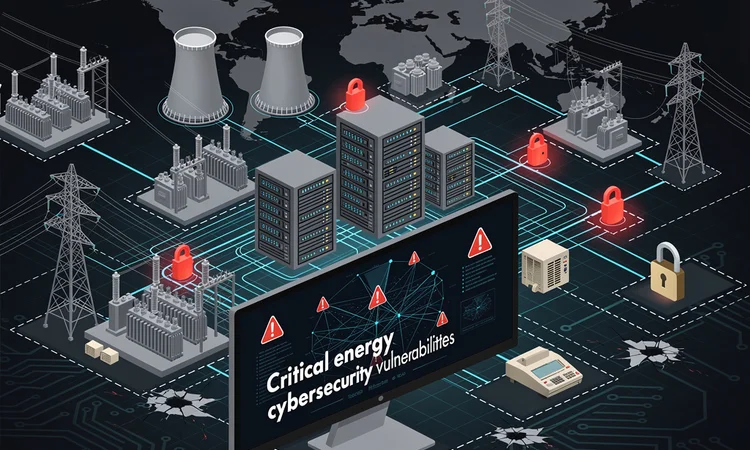
The electrical grid that powers modern civilization is running on borrowed time when it comes to cybersecurity defenses, according to a comprehensive new analysis that exposes systematic vulnerabilities across critical energy infrastructure. A survey of more than 100 operational technology systems at substations and power plants has uncovered security gaps so fundamental that industry experts are calling for immediate regulatory intervention.
The study, conducted by OMICRON, a leading provider of testing and diagnostic solutions for electrical power systems, reveals that the majority of energy facilities lack basic security protocols that have been standard in corporate IT environments for over a decade. According to The Hacker News , the findings paint a troubling picture of an industry that has prioritized operational continuity over security preparedness, leaving critical infrastructure exposed to increasingly sophisticated threat actors.
The research examined operational technology (OT) networks—the specialized computer systems that monitor and control physical processes like power generation and distribution—across multiple continents. These systems, which were largely designed in an era before cybersecurity became a primary concern, now represent some of the most attractive targets for nation-state hackers and cybercriminals seeking to cause widespread disruption.
Authentication Failures Create Open Doors for Adversaries
Among the most concerning findings is the widespread absence of multi-factor authentication across OT systems. The OMICRON survey found that a significant percentage of energy facilities still rely on single-password access controls, with some systems using default credentials that have never been changed since installation. This authentication gap means that a compromised password could grant an attacker complete control over critical infrastructure components.
The study also identified alarming deficiencies in network segmentation, with many facilities maintaining direct connections between their corporate IT networks and operational technology systems. This architectural flaw creates a pathway for attackers who gain initial access through conventional phishing or malware campaigns to pivot directly into systems controlling physical equipment. Security researchers have long advocated for air-gapped or heavily segmented OT networks, yet implementation remains inconsistent across the energy sector.
Password management practices revealed in the survey would be considered unacceptable in virtually any other industry handling sensitive operations. Investigators found instances of shared credentials among multiple operators, passwords written on sticky notes near workstations, and authentication systems that failed to enforce regular password rotation. These fundamental security hygiene failures compound the technical vulnerabilities inherent in aging OT systems.
Legacy Systems Operating Without Security Updates
The research highlights a critical challenge facing energy operators: many operational technology systems are running on outdated software and hardware that no longer receives security patches from manufacturers. Some surveyed facilities were operating control systems more than 20 years old, designed in an era when internet connectivity and remote access were not considerations. Retrofitting these legacy systems with modern security controls presents both technical and financial challenges that many utilities have been slow to address.
The economic calculus of OT security upgrades differs fundamentally from traditional IT security investments. Energy infrastructure operates on multi-decade replacement cycles, and the costs associated with upgrading or replacing functioning equipment can run into millions of dollars per facility. This financial reality has created a situation where utilities often choose to extend the operational life of vulnerable systems rather than invest in comprehensive security modernization.
Compounding these challenges is the specialized nature of OT systems, which require expertise that straddles both electrical engineering and cybersecurity. The survey revealed a significant skills gap in the energy sector, with many facilities lacking personnel trained in both operational technology and modern security practices. This talent shortage means that even when vulnerabilities are identified, organizations may lack the internal resources to effectively remediate them.
Regulatory Frameworks Struggle to Keep Pace
Current regulatory requirements for OT security in the energy sector vary widely by jurisdiction and have not kept pace with evolving threat environments. While frameworks like the North American Electric Reliability Corporation’s Critical Infrastructure Protection (NERC CIP) standards establish baseline security requirements, the OMICRON study suggests that compliance does not necessarily equate to comprehensive security. Many facilities meet minimum regulatory thresholds while leaving significant vulnerabilities unaddressed.
The fragmented nature of energy infrastructure ownership further complicates security standardization. The grid comprises thousands of utilities, independent power producers, and transmission operators, each with varying resources and security maturity levels. This decentralization means that a sophisticated attacker need only find the weakest link in the chain to potentially impact broader grid stability.
International coordination on OT security standards remains limited, despite the global nature of both energy supply chains and cyber threats. Equipment manufactured in one country may be deployed in facilities across multiple continents, each with different security requirements and oversight mechanisms. This lack of harmonization creates opportunities for vulnerabilities to persist across international boundaries.
Nation-State Threats Escalate Urgency
The security gaps identified by OMICRON’s research take on heightened significance in the context of documented nation-state interest in energy infrastructure. U.S. intelligence agencies have repeatedly warned that adversarial countries have pre-positioned malware within American critical infrastructure, potentially creating the capability to cause widespread blackouts during geopolitical conflicts. The vulnerabilities revealed in this survey provide a roadmap for how such attacks might be executed.
Recent incidents have demonstrated that these threats are not theoretical. The 2015 and 2016 cyberattacks on Ukraine’s power grid, attributed to Russian state-sponsored actors, successfully caused blackouts affecting hundreds of thousands of people. Those attacks exploited many of the same vulnerabilities—including weak authentication and insufficient network segmentation—that the OMICRON survey identified as widespread in current energy infrastructure.
The potential consequences of a successful large-scale attack on energy infrastructure extend far beyond temporary power outages. Modern society’s dependence on electricity means that sustained grid disruption would cascade into failures across healthcare, communications, water treatment, and financial systems. Security experts estimate that a coordinated attack causing multi-week blackouts across major metropolitan areas could result in economic damages exceeding hundreds of billions of dollars and potential loss of life.
Industry Response and Path Forward
Energy sector leaders are increasingly acknowledging the severity of OT security challenges, though translating awareness into action remains inconsistent. Some forward-thinking utilities have begun implementing zero-trust architecture principles in their OT environments, requiring continuous authentication and authorization for all system access. These early adopters are demonstrating that comprehensive security is achievable even within the constraints of operational technology environments.
Technology vendors are developing solutions specifically designed for OT security challenges, including specialized monitoring systems that can detect anomalous behavior in industrial control systems without disrupting operations. These tools leverage machine learning to establish baseline operational patterns and flag deviations that might indicate malicious activity. However, deployment of such technologies remains limited, with many facilities continuing to rely on security approaches designed for traditional IT environments.
The insurance industry is beginning to play a role in driving security improvements, with some carriers now requiring evidence of specific security controls before offering cyber insurance coverage for critical infrastructure operators. This market-based pressure may prove more effective than regulatory mandates in compelling security investments, particularly among smaller utilities that have historically lagged in security maturity.
Investment Requirements and Economic Realities
Addressing the vulnerabilities identified in the OMICRON survey will require sustained investment across the energy sector. Industry analysts estimate that comprehensive OT security modernization could cost utilities between $500,000 and $5 million per facility, depending on size and complexity. For an industry already facing significant capital requirements for grid modernization and renewable energy integration, these security costs represent a substantial additional burden.
The question of who should bear these costs remains politically contentious. Consumer advocates argue that security investments should be considered routine operational expenses, while utilities contend that extraordinary cybersecurity requirements justify rate increases or government subsidies. This debate has slowed security investments in some jurisdictions, as utilities await regulatory clarity on cost recovery mechanisms.
Federal funding programs have begun to address this investment gap, with recent infrastructure legislation allocating billions of dollars for grid security improvements. However, the distribution of these funds has been slower than many security experts recommend, and the amounts available fall short of total estimated needs. Public-private partnerships may offer a path forward, combining government resources with private sector expertise and innovation.
Cultural Transformation in Operations
Beyond technical and financial challenges, the OMICRON findings underscore the need for cultural change within energy operations. For decades, the primary focus of power system operators has been reliability and uptime, with security considerations often treated as secondary concerns. This operational culture must evolve to recognize cybersecurity as equally fundamental to reliable service delivery.
Training and workforce development represent critical components of this cultural transformation. The survey revealed that many frontline operators lack basic cybersecurity awareness, despite being responsible for systems that could become attack vectors. Comprehensive security training programs that respect the operational expertise of existing staff while building new competencies will be essential for sustainable security improvements.
The path forward requires sustained commitment from utility leadership, regulators, policymakers, and technology providers. The vulnerabilities exposed by OMICRON’s research are not insurmountable, but addressing them demands recognition that OT security cannot be an afterthought or a compliance checkbox exercise. As energy infrastructure becomes increasingly digitized and interconnected, the security foundations must be strengthened to match the expanding attack surface. The alternative—waiting for a catastrophic incident to force action—is a risk that modern society cannot afford to take.






Leave a Reply
Your email address will not be published.