





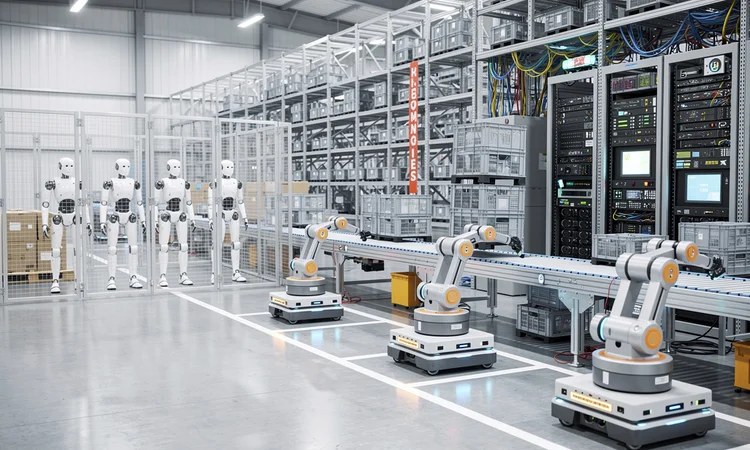
Humanoid robots, billed as the ultimate fix for labor shortages and rising costs in warehouses and factories, face a stark reality check. Gartner Inc. forecasts that through 2028, fewer than 100 companies will advance beyond initial proofs of concept, with only under 20 scaling to production in supply chain and manufacturing operations, according to a January 21, 2026, press release reported by RoboticsTomorrow . Most deployments will stick to controlled settings, far from the chaos of high-volume logistics.
“The promise of humanoid robots is compelling, but the reality is that the technology remains immature and far from meeting expectations for versatility and cost-effectiveness,” said Abdil Tunca, Senior Principal Analyst in Gartner’s Supply Chain practice, as quoted in Supply Chain Digital . Chief supply chain officers must weigh readiness before pouring resources into pilots that may never graduate.
Interest surges amid workforce gaps, with e-commerce fueling warehouse demands. Yet Gartner’s analysts highlight why bipedal bots lag: they mimic humans but falter in real-world demands.
Gartner’s Hard Numbers on Adoption
Gartner’s prognosis stems from rigorous analysis of tech maturity. “Companies with a high risk appetite and focus on innovation are the best candidates for pursuing humanoid robots at present, given the unproven capabilities of these solutions, and related lack of clarity for return on investment,” noted Caleb Thomson, Senior Director Analyst in Gartner’s Supply Chain practice, per DC Velocity .
By contrast, polyfunctional robots—wheeled or oddly shaped for tasks like sorting or palletizing—offer higher throughput, better energy efficiency, and easier integration, Gartner argues. These alternatives already thrive in dynamic warehouses, outpacing humanoids’ bipedal constraints.
The forecast aligns with broader trends. Earlier, in November 2024, Gartner’s Hype Cycle placed humanoids at the “Innovation Trigger,” signaling hype but a decade-plus to mainstream use, as detailed in Gartner ‘s report covered by Robotics 24/7 .
Tech Barriers Blocking Warehouse Breakthroughs
Core hurdles include dexterity shortfalls for mixed-SKU picking, intelligence gaps in unstructured spaces, and integration woes with legacy systems. Batteries drain fast on legged mobility, limiting shifts to hours, not days. Costs? Upfront and maintenance expenses dwarf returns versus specialized bots.
“CSCOs must carefully evaluate readiness and avoid overcommitting resources to solutions that cannot yet deliver on their potential,” Tunca advised in Supply Chain Digital . Pilots in semi-segregated zones highlight safety lags, like unreliable collision avoidance in crowded aisles, echoing WebProNews on McKinsey’s 2025 report.
Gartner urges robotics competency centers for change management, data analysis, and cybersecurity to bridge workforce readiness gaps, as noted in Modern Materials Handling’s 2026 outlook via WebProNews.
Pilot Pioneers: Figure, Agility, and Tesla Trials
Figure AI’s Figure 02 and 03 test at BMW’s Spartanburg plant, handling parts on 20-hour shifts, per WebProNews . Apptronik’s Apollo expands at Mercedes for bin-handling. Agility Robotics’ Digit moves totes at GXO and Spanx factories, plus Amazon pilots, showing structured-path viability.
Tesla’s Optimus Gen 3 prototypes eye internal factory use in late 2025, external pilots in 2026 at $20,000-$30,000, Elon Musk stated in Q3 2025 earnings, though hand-design delays shifted timelines, as Humanoid Press reported. Boston Dynamics’ electric Atlas, unveiled at CES 2026, ships to Hyundai and Google DeepMind for sequencing.
These efforts remain pilots. IDTechEx predicts logistics takeoff in 2026-2027, spurred by automotive proofs like BYD’s 1,500-unit 2025 deployment scaling to 20,000 by 2026, but warehouses demand more, per their April 2025 report cited in web searches.
Supply Chain Strains and Scaling Nightmares
No mature humanoid supply chain exists. Musk warned scaling Optimus to millions is unprecedented due to absent actuators and components, forcing in-house development harder than Cybertruck, per The Korea Herald . Tesla targets $20,000-$30,000 via automotive reuse, undercutting Figure 02’s $100,000+ estimates.
Hyundai leverages Korea’s ecosystem for Boston Dynamics’ Atlas, aiming mass production at its Georgia plant by 2028, claiming edges over Tesla, as The Verge detailed. Chinese firms like UBTECH supply Airbus with Walker S2 for manufacturing, hitting 1.4 billion yuan orders in 2025, per X posts and China Daily.
Bain & Company’s 2025 report notes $2.5 billion VC in 2024 but stresses pilots rely on human oversight, with demos masking limits in dynamic range vision and tactile sense, via Bain .
Alternatives Dominating Dynamic Operations
Polyfunctional designs win for now. Autonomous mobile robots, collaborative pickers, and goods-to-person systems climb Gartner’s Slope of Enlightenment, per the 2024 Hype Cycle. “For the majority of companies that will need to prioritise robots that maximize throughput-per-dollar invested, we expect polyfunctional robots to be the superior solution,” Thomson said.
MarketsandMarkets projects the humanoid market at $2.03 billion in 2024 to $13.25 billion by 2029, CAGR 45.5%, driven by manufacturing and logistics, but adoption skews pilots. ABI Research sees robotics at $110.7 billion by 2030, with mobile robots at $75 billion leading.
Gartner predicts one in 20 supply chain managers overseeing robots over humans by 2030, per July 2025 release, demanding new fleet management skills amid 80% daily human-robot engagement.
Strategic Plays for C-Suite Risk Takers
Gartner advises pilots for validation, provider collaborations, monitoring breakthroughs, and outcome-focused automation. High-risk innovators like BMW and Mercedes lead, but most should opt for proven bots maximizing ROI.
On X, Brett Adcock of Figure argued humanoids centralize engineering for vast tasks, amortizing costs, countering specialized fragmentation. Yet Gartner’s data tempers optimism: hype outruns readiness.
Investors eye suppliers like Ambarella for vision, Harmonic Drive for actuators, Qualcomm for edge AI. CES 2026 showcased Atlas production and Optimus prototypes, but production lags pilots, per InvestorPlace and Humanoid Press.
Longer Horizons: Transformational Shifts Ahead
By 2027, Gartner eyed 10% of intralogistics smart robots as humanoids in 2024 notes, but 2026 updates sober that. Morgan Stanley’s model projects 1 billion units and $5 trillion revenue by 2050, per X buzz, implying manufacturing and geopolitics shifts.
Challenges persist: 95% pilots fail without control, Bain notes phased rollouts from controlled sites. Energy hits 8-hour shifts in a decade; dexterity evolves for precision. China leads production, U.S. software, per Automate.org.
For industry leaders, the path demands pragmatism: deploy polyfunctionals now, pilot humanoids selectively, build competencies. Humanoids promise waves of value, but not floods—yet.






Leave a Reply
Your email address will not be published.