







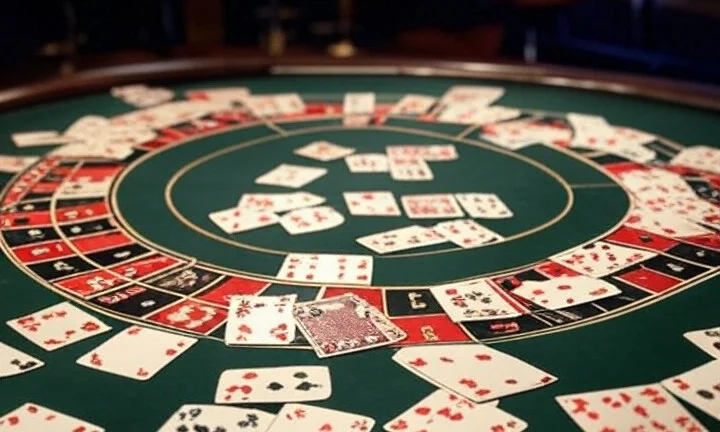
Las Vegas’s glittering casinos and booming sportsbooks face a federal tax squeeze that could dim their lights. Starting with the 2026 tax year, the IRS’s new rule under the One Big Beautiful Bill Act (OBBBA) caps gambling loss deductions at 90% of winnings, forcing even break-even players to pay taxes on “phantom income” they never pocketed. This provision, buried in last year’s massive spending bill, has ignited bipartisan fury but stalled in Congress, leaving professionals from poker tables to sportsbooks staring down ruinous tax bills.
The math is brutal. A pro poker player winning $250,000 across tournaments but losing the same amount now deducts only $225,000, owing taxes on $25,000 of nonexistent profit, as detailed in analyses from SSB-CPA . Sports bettors with high-volume action, often operating on razor-thin edges, face similar hits: win $100,000, lose $100,000, pay up on $10,000 anyway. “Taxing people on money they don’t have will stifle the tourism industry,” warned Sen. Catherine Cortez Masto, per CPA Practice Advisor .
Casual gamblers aren’t spared. Slot players on the Las Vegas Strip, where casinos hold an 8% edge and 90% lose money yearly according to Yahoo Finance , could owe on rare hot streaks despite net losses. The IRS tracks big wins via W-2G forms—$2,000+ on slots/bingo, $5,000 net in poker tournaments—but demands self-reporting of all income, now with crippled offsets.
Phantom Income’s Vicious Grip
The IRS’s shift creates taxable income from thin air. Previously, losses up to winnings offset taxes fully if itemized. Now, that 10% haircut ensures the house—Washington—always wins extra. A sports bettor with $24,500 losses against $20,000 wins pays on $5,500 despite netting a loss, as illustrated by Bookmakers Review . High-rollers exemplify the outrage: a $20 million win/$18 million loss year jumps from $2 million taxable to far worse under progressive brackets, per Forbes .
Tax pros decry the unfairness. “Ninety percent of players lose,” notes Russell Fox of Clayton Financial and Tax in CPA Practice Advisor . Yet the IRS demands meticulous logs—dates, locations, witnesses—for every session, from poker hands to parlay slips. Fail, and deductions vanish in audits, where the agency already eyes gamblers with $100,000+ income.
Historical evasion underscores the gap: 48,908 Americans skipped returns on $15,000+ wins from 2018-2020, hiding $13 billion and costing $1.4 billion in taxes, per Treasury Inspector General data cited in Yahoo Finance . But punishing losers with phantom taxes won’t close that; it just drives action underground.
Poker Pros Face Tournament Wipeout
Professional poker circuits teeter on collapse. “It’s very damaging to poker… It effectively kills poker if players are reporting correctly,” an anonymous pro told InGame . High-roller events, fueling PokerGo’s televised revival, rely on pros recycling buy-ins. With full losses non-deductible, margins evaporate—no pro sustains wins without offsets. Chris Dierkes warns the “high-roller tournament scene [could] die in 2026,” echoed in the same report.
W-2G rules hit hard: net $5,000+ tournament payouts trigger IRS reports, per IRS instructions . Pros entering multiple events rack up reported wins, but 90% losses mean unrelenting tax drag. World Series of Poker, drawing global fields to fill Vegas’s summer lull, risks shrinkage as pros flee to offshore havens, per Yahoo Finance .
PokerGo’s streaming boom—reviving post-2008 TV heyday—depends on star pros. IRS overreach threatens that ecosystem, turning U.S. tables into pro deserts while unregulated sites thrive. “This could be fixed next year… It’s already impacting wagering,” says Circa Resort CEO Derek Stevens in the same piece.
Sports Betting’s Pro Backbone Cracks
Legal sports gambling, exploding post-PASPA repeal, hinges on 10% pros and high-volume sharps driving liquidity, warns Cardplayer . American Bettor’s Voice projects $18 billion handle drop as pros exit, ceding markets to offshore operators already snagging one-third of action per American Gaming Association.
Sharps betting spreads—$55 to win $50—rarely trigger W-2Gs (need 300x wager), but self-report mandates collide with 90% caps. Break-even volumes yield phantom taxes at 37% top rates, gutting viability. “An existential threat to regulated sports betting,” per industry voices in Ave Maria School of Law analysis.
Nevada’s delegation fights back, but IRS rules stand. Rep. Dina Titus’s FAIR BET Act, introduced July 2025, stalled when House Rules Committee nixed amendments to spending bills, as reported by Las Vegas Review-Journal . “I led the charge… this tax on phantom winnings hidden in the OBBB,” Titus stated there.
Congressional Fumbles Fuel IRS Overreach
Senators Cortez Masto, Jacky Rosen, and Ted Cruz back the FULL HOUSE Act, yet no hearings. Titus vows persistence: “There will be other opportunities… until we get this done,” per Las Vegas Review-Journal . Gaming execs lobbied Ways and Means Chair Jason Smith in December, to no avail.
The IRS projects $1.1 billion revenue over a decade, peanuts amid trillions, yet enough to kneecap industries. Casinos track loyalty card play but share nothing with IRS beyond W-2Gs, leaving self-audits to taxpayers. Non-users lack records, amplifying pain.
Nevada’s economy, tourism-dependent, braces. “Nevada’s tourism economy would take a hit,” Sen. Rosen cautioned in CPA Practice Advisor . IRS audits loom larger, with poor logs dooming claims.
Industry Reels, Underground Beckons
Casino stocks dip on early signals; Circa’s Stevens notes pre-2026 wagering dips in Yahoo Finance . Pros pivot to crypto sites or abroad, eroding regulated revenue. Prediction markets risk Section 1256 mismatches, further tilting to black markets.
Tax advisors urge diaries, tickets, statements—bingo cards, keno slips, sportsbook histories—per IRS Publication 529 nods in multiple sources like Hedman Partners . But compliance won’t save pros: no business deducts just 90% costs. Fairness demands full offsets, yet IRS wields the hammer.
As 2026 filings near, gamblers log furiously, but the damage mounts. Congress dithers, IRS collects, and America’s gambling pulse weakens—proof federal meddling trumps economic sense.






Leave a Reply
Your email address will not be published.