








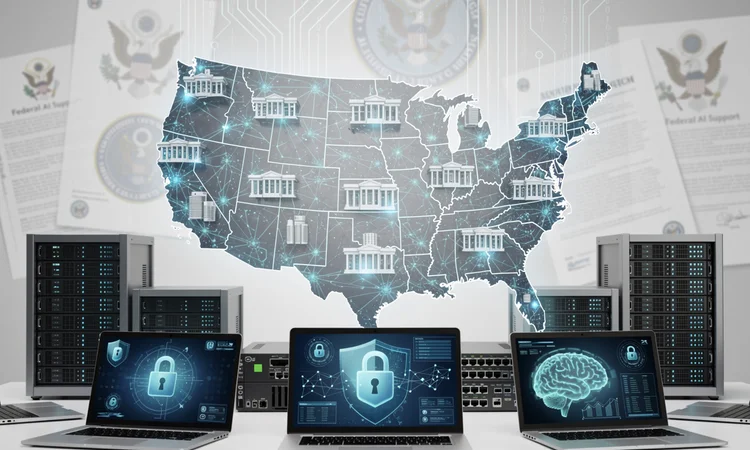
State government technology leaders are mounting an unprecedented campaign to secure federal assistance as they navigate the dual challenges of implementing artificial intelligence systems while fortifying defenses against increasingly sophisticated cyber threats. The National Association of State Chief Information Officers (NASCIO) has emerged as the primary voice calling for coordinated support from Washington, arguing that state IT programs cannot effectively address these complex challenges in isolation.
The push comes at a critical juncture when state governments face mounting pressure to modernize legacy systems, adopt emerging technologies, and protect sensitive citizen data from ransomware attacks and nation-state adversaries. According to BankInfoSecurity , state CIOs are juggling multiple priorities simultaneously, creating resource constraints that threaten to undermine both innovation and security initiatives. The organization’s leadership has been vocal about the need for federal partnerships that go beyond funding to include technical expertise, threat intelligence sharing, and policy guidance.
State technology officials argue that the current fragmented approach to AI implementation and cybersecurity creates vulnerabilities that malicious actors can exploit. Without standardized frameworks and shared resources, individual states must independently develop policies, train personnel, and acquire technologies—an inefficient process that leaves gaps in the nation’s overall security posture. The federal government’s role, according to NASCIO, should include establishing baseline security standards, facilitating information sharing between states, and providing access to cutting-edge tools that individual states cannot afford independently.
Resource Constraints Drive Collaboration Demands
The financial burden of maintaining robust cybersecurity programs while simultaneously exploring AI applications has stretched state budgets to their limits. Many states operate with IT departments that have remained understaffed for years, making it difficult to recruit and retain specialized talent in competitive fields like artificial intelligence and cybersecurity. The competition for skilled professionals has intensified as private sector companies offer significantly higher salaries than state governments can match, creating a persistent talent gap that federal support could help address through training programs and resource sharing.
State CIOs have identified several specific areas where federal assistance would prove most valuable. These include access to advanced threat intelligence that only federal agencies possess, technical assistance in evaluating and implementing AI systems safely, and funding mechanisms that don’t require states to navigate complex grant application processes. The emphasis on streamlined support reflects frustration with existing programs that often come with burdensome administrative requirements, delaying critical security upgrades and technology deployments.
AI Implementation Raises Governance Questions
The rapid advancement of artificial intelligence technologies has caught many state governments unprepared, lacking clear policies on acceptable use cases, data privacy protections, and accountability measures. State CIOs recognize AI’s potential to improve public services—from processing benefit applications more efficiently to predicting infrastructure maintenance needs—but they also understand the risks of deploying these systems without proper guardrails. Federal guidance on AI governance would help states avoid costly mistakes and ensure that algorithmic decision-making systems don’t perpetuate biases or violate citizens’ rights.
Several states have begun experimenting with AI applications independently, creating a patchwork of approaches that may not be sustainable or secure. Without coordinated standards, these early implementations could establish problematic precedents or create interoperability issues when states need to share data or collaborate on regional initiatives. NASCIO’s call for federal support reflects a desire to learn from other states’ experiences and adopt best practices rather than repeating mistakes or reinventing solutions that already exist elsewhere.
Cybersecurity Threats Evolve Faster Than Defenses
The cybersecurity challenges facing state governments have grown exponentially in recent years, with ransomware gangs specifically targeting state and local agencies that often lack sophisticated defenses. High-profile attacks on state systems have disrupted critical services, from motor vehicle departments to unemployment benefit systems, demonstrating the real-world consequences of inadequate security measures. State CIOs point out that adversaries share tools and tactics rapidly, while defenders often work in isolation, creating an asymmetric battle that federal coordination could help balance.
Federal agencies possess threat intelligence and defensive capabilities that could significantly strengthen state cybersecurity postures if shared effectively. The Cybersecurity and Infrastructure Security Agency (CISA) has made efforts to support state and local governments, but state CIOs argue that more comprehensive partnerships are needed. These would include real-time threat information sharing, access to federal security tools and technologies, and coordinated incident response capabilities that can be mobilized quickly when states face major cyber incidents.
Budget Realities Complicate Technology Modernization
State technology budgets often prioritize maintaining existing systems over investing in new capabilities, leaving little room for proactive security improvements or innovative AI projects. The cost of modernizing legacy infrastructure—some state systems still rely on programming languages like COBOL that few people know how to maintain—competes with demands for new security tools and AI experimentation. Federal funding specifically designated for these dual priorities could help states break out of the maintenance cycle and make strategic investments in their technology futures.
The economic uncertainty facing many states has made it even more difficult to justify large technology expenditures, particularly for projects with long-term payoffs rather than immediate visible results. State CIOs must often advocate for cybersecurity and AI investments to legislators and budget officials who may not fully understand the technical complexities or strategic importance of these initiatives. Federal support that comes with clear mandates and accountability measures could provide the political cover that state technology leaders need to secure adequate funding from their own legislatures.
Intergovernmental Coordination Challenges Persist
The relationship between federal and state technology programs has historically been complicated by differing priorities, bureaucratic obstacles, and communication gaps. State CIOs have experienced frustration with federal initiatives that impose requirements without providing corresponding resources or that fail to account for the diverse needs of different states. NASCIO’s current advocacy effort seeks to establish more equitable partnerships where states have input into federal programs rather than simply being expected to comply with mandates developed without their participation.
Effective collaboration requires federal agencies to understand the operational realities of state government IT environments, which often differ significantly from federal systems in scale, structure, and constraints. States need flexible solutions that can be adapted to their specific circumstances rather than one-size-fits-all approaches that may work well in federal contexts but prove impractical at the state level. The push for federal support includes requests for more consultative relationships where state expertise informs federal policy development, creating solutions that work across all levels of government.
Future of State Technology Depends on Partnership Models
The success of state efforts to harness AI capabilities while maintaining strong cybersecurity postures will largely depend on whether effective federal-state partnerships can be established. State CIOs envision a collaborative model where federal agencies provide strategic guidance, technical resources, and funding support while respecting state autonomy and allowing flexibility in implementation. This balanced approach would leverage federal capabilities without creating dependency or undermining state innovation.
As technology continues to evolve at a rapid pace, the need for coordinated responses to emerging challenges will only intensify. State governments serve as critical infrastructure for delivering services to millions of Americans, making their technology systems essential to national security and economic stability. NASCIO’s advocacy for federal support represents recognition that these systems cannot be secured or modernized through state efforts alone—they require a comprehensive national strategy that treats state technology infrastructure as a shared priority worthy of sustained federal investment and partnership.






Leave a Reply
Your email address will not be published.