







Proton Warns: Big Tech Faces $7.3B EU Fines in 2025, Just One Month’s Revenue

Proton Warns: Big Tech Faces $7.3B EU Fines in 2025, Just One Month’s Revenue

Proton warns that Big Tech giants like Google, Apple, Meta, and Amazon could face $7.3 billion in fines in 2025 for privacy and antitrust violations under EU laws, yet this amounts to just one month's revenue. The report criticizes fines as ineffective deterrents and urges structural reforms for real change.

Posted on: by Micah Shaw
Apple Launches Creator Studio: $12.99 Subscription with AI Tools

Apple Launches Creator Studio: $12.99 Subscription with AI Tools

Apple has launched Apple Creator Studio, a $12.99/month subscription bundling apps like Final Cut Pro and Logic Pro with exclusive AI features for creators. This shift from one-time purchases aims to compete with Adobe's Creative Cloud, offering value but sparking mixed reactions over subscription fatigue and feature gating.

Posted on: by Amelia Keller
Saks’ Collapse Hands Macy’s a Rare Retail Lifeline

Saks’ Collapse Hands Macy’s a Rare Retail Lifeline

Saks Global's bankruptcy creates openings for Macy's to seize luxury market share in beauty and fashion, amid debt woes and restructuring. Analysts see a once-in-a-lifetime chance for Macy's turnaround.

Posted on: by Grace Wright
T-Mobile’s Better Value Plan: $140 Unlimited 5G for Families, Big Savings

T-Mobile’s Better Value Plan: $140 Unlimited 5G for Families, Big Savings

T-Mobile's January 2026 Better Value plan offers families $140 for three lines with unlimited 5G data, streaming perks, and a five-year price lock, promising over $1,000 in savings versus rivals. It includes device deals and bundles, aiming to boost retention amid economic pressures and industry competition.

Posted on: by Emily Chen
Saks Global Files for Chapter 11 Bankruptcy Amid $5B Debt from Merger

Saks Global Files for Chapter 11 Bankruptcy Amid $5B Debt from Merger

Saks Global, owner of Saks Fifth Avenue, filed for Chapter 11 bankruptcy on January 14, 2026, overwhelmed by $5 billion in debt from its 2025 Neiman Marcus merger amid declining luxury sales and online competition. Despite $1.75 billion in financing, the retailer's future remains uncertain.

Posted on: by Jack Chen
Spotify Raises US Premium Price to $13/Month in Third Hike

Spotify Raises US Premium Price to $13/Month in Third Hike

Spotify is increasing its US premium subscription to $13/month, the third hike in three years, to boost revenue amid rising costs and competition. This reflects the maturing streaming market's shift toward profitability, with mixed user reactions and potential risks to retention. Competitors like Apple Music remain cheaper, testing Spotify's value proposition.

Posted on: by Chloe Ortiz
Macy’s Bold Closures: 14 Stores Shuttered in 2026 Push

Macy’s Bold Closures: 14 Stores Shuttered in 2026 Push

Macy's shutters 14 stores in 12 states in 2026 under its Bold New Chapter plan, sparing Ohio after prior cuts. The strategy drives stock gains and reinvests in 350 locations amid digital shifts.

Posted on: by Claire Bell
Europe’s Bind: Defying Trump While Clinging to U.S. Lifelines

Europe’s Bind: Defying Trump While Clinging to U.S. Lifelines

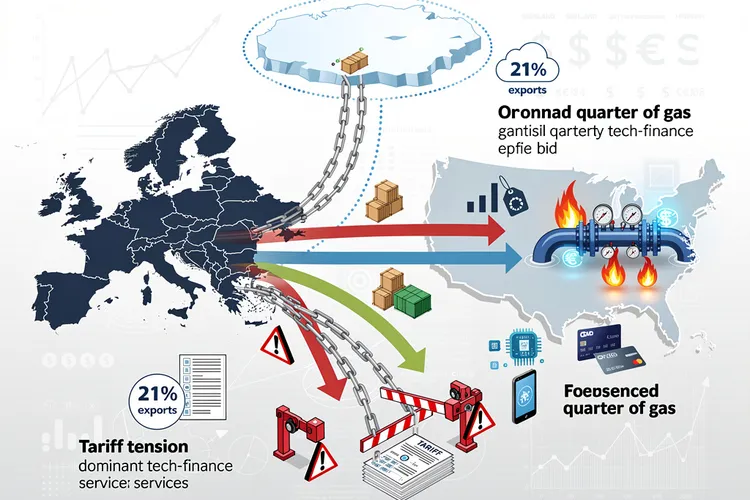
Europe defies Trump's Greenland bid but remains tethered to U.S. security, 21% of exports, quarter of gas, and dominant tech-finance services, amplifying leverage amid tariffs and tensions.

Posted on: by Isabella Reed
Global Mobile App Downloads Drop 2.7% in 2025, Spending Surges 21.6%

Global Mobile App Downloads Drop 2.7% in 2025, Spending Surges 21.6%

In 2025, global mobile app downloads fell 2.7% to 106.9 billion, marking five years of decline, while consumer spending surged 21.6% to $155.8 billion. This shift reflects a maturing market favoring subscriptions in non-game apps like streaming and fitness. AI innovations may reverse trends, promising sustained growth.

Posted on: by Leo Rossi
Reviving US Factories: Why Postwar Glory Can’t Return

Reviving US Factories: Why Postwar Glory Can’t Return

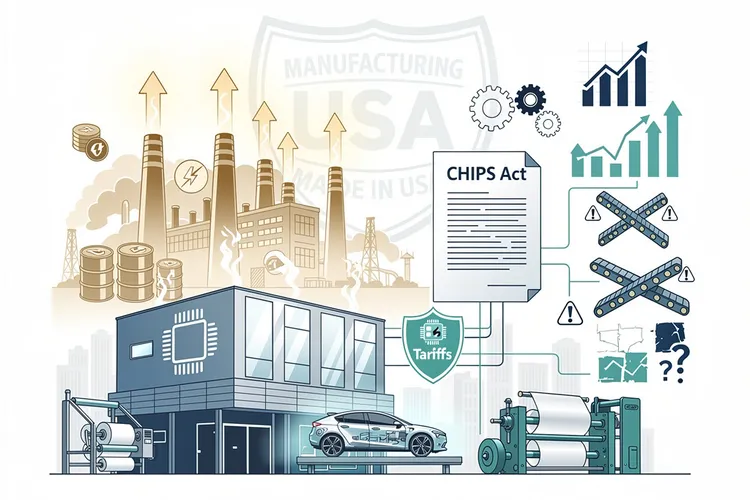
America's postwar manufacturing boom was a fluke driven by unique global dominance and cheap energy. Today's reshoring in chips, EVs and textiles via CHIPS Act and tariffs creates high-skill jobs but faces labor shortages and investment hurdles, defying nostalgic revival dreams.

Posted on: by Zoe Wright

Taiwan’s $250 Billion Bet: Reshaping America’s Chip Powerhouse

Samuel Johnson | 2025-11-28
Taiwan’s $250 Billion Bet: Reshaping America’s Chip Powerhouse

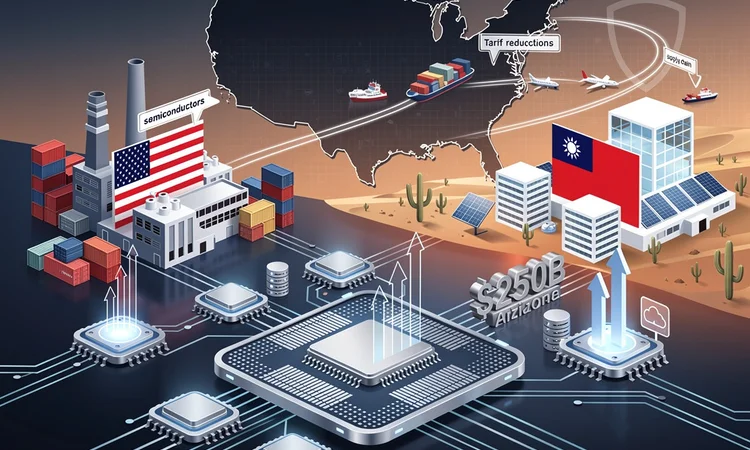
The U.S. and Taiwan have forged a landmark trade pact that commits Taiwanese firms to pour at least $250 billion into American semiconductor production, a move set to bolster U.S. manufacturing independence amid escalating tensions with China. Announced by the Department of Commerce on January 15, 2026, the agreement slashes tariffs on Taiwanese exports to 15% from higher proposed levels, while securing massive investments in chip factories, research and supply chains.

Taiwan Semiconductor Manufacturing Co., or TSMC, stands at the forefront, accelerating its Arizona expansion with plans for additional fabrication plants following its prior $165 billion commitment. The deal also includes $250 billion in credit guarantees from Taiwan’s government to support the semiconductor ecosystem, targeting artificial intelligence, energy systems and advanced computing.

The Trade-Off: Tariffs for Factories

In exchange for the investments, the U.S. exempts key Taiwanese goods like generic pharmaceuticals, aircraft components and natural resources from reciprocal tariffs. Companies with U.S. production gain duty-free import quotas under Section 232 rules. ‘This is the largest foreign direct investment in American industrial infrastructure in modern history,’ stated a Department of Commerce release, as reported by BitcoinWorld .

President Donald Trump’s administration framed the pact as a strategic win, building on prior CHIPS Act incentives and TSMC’s Arizona fabs. Posts on X from industry watchers like Brian Sullivan of CNBC highlighted TSMC’s land acquisitions in Arizona, signaling rapid scaling to five more facilities.

TSMC’s Arizona Acceleration

TSMC’s chief financial officer confirmed post-earnings that the company’s U.S. push isn’t slowing, with Arizona investments now tied to the trade deal. ‘TSMC is set to accelerate its multibillion-dollar expansion in Arizona,’ noted CNBC , citing strong quarterly results and the new agreement.

Prior TSMC pledges included $65 billion for three Arizona plants under CHIPS Act deals, creating tens of thousands of jobs by decade’s end, per White House statements echoed in X posts from 2024. The fresh $250 billion escalates this, with most funds flowing to Arizona for cutting-edge nodes.

Geopolitical Stakes with China Looming

The pact risks Beijing’s ire, as Taiwan—producing over 90% of advanced chips—shifts capacity stateside. ‘The deal… risks infuriating China,’ warned Reuters , noting U.S. efforts to diversify from Taiwan’s vulnerability.

Taiwan aims to relocate 40% of its semiconductor supply chain to the U.S., per government objectives cited in X discussions. This addresses national security gaps, with investments spanning fabs, R&D and packaging.

Supply Chain Shifts and Job Creation

Beyond TSMC, the deal encompasses Taiwan’s broader tech sector, including suppliers for energy and AI infrastructure. AP News detailed how the agreement cuts tariffs initially set at 32%, now capped at 15%.

Expected outcomes include thousands of high-tech jobs, reduced reliance on Asian manufacturing and enhanced U.S. competitiveness. X sentiment from accounts like StockMKTNewz underscores the momentum from earlier $100 billion TSMC announcements in 2025.

Economic Multipliers and Risks

The $250 billion direct investment, plus matching guarantees, could multiply through U.S. subsidies and private capital. Commerce officials project transformation in AI and defense tech, as outlined in TechCrunch .

Challenges persist: U.S. fabs lag in yields, labor shortages loom and costs exceed Taiwan’s. Yet, Trump’s tariff strategy compelled the shift, per analyses on X tying it to EU and Japan pacts.

Global Repercussions Unfold

China’s response remains watched, with potential retaliation via Taiwan Strait tensions. CNBC reported the deal stabilizes U.S.-Taiwan ties while pressuring Beijing. Industry insiders on X, including Lord Bebo, hailed it as bringing ‘high tech chips’ home.

For semiconductors, this cements a bipolar world: U.S.-aligned production versus China’s push. TSMC’s role evolves from Taiwan-centric to global balancer.

Implementation Roadmap Ahead

Investments target 2028 rollout, with Arizona as epicenter. Engadget specified exemptions boosting Taiwanese firms’ U.S. foothold. Ongoing X buzz from Diane Mantouvalos links it to TSMC’s ‘blowout’ earnings and land buys.


Subscribe Newsletter

Subscribe to our newsletter and stay up to date with the latest news, updates, and exclusive offers. Join our community today!

Comments

Join the discussion and share your thoughts.

No comments yet. Be the first to comment.

Leave a Reply

Your email address will not be published.

Join Us

Share your perspective with confidence. Your experience could inform, inspire, and help someone live better.

Archives

Authors

More ...

Search NexaPress



