

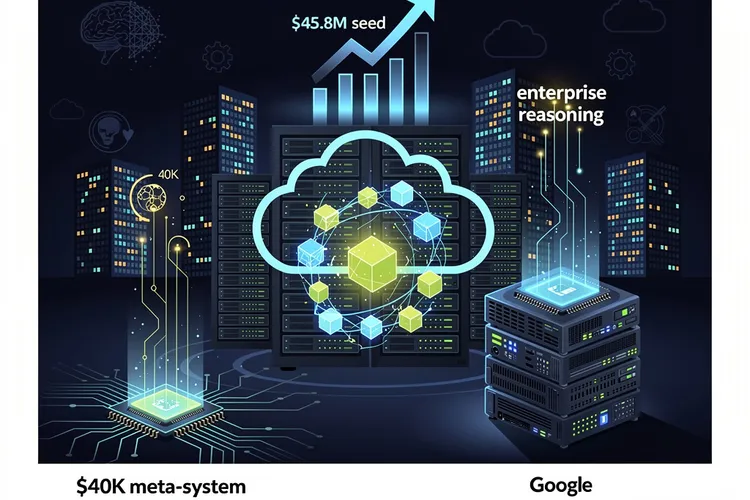








The race to build autonomous AI agents capable of navigating the web like humans has intensified dramatically in recent months, with new benchmarking standards revealing stark differences in performance across competing platforms. At the center of this technological arms race lies a fundamental question: which AI systems can truly understand and execute complex web-based tasks without human intervention?
According to comprehensive testing data from Browser Use , the performance gap between leading AI models in browser automation tasks is more significant than many industry observers anticipated. The benchmark evaluates agents across multiple dimensions, including their ability to navigate complex websites, fill forms, extract information, and complete multi-step workflows that mirror real-world business processes.
The emergence of standardized benchmarks represents a critical inflection point for the browser automation industry. Unlike earlier generations of robotic process automation tools that relied on rigid scripts and predetermined pathways, modern AI agents must demonstrate adaptive reasoning, contextual understanding, and the ability to recover from unexpected scenarios. These capabilities are no longer theoretical aspirations but measurable competencies that separate market leaders from also-rans.
The Technical Architecture Behind Agent Performance
The Browser Use benchmark reveals that success in autonomous web navigation depends heavily on an agent’s underlying vision-language model capabilities. Systems built on more advanced multimodal architectures consistently outperform text-only approaches, particularly when dealing with dynamic web applications that rely heavily on visual elements, interactive components, and modern JavaScript frameworks.
Performance variations emerge most prominently in tasks requiring contextual reasoning across multiple page loads. While basic form-filling operations show relatively uniform success rates across tested agents, complex workflows involving conditional logic, data validation, and multi-step authentication sequences expose significant capability gaps. The top-performing agents demonstrate success rates exceeding 85% on advanced scenarios, while lower-tier systems struggle to break 40% completion rates on identical tasks.
The benchmark methodology itself represents an evolution in how the industry evaluates AI agent capabilities. Rather than relying on synthetic test environments, the evaluation framework incorporates real-world websites spanning e-commerce platforms, enterprise software interfaces, government portals, and content management systems. This approach ensures that performance metrics reflect actual deployment conditions rather than laboratory ideals.
Commercial Implications for Enterprise Adoption
The performance disparities documented in recent benchmarks carry substantial implications for enterprises evaluating browser automation solutions. Organizations investing in AI agent technology face a complex calculus: premium systems command higher licensing fees but deliver superior task completion rates, while budget alternatives may require extensive human oversight that erodes their cost-effectiveness.
Early enterprise adopters report that agent reliability directly impacts return on investment timelines. A major financial services firm recently disclosed that upgrading from a mid-tier agent to a top-performing system reduced their customer onboarding workflow time by 60%, despite a 40% increase in per-seat licensing costs. The improved accuracy eliminated manual error correction loops that had previously consumed significant staff hours.
The competitive dynamics extend beyond pure performance metrics to encompass factors like integration complexity, maintenance requirements, and vendor ecosystem maturity. Organizations must weigh whether best-in-class benchmark performance translates to superior outcomes within their specific technical environments and use case requirements. This evaluation complexity has spawned a nascent consulting sector focused exclusively on AI agent selection and implementation strategy.
The Role of Vision-Language Models in Agent Superiority
The technical architecture underlying browser agents has become increasingly sophisticated, with vision-language models emerging as the critical differentiator. These systems process both visual and textual information simultaneously, enabling them to understand web pages as humans do rather than relying solely on underlying HTML structure or accessibility trees.
This multimodal approach proves particularly valuable when dealing with modern web applications that prioritize visual design over semantic markup. Single-page applications, progressive web apps, and heavily stylized interfaces often lack the structured data that traditional automation tools depend upon. Vision-language agents navigate these environments by interpreting visual layouts, button positions, and interface states much as human users would.
The benchmark data indicates that agents leveraging cutting-edge vision-language models achieve approximately 30% higher success rates on visually complex tasks compared to systems relying primarily on DOM manipulation. This performance advantage compounds across multi-step workflows, where early-stage navigation errors cascade into complete task failures for less capable systems.
Security and Privacy Considerations in Agent Deployment
As browser agents gain autonomy and capability, security considerations have moved to the forefront of enterprise evaluation criteria. These systems require broad permissions to interact with web applications, access credentials, and process sensitive data. The benchmark framework does not yet incorporate security testing, representing a significant gap in the current evaluation methodology.
Organizations deploying browser agents must implement robust credential management, activity logging, and access control frameworks. The most sophisticated deployments incorporate zero-trust architectures where agents operate within isolated environments and undergo continuous behavioral monitoring to detect anomalous activities that might indicate compromise or malfunction.
Privacy implications extend beyond internal security to encompass regulatory compliance requirements. Browser agents processing personal information must adhere to GDPR, CCPA, and industry-specific regulations governing data handling. This compliance burden has prompted some vendors to develop specialized agent variants with enhanced audit trails and data minimization capabilities, though these features often come at the cost of reduced operational flexibility.
The Path Toward Standardization and Interoperability
The browser agent market currently lacks standardized interfaces or interoperability frameworks, forcing organizations into vendor-specific implementations that resist migration or multi-vendor strategies. Industry consortiums have begun preliminary discussions around common APIs and capability descriptions, though consensus remains elusive given the rapid pace of underlying technology evolution.
Standardization efforts face the classic innovator’s dilemma: premature standards risk codifying outdated approaches, while delayed standardization allows proprietary ecosystems to calcify. The benchmark initiative itself represents an informal standardization effort, establishing common evaluation criteria even as formal interface specifications remain under development.
Market observers anticipate that standardization will accelerate as enterprise adoption reaches critical mass. Large organizations with substantial agent deployments have begun demanding vendor commitments to emerging standards, leveraging their purchasing power to drive industry alignment. This dynamic mirrors historical patterns in enterprise software markets, where customer requirements ultimately forced competing vendors toward interoperability.
Future Trajectories in Agent Capability Development
The current generation of browser agents represents merely an initial step toward fully autonomous web interaction. Research laboratories and commercial vendors are actively developing enhanced capabilities including natural language task specification, cross-application workflow orchestration, and adaptive learning from user feedback.
Next-generation agents will likely incorporate reinforcement learning techniques that enable continuous improvement from deployment experience. Rather than relying solely on pre-training, these systems will refine their strategies based on success and failure patterns within specific organizational contexts. This adaptive capability could dramatically reduce the configuration burden currently required to optimize agent performance for particular use cases.
The benchmark framework itself will need to evolve to assess these emerging capabilities. Future iterations may incorporate measures of learning efficiency, adaptation speed, and generalization across novel scenarios. As agents become more sophisticated, evaluation methodologies must advance in parallel to provide meaningful differentiation among competing solutions.
Market Dynamics and Competitive Positioning
The browser agent market has attracted significant venture capital investment, with multiple startups securing substantial funding rounds to accelerate product development and market penetration. Established robotic process automation vendors face strategic decisions about whether to develop native AI agent capabilities or pursue acquisition strategies to rapidly close technology gaps.
Competitive differentiation increasingly centers on specialized vertical capabilities rather than horizontal platform features. Vendors are developing industry-specific agent libraries optimized for healthcare workflows, financial services operations, or supply chain management tasks. This vertical specialization enables deeper capability within domain-specific applications while potentially fragmenting the broader market.
The performance benchmarks provide crucial market intelligence for both vendors and customers, establishing objective capability hierarchies that influence purchasing decisions and investment priorities. As the market matures, benchmark performance has begun appearing in vendor marketing materials and customer requirements documents, cementing its role as a key competitive metric alongside traditional factors like pricing and support quality.






Leave a Reply
Your email address will not be published.