



India’s AI Classroom Revolution: Google’s Gemini Scales Where Silicon Valley Stumbles

India’s AI Classroom Revolution: Google’s Gemini Scales Where Silicon Valley Stumbles

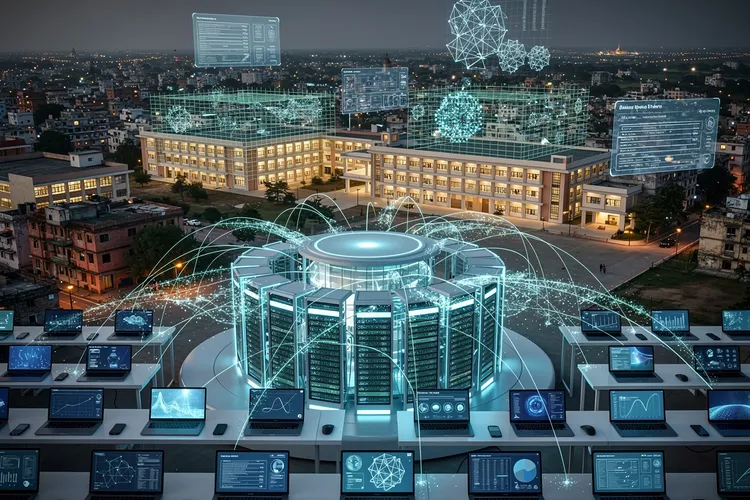
India leads global Gemini usage for learning, teaching Google to scale AI amid 247 million students, state curricula, and access gaps. Partnerships and tools like JEE mocks position it as a worldwide proving ground.

Posted on: by Micah Shaw
DeepSeek’s Bold Push: AI Search and Agents Challenge Google, OpenAI

DeepSeek’s Bold Push: AI Search and Agents Challenge Google, OpenAI

DeepSeek's January job postings reveal plans for a multilingual, multimodal AI search engine and persistent agents, intensifying rivalry with Google and OpenAI. Building on cost-efficient models like R1, the startup targets phone-first queries and autonomous task execution.

Posted on: by Vivian Stewart
Poetiq’s Lean Squad Outsmarts AI Giants on Reasoning Frontier

Poetiq’s Lean Squad Outsmarts AI Giants on Reasoning Frontier

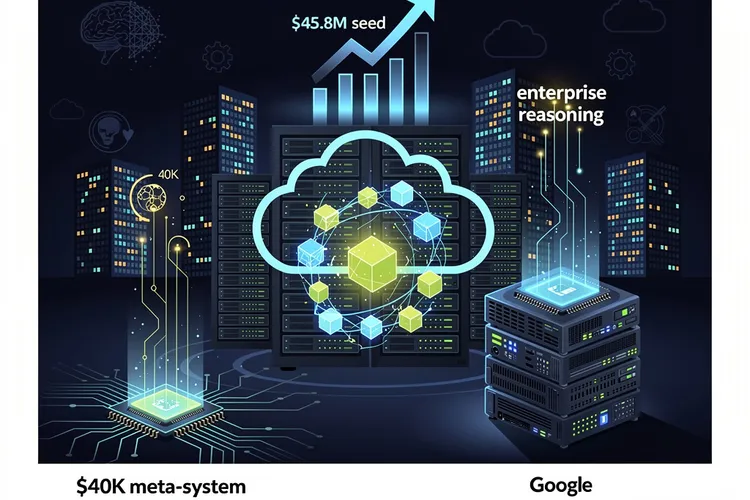
Poetiq's six-person team topped ARC-AGI-2 with a $40K meta-system, beating Google at half cost, then raised $45.8M seed to scale recursive agents enhancing any LLM for enterprise reasoning.

Posted on: by Elena Brooks
NASA’s Artemis Fuel System Failures Expose Critical Vulnerabilities in America’s Return to Lunar Exploration

NASA’s Artemis Fuel System Failures Expose Critical Vulnerabilities in America’s Return to Lunar Exploration

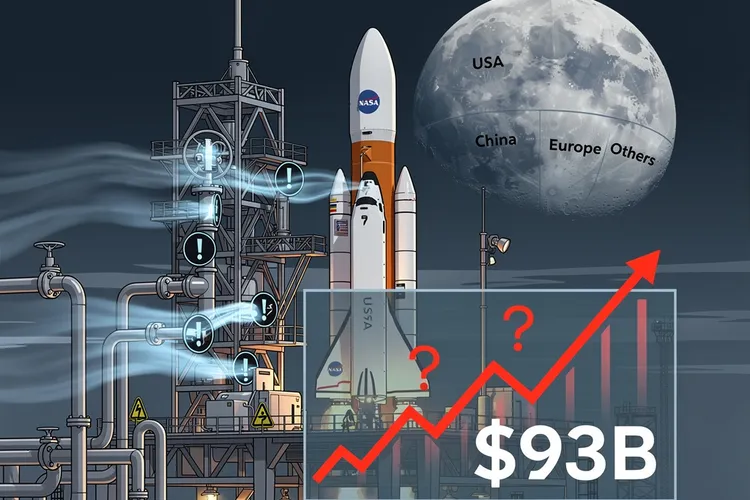
NASA's Space Launch System faces persistent hydrogen fuel leaks that have delayed the Artemis moon program, exposing critical gaps in expertise and raising questions about the $93 billion program's sustainability amid rising costs and international competition in lunar exploration.

Posted on: by Aria Brooks
AI Agents Shatter Compliance Foundations, Forcing CISOs to the Front Lines

AI Agents Shatter Compliance Foundations, Forcing CISOs to the Front Lines

AI agents are upending SOX, GDPR, PCI DSS, and HIPAA by autonomously executing regulated tasks, thrusting CISOs into accountability for compliance via identity and access controls. New governance treats AI as non-human identities amid rising regulatory demands.

Posted on: by Emily Scott
How One Company’s Radical AI Profit-Sharing Plan Is Rewriting the Productivity Playbook

How One Company’s Radical AI Profit-Sharing Plan Is Rewriting the Productivity Playbook

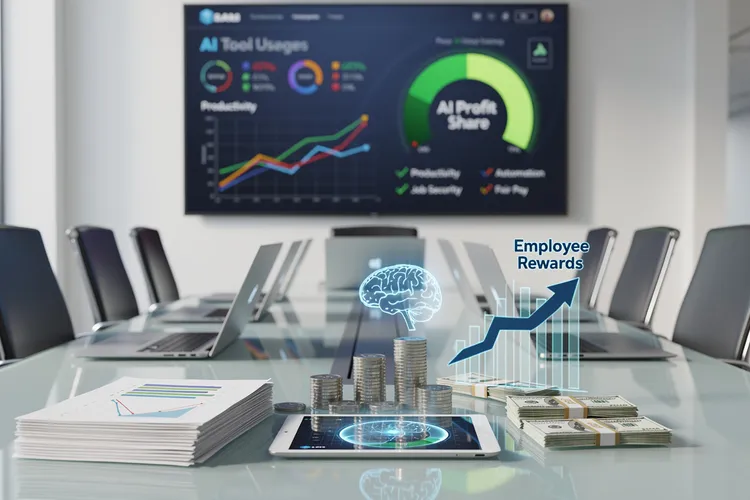
A company's innovative profit-sharing program ties employee compensation directly to AI tool usage and productivity gains, creating financial incentives that drive adoption rates far beyond industry norms while addressing worker concerns about automation and job security.

Posted on: by Samuel Johnson
Musk’s Abundance Dream vs. Amodei’s Job Apocalypse: AI’s Economic Reckoning

Musk’s Abundance Dream vs. Amodei’s Job Apocalypse: AI’s Economic Reckoning

Elon Musk predicts AI-driven abundance will render retirement savings irrelevant by 2030, while Anthropic's Dario Amodei warns of massive job losses and inequality demanding urgent fixes. Their visions clash on the path to AI's economic transformation.

Posted on: by Zoe Wright
The Agent-Native Revolution: How AI Agents Are Rewriting the Rules of Software Development

The Agent-Native Revolution: How AI Agents Are Rewriting the Rules of Software Development

The software industry is undergoing a fundamental transformation as agent-native architecture emerges, where AI agents rather than humans become the primary users of digital systems. This shift demands new approaches to development, security, and business operations.

Posted on: by Jack Chen
Uber’s Calculated Return to Greater China: Why Macau Marks a Pivotal Strategic Shift

Uber’s Calculated Return to Greater China: Why Macau Marks a Pivotal Strategic Shift

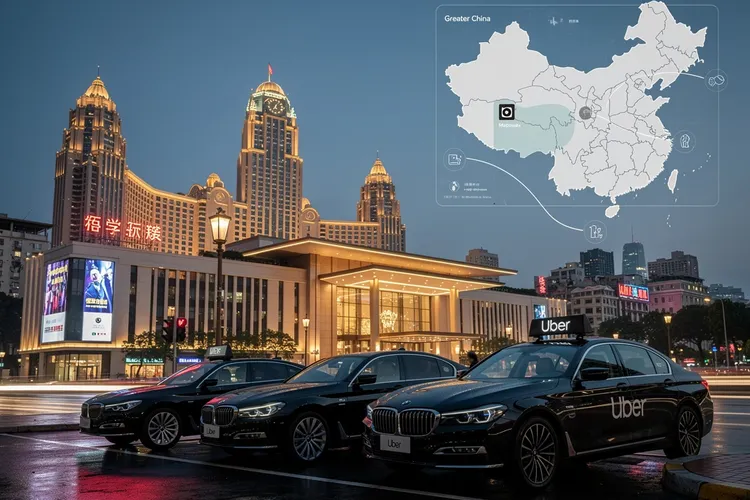
Uber's expansion into Macau marks its first new Asian market in years, representing a calculated test of whether the ride-hailing giant can succeed in Greater China after its costly 2016 retreat. The tourism-dependent territory offers unique advantages that could inform future regional strategy.

Posted on: by Zoe Wright
How Anthropic’s AI Is Driving NASA’s Mars Rover Through Uncharted Terrain

How Anthropic’s AI Is Driving NASA’s Mars Rover Through Uncharted Terrain

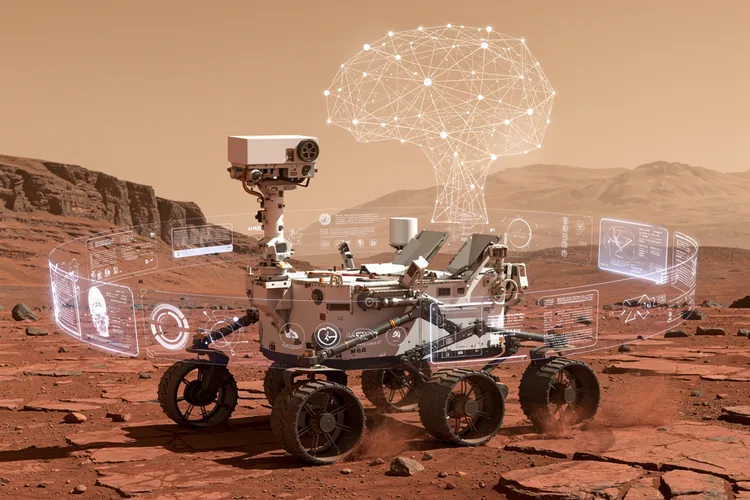
NASA's deployment of Anthropic's Claude AI to navigate the Perseverance rover on Mars marks a pivotal shift in space exploration, demonstrating how artificial intelligence can augment human decision-making in extraterrestrial missions and accelerate scientific discovery millions of miles from Earth.

Posted on: by Leo Rossi

Xiaomi SU7’s Forbidden Allure: Why U.S. Drivers Crave China’s EV Challenger

Zoe Wright | 2026-02-01
Xiaomi SU7’s Forbidden Allure: Why U.S. Drivers Crave China’s EV Challenger

In the frostbitten streets of New Jersey, Wall Street Journal columnist Joanna Stern spent two weeks piloting a Xiaomi SU7 Max, a Chinese electric vehicle barred from American showrooms by sky-high tariffs. What began as a favor from a friend morphed into a revelation: this sleek sedan, boasting smartphone-smooth software and blistering range, outshone her Ford Mustang Mach-E and a prior Tesla Model Y test. Stern’s verdict was stark—she no longer wanted American cars. Wall Street Journal .

Ford CEO Jim Farley echoed the sentiment after his own drive, declaring, “The competitive reality is that the Chinese are the 700-pound gorilla in the EV industry. There’s no real competition from Tesla, GM or Ford with what we’ve seen from China.” Farley’s team is now overhauling its lineup, kicking off with a $30,000 pickup to counter the onslaught. Tech YouTuber Marques Brownlee, after reviewing the SU7 Max, called it a $42,000 car that “feels like a $75,000” machine, poised to rattle U.S. and European brands if tariffs eased. Autoblog .

Tech Giant’s Seamless Drive

Xiaomi, master of gadgets from phones to vacuums, treats its SU7 like a rolling smartphone. The 16.1-inch HyperOS screen—Android-based and app-rich—delivers flawless Apple CarPlay. Navigation whispers through the driver’s headrest without muting tunes elsewhere. A magnetic control bar snaps on for physical buttons, ditching touchscreen woes that plague Tesla. Ecosystem perks abound: mirror a Xiaomi 17 Pro Max phone to the dash, dock tablets as rear climate panels, pair Bluetooth mics for karaoke, or chill drinks in a seat-hump fridge—all adjustable via screens.

On the road, the SU7 Max glides quieter and sportier than rivals. Stern’s cold-day 50-mile New York jaunt drained just 30% of its battery, smashing Mustang Mach-E expectations. Xiaomi claims 810 km (500 miles) range; Stern charged it home via adapter on her Level 2 setup. Advanced assistance smoothed Holland Tunnel crawls better than Ford’s system. Caveat: long-term reliability remains unproven, per analysts.

China’s Sales Juggernaut

In China, the SU7 is a phenomenon. Xiaomi delivered over 410,000 vehicles in 2025, smashing its 350,000 goal, with cumulative sales topping 500,000 by November in under 20 months. The sedan alone hit 258,164 units, eclipsing Tesla Model 3’s 200,361—a 29% edge. It led resale value at 88.91% retention after one year and topped NEV satisfaction for mid-large pure EVs two years running. Ultra variant sold 10,000 units in two hours, versus a 10,000 yearly target. Q3 EV revenue soared to 28.3 billion yuan, turning profitable via cost cuts and Ultra deliveries. Wikipedia ; CarNewsChina ; Electrive .

Yet challenges persist: Q1 2025 quality rankings placed it last among large BEV sedans, with high defect risks and complaints. A fatal crash fueled safety debates, though owners praise performance and comfort. Refreshed 2026 models garnered 100,000 pre-orders in 15 days, starting at 229,900 yuan ($33,000) with 902 km range and standard LiDAR, undercutting Tesla Model 3. CarNewsChina ; Bike-EV .

Tariff Fortress Holds Firm

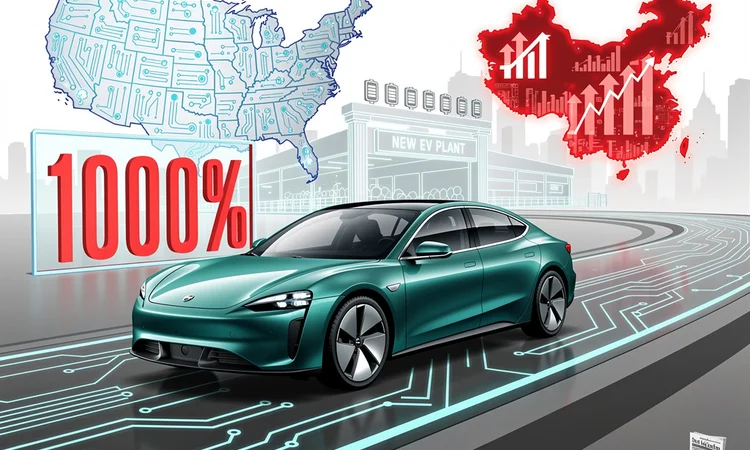
A 100% tariff on Chinese EVs, plus connected-tech bans, seals off U.S. access. President Trump, in a January 2026 Detroit Economic Club speech, cracked the door: “Let China come in” if they build here with American workers. Michael Dunne of Dunne Insights predicts a SU7-like car arriving via local plants within two years. “Chinese manufacturers are prepared and poised to pounce… through manufacturing here,” he said. Geely eyes U.S. entry; Xiaomi demurs for now, but tested SU7 Ultra in Germany ahead of 2027 Europe push. InsideEVs .

Trump’s past sanctions ironically birthed Xiaomi’s EV push, per CEO Lei Jun. No U.S. plans exist amid 100% duties, but parallel imports tease enthusiasts. Europe sees gray-market SU7s, though warranties falter outside China. Ford’s Farley, post-SU7 drive, admitted reluctance to return it, spurring redesigns. As Chinese EVs dominate Europe and Mexico, U.S. insiders brace for disruption if barriers shift.

Performance Pinnacle and Hurdles

SU7 Ultra dazzles: 1,548 hp, 0-100 km/h in 1.98 seconds, Nürburgring record of 7:04.957 for production EVs. It laps Porsche Taycan Turbo GT cheaper, at 529,900 yuan ($73,000). Base models start under $30,000 in China, premium-feeling versus Tesla Model Y at similar tags. HyperOS integrates deeply, but Mandarin apps limit non-speakers. Safety probes loom after incidents, yet satisfaction scores soar at 80/100.

U.S. entry hinges on factories skirting tariffs. Xiaomi’s 2025 surge—exceeding BYD in some metrics—signals intent. Stern’s infatuation mirrors Farley’s: Chinese EVs redefine value. As Trump weighs invites, Detroit watches warily, knowing a $43,000 SU7 could upend price wars.


Subscribe Newsletter

Subscribe to our newsletter and stay up to date with the latest news, updates, and exclusive offers. Join our community today!

Comments

Join the discussion and share your thoughts.

No comments yet. Be the first to comment.

Leave a Reply

Your email address will not be published.

Join Us

Share your perspective with confidence. Your experience could inform, inspire, and help someone live better.

Archives

Authors

More ...

Search NexaPress



