








Brian Armstrong, the combative CEO of Coinbase, has emerged as Wall Street’s most unwelcome rival in the race to redefine American finance. At the World Economic Forum in Davos last week, JPMorgan Chase CEO Jamie Dimon interrupted Armstrong’s coffee chat with former U.K. Prime Minister Tony Blair, jabbing a finger in his face and declaring, “You are full of s—.” Dimon accused Armstrong of lying on television about banks sabotaging digital asset legislation, according to people familiar with the exchange. The outburst underscored a deepening rift as crypto platforms challenge banks’ grip on consumer deposits.
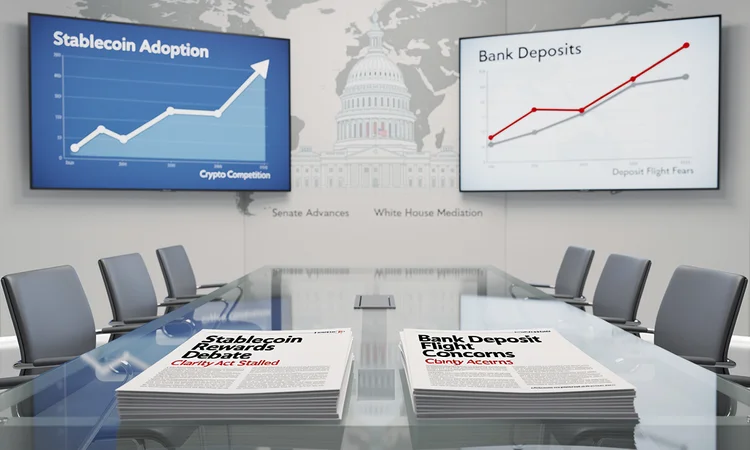
The flashpoint is the Clarity Act, a sweeping bill to establish rules for digital assets by dividing oversight between the Securities and Exchange Commission and the Commodity Futures Trading Commission. The House passed its version in July 2025 with bipartisan support, 294-134. But Senate progress stalled after Armstrong posted on X on January 14, 2026: “We’d rather have no bill than a bad bill.” Hours later, the Senate Banking Committee postponed a markup vote on a draft that would restrict crypto firms from offering rewards on stablecoins, potentially costing Coinbase billions. The Wall Street Journal detailed how Armstrong’s opposition shifted the debate from crypto versus banks to Coinbase versus banks, as noted by Ron Hammond, head of policy at Wintermute.
Armstrong doubled down in TV interviews, telling Bloomberg bank lobbyists were “out there trying to ban their competition” and accusing them of lending deposits “without their permission essentially.” At Davos, Bank of America CEO Brian Moynihan met Armstrong for 30 minutes, advising: “If you want to be a bank, just be a bank. If you want to be a money-market fund, just be a money-market fund.” Citigroup’s Jane Fraser granted less than a minute; Wells Fargo’s Charlie Scharf refused to engage.
Davos Sparks Open Hostility
Stablecoins, pegged to dollars and backed by reserves like U.S. Treasuries, lie at the heart of the dispute. The Genius Act, signed by President Trump last summer, legalized stablecoin issuance but barred issuers from paying interest directly. Exchanges like Coinbase, via its revenue-sharing deal with Circle on USDC, offer holders 3.5% rewards—far above banks’ under 0.1% on checking accounts. Banks warn this could siphon $6.6 trillion in deposits, gutting lending to businesses and community banks, per government estimates cited in lobbying.
Armstrong counters that stablecoins operate without fractional reserves, posing less risk than banks. “There’s no reason to prohibit paying interest to consumers,” he told The Wall Street Journal last year. On Fox Business, he envisioned Coinbase as a “bank replacement” super app for payments, stocks, and more. Banks demand crypto firms face equivalent scrutiny from the Federal Reserve and Office of the Comptroller of the Currency if offering deposit-like services.
Coinbase Chief Policy Officer Faryar Shirzad emphasized partnerships with banks like Citi and JPMorgan despite tensions. Yet the stakes are immense: S&P Global projected Coinbase’s stablecoin revenue exceeding $1 billion in 2025, per The Block .
Stablecoin Rewards Fuel Billions Battle
Armstrong, 43, co-founded Coinbase in 2012 after reading Satoshi Nakamoto’s Bitcoin whitepaper and struggling to wire money from Airbnb to South America. From a San Francisco apartment, it grew into a $55 billion public company post-2021 IPO, peaking at $100 billion and valuing his stake at $13 billion. Once shy—“Vulcan-like,” per ex-colleagues—he now leads crypto’s Washington charge, visiting Capitol Hill every two months in suits.
Coinbase funneled $75 million into 2024 elections via super PACs like Fairshake, now holding $193 million. Trump hailed a “new crypto era”; Armstrong attended the inauguration’s Crypto Ball with Snoop Dogg. Anthony Scaramucci of SkyBridge Capital called Coinbase “at the tip of the spear.” Survived 2022 crashes and Biden-era scrutiny, it positioned as America’s crypto gateway.
Post-Trump victory, the Genius Act boomed stablecoins. But Clarity Act drafts provoked: Senate versions ban passive yields on stablecoins for holding, allowing only activity-based rewards like payments or liquidity provision, per Reuters . Armstrong flagged other flaws: tokenized equity curbs, DeFi surveillance, SEC over CFTC power.
Coinbase’s Reluctant Warrior Rises
Industry splits emerged. a16z’s Chris Dixon urged advancing the bill despite issues; Ripple’s Brad Garlinghouse saw progress. Citron Research accused Armstrong of shielding Coinbase’s “moat.” Tether reportedly backs banks on yield bans, per X discussions. White House sources fumed at Coinbase’s “rug pull,” per podcaster Eleanor Terrett, prompting rift rumors. Armstrong denied it: “The White House sent Coinbase to see if we can go figure out a deal with the banks, which we’re currently working on,” he posted on X.
To break the deadlock, the White House schedules a February 2, 2026, meeting with bank and crypto groups, including Trump’s AI/crypto czar David Sacks and Coinbase’s Kara Calvert, per Reuters . Proposals include a new regulated class for reward-paying stablecoin entities or exemptions for loyalty programs.
Meanwhile, Senate Agriculture Committee advanced its version January 29, 2026, on party lines, 12-11, focusing on CFTC authority, per Fortune and CoinDesk . Democrats balked over lacking “grift” rules for Trump family conflicts. Banking markup looms larger, with Tim Scott (R-S.C.) pushing forward.
White House Brokers Fragile Truce
Armstrong proposed to Moynihan tighter standards for reward issuers, letting banks compete. Hilary Allen, American University law professor and crypto skeptic, called Coinbase’s veto power “truly shocking.” Banks like pilots with Coinbase on custody and stablecoins, per December 2025 CoinDesk . At Davos, Armstrong told CNBC: “Banks should have to play on a level playing field.”
The fight echoes broader tokenization momentum, with BlackRock’s Larry Fink eyeing opportunities. Sacks posted: “Passage of market structure legislation remains as close as it’s ever been.” As committees reconcile, the bill could redefine finance—or entrench incumbents if yields fall.
For industry insiders, Armstrong’s gambit tests crypto’s clout post-Trump. Banks fear erosion of their deposit franchise; Coinbase sees consumer choice paramount. With $193 million in PAC war chests eyeing 2026 midterms, the stablecoin skirmish signals finance’s next fault line.






Leave a Reply
Your email address will not be published.