
Inside Huawei Cloud’s Bold 2026 Partner Strategy: How Data Centers Become the Cornerstone of AI Infrastructure Expansion
Huawei Cloud's 2026 partner strategy positions data centers as strategic allies in AI infrastructure expansion, offering unprecedented revenue-sharing models and technical integration. The approach targets emerging markets with generous incentives while navigating geopolitical constraints and semiconductor restrictions.

Upwind’s Runtime Revolution: $250M Fuels $1.5B Cloud Security Unicorn
Upwind's $250 million Series B catapults it to $1.5 billion valuation, powering runtime-first cloud security amid 900% revenue surge. Backed by Bessemer and all-stars, the ex-Spot.io team targets AI-era threats for giants like Siemens and Roku.
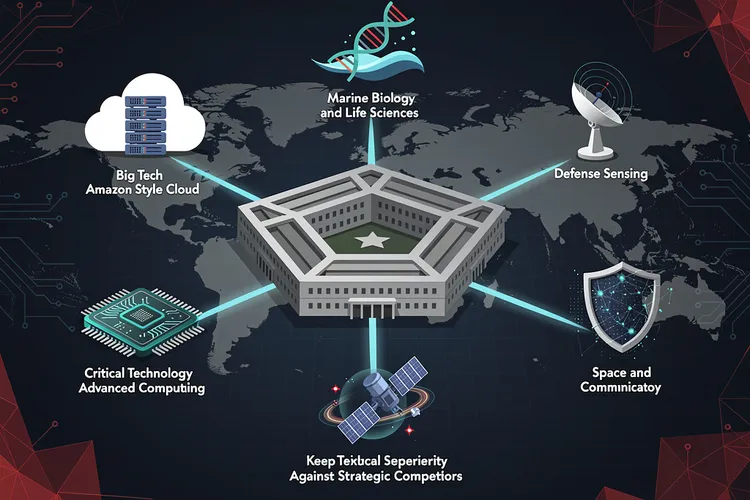
Pentagon’s New Technology Chiefs Signal Major Shift in Defense Innovation Strategy
The Pentagon's Chief Technology Officer has selected six defense technology veterans with diverse backgrounds—from Amazon executives to marine biologists—to lead Critical Technology Areas, signaling a major shift in how the Defense Department approaches innovation and maintains technological superiority against strategic competitors.

TikTok Finalizes US Restructuring Deal with Oracle, Avoids Ban
TikTok has finalized a deal to restructure its U.S. operations into a new entity majority-owned by American and allied investors, including Oracle, Silver Lake, and MGX, with ByteDance retaining a 20% stake. This hybrid model addresses data security concerns, avoids a nationwide ban, and sets a precedent for global tech sovereignty.

Finland Recruits Burned-Out US AI and Tech Talent with Visas, Better Balance
Finland is actively recruiting disillusioned U.S. tech professionals in AI and software by offering superior work-life balance, fast-track visas, and a high quality of life, aiming to attract talent by 2026 amid American burnout. This strategy challenges global tech dynamics, positioning Finland as an innovative haven.

AI Answers Demand New Rules: Why Google SEO Fails ChatGPT Citations
Mike King reveals why Google SEO tactics fail AI engines like ChatGPT, from query fan-out to HTTP 499 timeouts and chunking boosts. Case studies show 661% visibility gains via GEO.

India’s AI Classroom Revolution: Google’s Gemini Scales Where Silicon Valley Stumbles
India leads global Gemini usage for learning, teaching Google to scale AI amid 247 million students, state curricula, and access gaps. Partnerships and tools like JEE mocks position it as a worldwide proving ground.

Inside Elon Musk’s Audacious Plan to Fuse Rockets and AI: The SpaceX-xAI Megamerger
Elon Musk is merging SpaceX and xAI in a deal combining an $800 billion rocket manufacturer with a $230 billion AI startup, advancing his vision of space-based data centers while consolidating his technological empire ahead of a planned summer IPO.

DeepSeek’s Bold Push: AI Search and Agents Challenge Google, OpenAI
DeepSeek's January job postings reveal plans for a multilingual, multimodal AI search engine and persistent agents, intensifying rivalry with Google and OpenAI. Building on cost-efficient models like R1, the startup targets phone-first queries and autonomous task execution.

Dell Faces Federal Lawsuit Over Alleged 401(k) Mismanagement as Former Employees Claim Fiduciary Breaches
Former Dell employees have filed a federal lawsuit alleging systematic mismanagement of the company's 401(k) retirement plan, claiming fiduciary breaches under ERISA. The case raises critical questions about corporate responsibility for employee retirement security and could affect thousands of workers.
Google Launches Doppl: AI Virtual Try-Ons Transform Online Shopping
Google has launched Doppl, an AI-powered app enabling virtual clothing try-ons with personalized, dynamic models to reduce online shopping uncertainties and returns. Amid expanding AI shopping tools like agentic checkout, it faces regulatory scrutiny over data practices, yet promises to revolutionize e-commerce personalization and consumer behavior.
Waymo’s $5.6 Billion War Chest Signals Autonomous Vehicle Industry’s High-Stakes Race for Dominance
Waymo's $5.6 billion funding round positions Alphabet's autonomous vehicle unit for aggressive expansion across U.S. cities, underscoring both the technology's promise and the massive capital required to achieve scale in the robotaxi market amid industry consolidation.
U.S. Bank’s Leadership Transition: COO Shailesh Kotwal’s Retirement Signals Strategic Shift at Nation’s Fifth-Largest Bank
U.S. Bank's Chief Operating Officer Shailesh Kotwal is retiring this spring, marking a significant leadership transition at the nation's fifth-largest bank. His departure raises questions about succession planning and strategic direction as the institution navigates regulatory changes and technological disruption.
Shoppers’ Snapshots: How Retailers Harness UGC to Ignite Sales
Retailers wield user-generated content like photos and videos to eclipse ads, driving trust and sales surges. From Starbucks' viral contests to AI-boosted creatives yielding 126% conversion lifts, authentic UGC reshapes shopper journeys across online and in-store channels.
How Strategic On-Campus Employment Transforms Graduate Career Trajectories: Inside UWM’s Pipeline to Corporate Success
UWM master's student Uday Sanem secured a position at Johnson Controls before graduation through strategic on-campus employment and mentorship. His experience demonstrates how universities can leverage internal operations as career development incubators that produce job-ready graduates.
Trump’s Bilateral Gambit: How Washington Seized the India Trade Deal Before Brussels Could Celebrate
President Trump signed a comprehensive U.S.-India trade deal weeks after the EU finalized its own agreement with New Delhi, sparking competitive bilateralism that reshapes global trade dynamics. The $500 billion agreement prioritizes technology, services, and agriculture while establishing strategic frameworks to counter Chinese influence in the Indo-Pacific region.
TikTok’s U.S. Pivot: Precise Location, Immigration Data Spark Privacy Firestorm
TikTok's ownership shift to U.S.-led TikTok USDS enables precise location tracking and flags sensitive data like immigration status, sparking user panic amid CCPA compliance. Experts call it standard legalese, but timing fuels distrust.
Inside Canada Computers’ Security Breach: A Forensic Analysis of Retail Technology Vulnerabilities
Canada Computers & Electronics disclosed a significant data breach exposing customer names, email addresses, billing information, and partial payment data. The incident highlights persistent cybersecurity vulnerabilities among mid-sized technology retailers operating with constrained security resources while facing sophisticated threats.
Google Unveils Universal Commerce Protocol for AI-Powered Shopping
Google unveiled the Universal Commerce Protocol at the 2026 NRF conference, an open standard developed with partners like Shopify and Visa to enable AI agents for seamless, agentic shopping—from discovery to transactions. This initiative aims to standardize e-commerce, boost personalization, and address fragmentation, positioning Google as a leader in retail innovation.
Google’s Search Vault: Reid Affidavit Exposes Perils of Forced Data Handover
Elizabeth Reid's affidavit reveals Google's fears: antitrust remedies force-sharing of search index, rankings, and user data, risking IP theft, spam floods, and privacy collapses that could degrade results and user trust forever.
Scammers Sell Fake DDR5 as Old RAM Amid AI-Fueled Shortage
Amid a global memory chip shortage inflating RAM prices due to AI demand, scammers are selling counterfeit DDR5 as outdated modules via online platforms, exploiting desperate buyers. Tactics include tampered packaging and firmware alterations. Consumers and businesses face financial losses, urging purchases from trusted sources and verification tools for protection.

Known for clear analysis, Leo Rossi follows developer productivity and the people building it. Their approach combines editorial reviews backed by user research. They frequently translate research into action for founders and operators, prioritizing clarity over buzzwords. They value transparent sourcing and prefer primary data when it is available. They explore how policies, markets, and infrastructure intersect to create second‑order effects. They often cover how organizations respond to change, from process redesign to technology adoption. Readers appreciate their ability to connect strategic goals with everyday workflows. They believe good analysis should be specific, testable, and useful to practitioners. Their perspective is shaped by interviews across engineering, operations, and leadership roles. They write about both the promise and the cost of transformation, including risks that are easy to overlook. Their reporting blends qualitative insight with data, highlighting what actually changes decision‑making. They tend to favor small experiments over sweeping predictions. Readers return for the clarity, the caution, and the actionable takeaways.
View ProfileJoin Us
Share your perspective with confidence. Your experience could inform, inspire, and help someone live better.
Archives
Authors
More ...-
 Vivian Stewart 57 articles
As a writer, Vivian Stewart covers retail operations with an eye for detail. They work through comparative reviews and hands‑on testing to make complex topics approachable. They believe good analysis should be specific, testable, and useful to practitioners. They frequently translate research into action for marketing teams, prioritizing clarity over buzzwords. Their coverage includes guidance for teams under resource or time constraints. They explore how policies, markets, and infrastructure intersect to create second‑order effects. They write about both the promise and the cost of transformation, including risks that are easy to overlook. They frequently compare approaches across industries to surface patterns that travel well. Readers appreciate their ability to connect strategic goals with everyday workflows. Their reporting blends qualitative insight with data, highlighting what actually changes decision‑making. They maintain a balanced tone, separating speculation from evidence. They are known for dissecting tools and strategies that improve execution without adding complexity. They emphasize decision‑making under uncertainty and imperfect data. Their work aims to be useful first, timely second.
-
 Emily Scott 68 articles
As a writer, Emily Scott covers consumer behavior with an eye for detail. They work through clear frameworks, case studies, and practical checklists to make complex topics approachable. They value transparent sourcing and prefer primary data when it is available. A recurring theme in their writing is how teams build repeatable systems and measure impact over time. They often cover how organizations respond to change, from process redesign to technology adoption. Their reporting blends qualitative insight with data, highlighting what actually changes decision‑making. They emphasize responsible innovation and the constraints teams face when scaling products or services. They maintain a balanced tone, separating speculation from evidence. Their coverage includes guidance for teams under resource or time constraints. Readers appreciate their ability to connect strategic goals with everyday workflows. They write about both the promise and the cost of transformation, including risks that are easy to overlook. They tend to favor small experiments over sweeping predictions. They value transparency, practical advice, and honest uncertainty.
-
 Emily Chen 63 articles
Known for clear analysis, Emily Chen follows retail operations and the people building it. They work through clear frameworks, case studies, and practical checklists to make complex topics approachable. They often cover how organizations respond to change, from process redesign to technology adoption. Readers appreciate their ability to connect strategic goals with everyday workflows. They examine how customer expectations evolve and how organizations adapt to meet them. They value transparent sourcing and prefer primary data when it is available. A recurring theme in their writing is how teams build repeatable systems and measure impact over time. They also highlight cultural factors that determine whether change sticks. They avoid buzzwords, focusing instead on outcomes, incentives, and the human side of technology. They explore how policies, markets, and infrastructure intersect to create second‑order effects. They believe good analysis should be specific, testable, and useful to practitioners. They tend to favor small experiments over sweeping predictions. They value transparency, practical advice, and honest uncertainty.
-
 Layla Reed 56 articles
Known for clear analysis, Layla Reed follows retail operations and the people building it. They work through long‑form narratives grounded in real‑world metrics to make complex topics approachable. They believe good analysis should be specific, testable, and useful to practitioners. They avoid buzzwords, focusing instead on outcomes, incentives, and the human side of technology. They explore how policies, markets, and infrastructure intersect to create second‑order effects. They frequently compare approaches across industries to surface patterns that travel well. They are known for dissecting tools and strategies that improve execution without adding complexity. A recurring theme in their writing is how teams build repeatable systems and measure impact over time. Their reporting blends qualitative insight with data, highlighting what actually changes decision‑making. They often cover how organizations respond to change, from process redesign to technology adoption. They maintain a balanced tone, separating speculation from evidence. Outside of publishing, they track public datasets and industry benchmarks. Readers return for the clarity, the caution, and the actionable takeaways.
-
 Stella Evans 57 articles
Stella Evans is a journalist who focuses on AI deployment. They work through trend monitoring with careful context and caveats to make complex topics approachable. They believe good analysis should be specific, testable, and useful to practitioners. They examine how customer expectations evolve and how organizations adapt to meet them. Their reporting blends qualitative insight with data, highlighting what actually changes decision‑making. Readers appreciate their ability to connect strategic goals with everyday workflows. They write about both the promise and the cost of transformation, including risks that are easy to overlook. They also highlight cultural factors that determine whether change sticks. Their coverage includes guidance for teams under resource or time constraints. Their perspective is shaped by interviews across engineering, operations, and leadership roles. They often cover how organizations respond to change, from process redesign to technology adoption. They maintain a balanced tone, separating speculation from evidence. They are interested in the economics of scale and operational resilience. They prefer evidence over hype and explain trade‑offs plainly.
-
 Micah Shaw 60 articles
Micah Shaw specializes in developer productivity and reports on the systems behind modern business. Their approach combines interviews with operators and data‑backed analysis. Their perspective is shaped by interviews across engineering, operations, and leadership roles. Readers appreciate their ability to connect strategic goals with everyday workflows. They frequently compare approaches across industries to surface patterns that travel well. Their reporting blends qualitative insight with data, highlighting what actually changes decision‑making. They maintain a balanced tone, separating speculation from evidence. Their coverage includes guidance for teams under resource or time constraints. They emphasize responsible innovation and the constraints teams face when scaling products or services. They are known for dissecting tools and strategies that improve execution without adding complexity. They look for overlooked details that differentiate sustainable success from short‑term wins. A recurring theme in their writing is how teams build repeatable systems and measure impact over time. They watch the policy landscape closely when it affects product strategy. Their work aims to be useful first, timely second.