







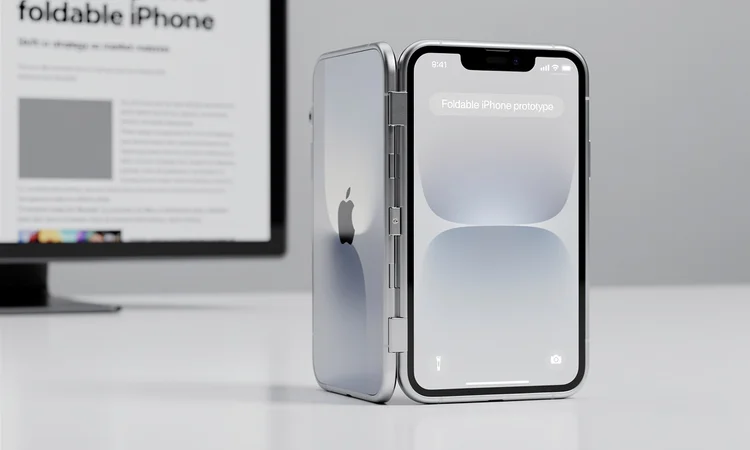
After years of speculation and patent filings, Apple appears to be seriously exploring entry into the foldable smartphone market with a clamshell-style device that would mark the company’s most significant iPhone form factor evolution since the introduction of larger displays. According to recent reporting from MacRumors , the tech giant has intensified its research and development efforts around a flip-style iPhone, joining competitors Samsung, Motorola, and others who have already established positions in this emerging category.
The move represents a notable shift for a company that has traditionally waited for technologies to mature before adoption. Unlike Apple’s typical pattern of perfecting existing innovations rather than pioneering new form factors, a foldable iPhone would demonstrate the company’s recognition that consumer preferences may be evolving beyond the traditional smartphone slab design. Industry analysts suggest this exploration comes at a critical juncture when iPhone sales growth has plateaued in mature markets, making new form factors an attractive avenue for reinvigorating consumer interest and justifying premium pricing.
Engineering Challenges Behind Cupertino’s Hesitation
Apple’s delayed entry into foldables reflects the company’s exacting standards for display technology and durability. The primary technical hurdle involves creating a folding display that meets Apple’s quality benchmarks while withstanding hundreds of thousands of fold cycles without degradation. Current foldable devices from competitors have faced criticism for visible crease lines, display fragility, and hinge mechanisms that accumulate debris—issues that would be anathema to Apple’s reputation for premium build quality.
According to supply chain sources familiar with Apple’s component testing, the company has been working with multiple display manufacturers, including Samsung Display and LG Display, to develop ultra-thin glass solutions that can fold without cracking. The challenge extends beyond the display itself to include the complex hinge mechanism, which must be both robust and thin enough to maintain the device’s premium aesthetic. Apple’s engineers are reportedly examining materials and designs that would allow the device to fold completely flat while maintaining water and dust resistance—features standard in current iPhone models but notoriously difficult to implement in foldable designs.
Market Dynamics Driving Apple’s Foldable Calculus
The foldable smartphone segment, while still niche, has demonstrated consistent growth that cannot be ignored. Samsung has sold millions of units of its Galaxy Z Flip series, establishing that a significant consumer segment values compactness and novelty enough to accept higher price points and some compromises in durability. The clamshell form factor, in particular, has resonated with users who appreciate the ability to reduce a full-sized smartphone to a more pocketable square when folded.
For Apple, the business case for a flip iPhone extends beyond simply matching competitors. The device could command super-premium pricing—potentially $1,500 or higher—targeting fashion-conscious consumers and early adopters willing to pay for distinctive design. This pricing strategy would align with Apple’s ongoing effort to increase average selling prices even as unit sales growth moderates. Furthermore, a foldable iPhone could reinvigorate upgrade cycles among existing iPhone users who have extended the replacement intervals for their devices, seeing insufficient differentiation in recent models to justify regular upgrades.
Design Philosophy Meets Practical Constraints
Apple’s approach to a flip iPhone would likely differ substantially from existing clamshell foldables in the market. The company’s design language emphasizes simplicity and intuitiveness, which could translate to a more streamlined hinge mechanism and potentially innovative solutions to the external display question. Current flip phones feature small cover screens that provide limited functionality when folded; Apple would need to determine whether to follow this pattern or develop a more capable external interface that maintains the device’s usability without requiring users to unfold it for routine tasks.
The software experience presents equally complex challenges. iOS would require significant modifications to handle the transition between folded and unfolded states seamlessly. Apple’s ecosystem advantage could prove decisive here—the company’s control over both hardware and software would enable optimizations impossible for Android-based competitors. Features like Continuity, which allows tasks to move between Apple devices, could be adapted to create fluid transitions between the phone’s folded and unfolded states, potentially offering a more polished experience than current foldable implementations.
Supply Chain Implications and Manufacturing Complexity
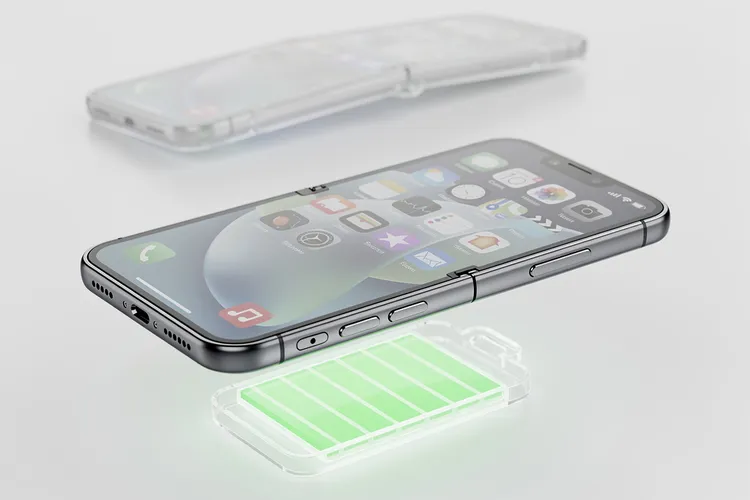
Manufacturing a foldable iPhone at Apple’s typical volumes would require substantial supply chain coordination and investment. The company would need to secure sufficient quantities of specialized components, including flexible OLED panels, custom hinges, and modified battery configurations that accommodate the folding mechanism. Unlike traditional iPhones, which benefit from highly optimized, high-volume production processes refined over years, a foldable model would initially face lower yields and higher per-unit costs.
These manufacturing challenges explain why Apple has reportedly been conducting extensive prototype testing and supplier qualification processes. The company cannot afford the quality control issues that have plagued some competitor foldables, including screen failures and hinge problems. Apple’s reputation rests on delivering products that work reliably over multi-year ownership periods, setting a higher bar than the early-adopter tolerance that has characterized the foldable market thus far. Any foldable iPhone would need to match or exceed the durability standards of conventional iPhone models, including resistance to water, dust, and accidental damage.
Strategic Timing and Market Positioning
The timing of Apple’s intensified foldable exploration appears deliberate. By waiting until the technology has matured through several generations of competitor products, Apple can learn from others’ mistakes while entering a market that has established proof of concept but remains far from saturated. This strategy mirrors Apple’s historical approach with technologies like smartwatches and wireless earbuds, where the company arrived after pioneers but quickly dominated through superior execution and ecosystem integration.
However, the window for advantageous entry may be narrowing. As foldable technology becomes more commonplace and competitors continue refining their offerings, the novelty factor that could justify Apple’s premium pricing may diminish. Additionally, if foldables eventually become the expected standard rather than a premium alternative, Apple risks appearing behind the curve—a perception the company has carefully avoided throughout its modern history. The calculus involves balancing the risks of premature entry against the dangers of being perceived as a follower rather than a leader in smartphone innovation.
Ecosystem Integration as Competitive Differentiator
Where Apple could most significantly differentiate a flip iPhone is through integration with its broader ecosystem of devices and services. The company’s installed base of over two billion active devices creates opportunities for unique features unavailable to competitors. Imagine a flip iPhone that seamlessly transitions tasks to an iPad or Mac when unfolded, or uses the folded state to trigger specific automation routines through Shortcuts. The device could serve as a more capable camera remote for other Apple devices, leveraging its compact folded form and external display.
The health and fitness capabilities that have become central to Apple’s value proposition could also benefit from a foldable form factor. A more compact device might encourage users to carry their phones during activities where bulk is a deterrent, potentially improving the accuracy and completeness of health data collection. Apple’s focus on privacy and on-device processing could enable features that competitors cannot match, such as secure authentication methods that work reliably across both folded and unfolded states without compromising user data.
Financial Implications for Apple’s Business Model
From a financial perspective, a flip iPhone represents both opportunity and risk. The potential for higher average selling prices and renewed upgrade momentum could provide meaningful revenue growth, particularly important as Apple seeks to offset slowing growth in its core iPhone business. Analysts estimate that even capturing a modest share of the premium smartphone market with a foldable device could add billions to Apple’s annual revenue, with the company’s typically strong margins on hardware potentially expanding further on a super-premium product.
Conversely, the development costs associated with bringing a foldable iPhone to market are substantial. Apple would need to invest heavily in new manufacturing capabilities, component development, and quality assurance processes. If the product fails to achieve sufficient scale, these investments might not generate adequate returns. There is also the risk of cannibalization—some buyers of a flip iPhone might otherwise have purchased higher-end conventional iPhone models, meaning the net revenue impact could be less than projections suggest. Apple’s management must weigh these financial considerations against the strategic imperative of maintaining its innovation leadership and brand prestige.
The Path Forward Remains Uncertain
Despite the intensified exploration reported by MacRumors and other industry observers, Apple has characteristically remained silent on its foldable plans. The company’s product development process is famously secretive, with numerous prototypes and concepts never reaching consumers. The existence of flip iPhone prototypes and supplier discussions does not guarantee a commercial product will emerge, particularly given Apple’s willingness to abandon projects that fail to meet its standards, regardless of investment levels.
What seems increasingly clear is that Apple recognizes foldable smartphones as a category worthy of serious consideration rather than a passing fad. Whether that recognition translates into a product launch depends on the company’s ability to solve the technical challenges in ways that align with its design philosophy and quality standards. For an industry watching Apple’s every move, the question is no longer whether the company is exploring foldables, but whether its exploration will yield a product that redefines the category as the iPhone once redefined smartphones themselves. The answer to that question will have profound implications not just for Apple, but for the entire smartphone industry’s evolution over the coming decade.






Leave a Reply
Your email address will not be published.