






After more than three decades at the helm of the Linux kernel project, Linus Torvalds has finally addressed the elephant in the room that has concerned the technology industry for years: what happens when he’s no longer able to lead the development of the world’s most widely deployed operating system kernel? The answer, revealed at the recent Open Source Summit in Vienna, represents a carefully considered succession plan that aims to preserve the stability and direction of a project that powers everything from smartphones to supercomputers.
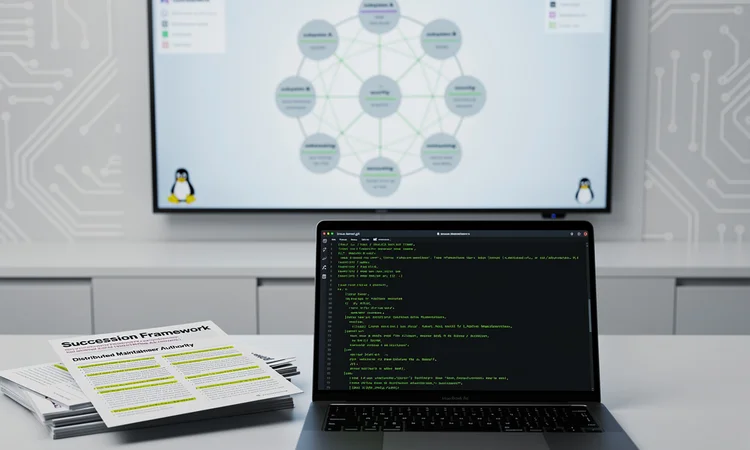
According to TechRadar , Torvalds acknowledged the aging demographics of the kernel maintainer community while outlining a transition framework that has been quietly taking shape. The plan doesn’t designate a single successor but instead relies on a distributed leadership model that reflects the collaborative nature of open source development itself. This approach seeks to avoid the pitfalls of personality-driven leadership transitions that have plagued other major technology projects.
The Linux kernel powers approximately 90% of the public cloud infrastructure, dominates the mobile market through Android, and serves as the foundation for countless embedded systems worldwide. Its economic impact is measured in trillions of dollars, making the question of leadership succession not merely a technical concern but a matter of global technological stability. The stakes couldn’t be higher for an industry that has built its infrastructure on this single project’s continued health and direction.
The Architecture of Succession: A Multi-Layered Approach
Torvalds has emphasized that the succession plan isn’t about finding “another Linus” but rather about strengthening the existing maintainer hierarchy that has evolved over decades. The kernel development process already operates through a network of subsystem maintainers who handle specific areas of the codebase, from networking to file systems to device drivers. These maintainers, many of whom have been in their roles for over a decade, form the backbone of the project’s technical decision-making apparatus.
Greg Kroah-Hartman, who maintains the stable kernel releases and serves as one of the most prominent figures in kernel development after Torvalds himself, has been frequently mentioned as a likely candidate to assume greater coordinating responsibilities. However, the succession framework appears designed to distribute rather than concentrate authority, recognizing that no single individual can replicate Torvalds’ unique combination of technical expertise, institutional knowledge, and community standing.
Addressing the Grey Hair Problem: Demographic Challenges in Open Source
The kernel community’s demographics present a unique challenge that extends beyond simple succession planning. Many of the project’s most experienced maintainers are approaching or have reached retirement age, creating what Torvalds has candidly referred to as the “grey and old” problem. This generational issue isn’t unique to Linux but is particularly acute in a project where institutional knowledge and historical context play such critical roles in decision-making.
Efforts to recruit and retain younger developers have met with mixed success. The kernel development process, with its exacting standards, complex review procedures, and steep learning curve, can be intimidating for newcomers. The project has implemented mentorship programs and improved documentation to lower barriers to entry, but the fundamental challenge remains: kernel development requires a level of commitment and expertise that takes years to develop, and the modern technology job market offers many paths that appear more immediately rewarding.
The Technical Governance Model: How Decisions Flow Through the Hierarchy
Understanding the succession plan requires understanding how the kernel development process currently functions. Code changes flow upward through a hierarchical structure of maintainers, each responsible for reviewing and accepting patches in their domain. Torvalds sits at the top of this hierarchy, making final decisions on what enters the mainline kernel and serving as the ultimate arbiter of technical disputes. His role combines technical judgment with community management, requiring both deep expertise and diplomatic skill.
The succession framework preserves this hierarchical structure while acknowledging that Torvalds’ coordinating role could be distributed among a small group of senior maintainers. This approach mirrors governance models used by other successful open source projects, such as the Python Software Foundation’s steering council model implemented after Guido van Rossum stepped down as Python’s Benevolent Dictator for Life. The key difference is that Linux’s far greater complexity and broader impact make its transition potentially more disruptive.
Corporate Stakes and Community Independence
The Linux kernel’s development is heavily supported by corporate contributors, with companies like Intel, Red Hat, Google, and Huawei employing many of the project’s most active developers. This corporate involvement raises questions about how succession might affect the project’s independence and direction. The existing governance structure, with Torvalds as a neutral arbiter not beholden to any single corporate interest, has helped maintain community trust and prevented any one company from dominating the project’s direction.
The Linux Foundation, the nonprofit organization that employs Torvalds and provides infrastructure support for kernel development, plays a supporting rather than governing role in the project’s technical decisions. This separation between organizational support and technical governance has been crucial to maintaining the kernel’s independence, and any succession plan must preserve this balance. The challenge lies in ensuring that future leadership maintains the same neutrality and resistance to corporate pressure that Torvalds has demonstrated throughout his tenure.
Learning from History: Open Source Succession Precedents
The technology industry has witnessed both successful and problematic leadership transitions in major open source projects. The Python community’s transition after van Rossum’s departure initially caused uncertainty but ultimately resulted in a more distributed governance model that has proven effective. Conversely, projects like OpenOffice struggled with leadership transitions and community fractures, leading to forks like LibreOffice that fragmented developer resources and user bases.
The MySQL database project’s transition through corporate acquisitions and the subsequent creation of MariaDB as a community fork illustrates the risks when commercial interests intersect with open source governance. The Linux kernel’s succession plan appears designed to avoid such fractures by maintaining continuity in both technical direction and community governance structures. The emphasis on strengthening existing maintainer relationships rather than imposing new governance frameworks suggests a conservative approach that prioritizes stability over innovation in process.
The Role of Technical Excellence in Leadership Selection
Torvalds has consistently emphasized that technical merit must remain the primary criterion for leadership positions in kernel development. This meritocratic approach has been both a strength and a source of controversy, with critics arguing that it can perpetuate demographic imbalances and create barriers for underrepresented groups. The succession plan must navigate these tensions while maintaining the technical standards that have made the Linux kernel remarkably stable and efficient despite its enormous complexity.
The challenge of identifying future leaders goes beyond technical ability to encompass communication skills, community respect, and the ability to make difficult decisions that balance competing interests. Torvalds’ sometimes controversial communication style has evolved over the years, and expectations for future leaders may differ from the norms established during the project’s early decades. The kernel community has worked to develop more inclusive communication guidelines, and future leaders will need to embody these evolving standards while maintaining the technical rigor that defines the project.
Timeline and Transition Mechanics
While Torvalds has made clear that he has no immediate plans to retire, the succession framework provides a roadmap for gradual transition rather than abrupt change. This approach allows for knowledge transfer and adjustment periods that can help prevent the disruption that often accompanies leadership changes in complex technical projects. The existing maintainer structure already distributes much of the day-to-day decision-making, meaning that Torvalds’ eventual departure, while significant, need not create a vacuum in project leadership.
The practical mechanics of succession remain somewhat undefined, reflecting the organic nature of open source governance. Rather than establishing rigid procedures or formal voting mechanisms, the plan relies on consensus-building among senior maintainers and natural evolution of responsibilities. This flexibility allows the community to adapt to circumstances that cannot be fully anticipated, but it also creates some uncertainty about how conflicts or disagreements might be resolved in a post-Torvalds environment.
Global Implications for Technology Infrastructure
The Linux kernel’s ubiquity means that its governance affects global technology infrastructure in ways that extend far beyond the open source community. Governments, financial institutions, healthcare systems, and critical infrastructure operators all depend on Linux-based systems, making the project’s stability a matter of national and international security. The succession plan’s success or failure could have ripple effects throughout the technology sector and beyond.
International tensions and the increasing politicization of technology development add additional complexity to succession planning. The kernel community has worked to maintain its international character and resist pressure to exclude contributors based on nationality or political considerations, but these pressures are likely to intensify. Future leadership will need to navigate these challenges while maintaining the project’s technical focus and global collaboration model that has been essential to its success.
The Path Forward: Preparing for Inevitable Change
As the Linux kernel enters its fourth decade, the succession plan represents an acknowledgment that even the most successful projects must prepare for leadership transitions. The distributed model being implemented reflects both the technical architecture of the kernel itself and the collaborative ethos of open source development. By strengthening existing structures rather than creating new ones, the plan aims to ensure continuity while allowing for evolution.
The coming years will test whether this approach can successfully navigate the transition from founder-led development to community-governed maintenance. The kernel community’s ability to maintain technical excellence, manage corporate interests, recruit new talent, and preserve its culture of rigorous peer review will determine whether Linux continues to dominate computing infrastructure for decades to come. For an industry built on Linux’s foundation, the stakes in getting succession right could not be higher, making this quiet planning process one of the most consequential developments in contemporary technology governance.






Leave a Reply
Your email address will not be published.