







A groundbreaking collaboration between researchers at The Ohio State University and the Indian Institute of Technology Madras has produced an artificial intelligence framework that promises to dramatically accelerate the identification of potential drug candidates, marking a significant advancement in pharmaceutical research methodology. The partnership, which bridges continents and combines expertise from two leading research institutions, represents a new model for international scientific cooperation in the age of machine learning.
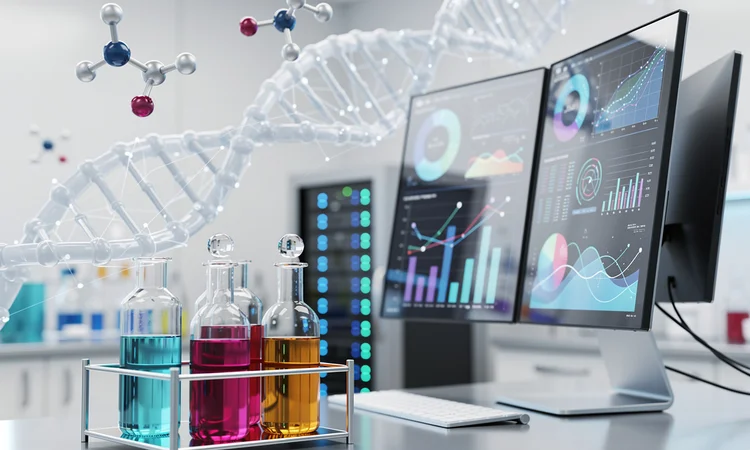
According to The Ohio State University , the AI-powered tool leverages advanced machine learning algorithms to analyze molecular structures and predict their potential effectiveness as therapeutic compounds. This development comes at a critical juncture when pharmaceutical companies face mounting pressure to reduce the time and cost associated with bringing new drugs to market, a process that traditionally takes over a decade and costs billions of dollars.
The framework distinguishes itself from existing computational drug discovery methods by incorporating a more sophisticated approach to molecular property prediction. Rather than relying solely on structural similarity to known drugs, the system employs deep learning techniques to identify subtle patterns in molecular behavior that might indicate therapeutic potential. This nuanced approach allows researchers to explore chemical spaces that might otherwise be overlooked using conventional screening methods.
Bridging Computational Power with Pharmaceutical Expertise
The collaboration between Ohio State and IIT Madras brings together complementary strengths that have proven essential to the project’s success. Ohio State’s researchers contributed extensive pharmaceutical knowledge and access to biological testing facilities, while IIT Madras provided cutting-edge expertise in artificial intelligence and machine learning architecture. This division of labor has enabled the team to develop a tool that is both scientifically rigorous and practically applicable to real-world drug discovery challenges.
The AI framework utilizes a multi-layered neural network architecture trained on vast databases of molecular structures and their known biological activities. By learning from millions of existing data points, the system can generate predictions about previously untested compounds with remarkable accuracy. The researchers have reported that their tool can evaluate thousands of potential drug candidates in the time it would take traditional methods to assess just a handful, representing an exponential increase in screening efficiency.
Addressing the Pharmaceutical Industry’s Most Pressing Challenges
The pharmaceutical sector has long grappled with the challenge of attrition rates in drug development, where the vast majority of compounds that enter clinical trials ultimately fail to receive regulatory approval. This high failure rate contributes significantly to the astronomical costs of drug development and limits the number of new therapies that reach patients. The AI framework developed by the Ohio State-IIT Madras team specifically addresses this problem by improving the quality of compounds selected for further development.
By identifying potential safety issues and efficacy concerns earlier in the discovery process, the tool helps researchers avoid investing resources in compounds likely to fail in later stages. This predictive capability is particularly valuable in an era when pharmaceutical companies are increasingly focused on precision medicine and targeted therapies, which require even more sophisticated understanding of how specific molecular structures interact with biological systems.
Technical Innovation in Molecular Modeling
At the core of the framework lies an innovative approach to representing molecular structures in a format that machine learning algorithms can effectively process. Traditional computational chemistry methods often struggle to capture the full complexity of three-dimensional molecular interactions, but the new AI system employs advanced graph neural networks that can model these relationships with unprecedented detail. This technical breakthrough enables the system to make more accurate predictions about how potential drug molecules will behave in biological environments.
The researchers have also incorporated transfer learning techniques, allowing the AI model to apply knowledge gained from studying one class of therapeutic compounds to accelerate discovery in entirely different therapeutic areas. This cross-pollination of insights means that advances in cancer drug discovery, for example, can inform and improve the search for treatments in cardiovascular disease or neurological disorders. The framework’s flexibility and adaptability make it a versatile tool that can be applied across multiple disease areas and drug modalities.
Implications for Global Health and Access to Medicines
Beyond its immediate applications in pharmaceutical research, the international nature of this collaboration carries important implications for global health equity. By demonstrating the value of partnerships between institutions in developed and emerging economies, the project provides a model for how scientific knowledge and technological capabilities can be shared to address health challenges that affect populations worldwide. The involvement of IIT Madras, one of India’s premier research institutions, also reflects the growing role of Asian countries in leading-edge pharmaceutical innovation.
The reduced costs and accelerated timelines enabled by AI-powered drug discovery could prove particularly beneficial for developing treatments for neglected diseases that primarily affect populations in lower-income countries. Pharmaceutical companies have historically been reluctant to invest in these therapeutic areas due to limited profit potential, but more efficient discovery methods could make such research economically viable while simultaneously addressing critical unmet medical needs.
Validation and Real-World Applications
The research team has already begun validating their AI framework through partnerships with pharmaceutical companies and academic research groups. Early results suggest that compounds identified by the system show promising activity in laboratory tests, though the researchers emphasize that extensive additional work remains before any AI-discovered drugs reach clinical trials. The validation process involves not only confirming the biological activity of predicted compounds but also ensuring they meet acceptable standards for safety, stability, and manufacturability.
Several pilot projects are currently underway to apply the framework to specific therapeutic challenges, including the search for new antibiotics to combat drug-resistant bacteria and the development of more effective treatments for chronic diseases. These real-world applications will provide crucial data about the system’s practical utility and help refine its algorithms to improve future predictions. The researchers have indicated their intention to make certain aspects of the framework available to the broader scientific community, potentially accelerating adoption and further innovation in AI-powered drug discovery.
Navigating Regulatory and Ethical Considerations
As AI tools become increasingly prevalent in pharmaceutical research, regulatory agencies worldwide are grappling with how to evaluate and approve drugs discovered through machine learning methods. The U.S. Food and Drug Administration and European Medicines Agency have begun developing frameworks for assessing AI-discovered compounds, but many questions remain about the appropriate standards of evidence and validation required. The Ohio State-IIT Madras team has engaged with regulatory experts to ensure their framework produces data and documentation that will meet evolving regulatory expectations.
Ethical considerations also loom large in AI-powered drug discovery, particularly regarding data privacy, algorithmic bias, and equitable access to resulting therapies. The researchers have implemented safeguards to protect sensitive biological and chemical data used in training their models, and they have worked to ensure their training datasets represent diverse populations and disease states. These efforts reflect growing awareness within the scientific community that AI tools must be developed and deployed responsibly to maximize their benefits while minimizing potential harms.
Future Directions and Expanding Capabilities
Looking ahead, the research team plans to expand their framework’s capabilities to address additional aspects of the drug discovery process, including optimization of drug formulations, prediction of drug-drug interactions, and identification of potential biomarkers for patient selection in clinical trials. These enhancements would create a more comprehensive AI-powered platform capable of supporting pharmaceutical development from initial discovery through clinical validation.
The collaboration between Ohio State and IIT Madras continues to evolve, with both institutions committing resources to further development and refinement of their AI framework. Additional academic and industry partners are being recruited to contribute expertise and resources, potentially transforming the bilateral partnership into a global consortium focused on advancing AI applications in pharmaceutical science. This expansion reflects confidence in the framework’s potential and recognition that the most challenging problems in drug discovery will require sustained, coordinated efforts across institutions and borders. As the pharmaceutical industry continues its digital transformation, initiatives like this international collaboration may well represent the future of how new medicines are discovered and developed.






Leave a Reply
Your email address will not be published.