









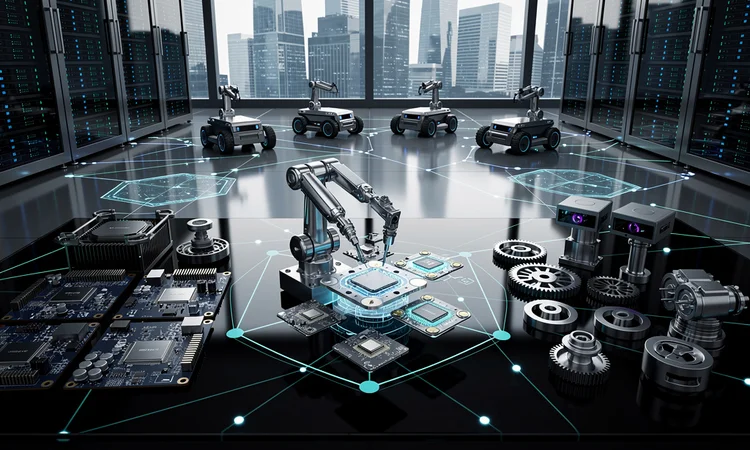
The artificial intelligence robotics sector has long been dominated by household names like Nvidia, Microsoft, and Tesla, but a fundamental shift is underway that sophisticated investors cannot afford to ignore. While mega-cap technology companies capture headlines and retail investor attention, a diverse ecosystem of specialized firms across the entire technology stack is emerging as the true engine of innovation—and potentially superior returns—in the AI robotics revolution.
According to analysis from ETF Trends , the investment opportunity in AI robotics extends far beyond the familiar names that dominate major indices. The sector encompasses semiconductor designers, sensor manufacturers, software developers, component suppliers, and systems integrators—each playing a critical role in bringing autonomous systems from laboratory concepts to commercial reality. This multi-layered structure creates investment opportunities at various risk-reward profiles, allowing portfolio managers to gain exposure without concentrating positions in already-expensive mega-cap stocks.
The robotics technology stack operates much like a pyramid, with each layer dependent on innovations from the tier below. At the foundation sit semiconductor companies producing specialized chips for machine vision, sensor fusion, and real-time decision-making. The middle layers include firms developing operating systems, simulation software, and middleware that enable robots to interpret sensory data and execute complex tasks. At the apex are the systems integrators and end-user manufacturers deploying these technologies in warehouses, factories, hospitals, and homes.
The Semiconductor Substrate: Where Intelligence Takes Physical Form
While Nvidia commands attention for its data center GPUs powering AI training, a constellation of smaller semiconductor firms is developing specialized processors optimized for edge computing in robotic systems. These application-specific integrated circuits (ASICs) and system-on-chip (SoC) designs must balance computational power with thermal constraints and energy efficiency—requirements fundamentally different from cloud-based AI infrastructure.
Companies like Ambarella and Lattice Semiconductor have carved out positions in machine vision processing, creating chips that can analyze video streams in real-time while consuming minimal power. Their products enable robots to navigate dynamic environments, recognize objects, and make split-second decisions without constant cloud connectivity. This edge processing capability is essential for applications ranging from autonomous mobile robots in warehouses to surgical assistance systems where latency could prove catastrophic.
The sensor fusion challenge represents another critical investment opportunity often overlooked by investors fixated on pure-play AI companies. Robotics systems require integration of data from cameras, lidar, radar, inertial measurement units, and tactile sensors. Firms specializing in sensor technology and the algorithms that synthesize these disparate data streams into coherent environmental models are experiencing robust demand growth as robotics deployments accelerate across industries.
Software and Middleware: The Invisible Infrastructure
Between hardware and end applications lies a sophisticated software layer that receives far less attention than it deserves from the investment community. Robot operating systems, simulation environments, and fleet management platforms constitute the connective tissue enabling scalable robotics deployments. Companies operating in this space often enjoy high gross margins and recurring revenue models as they provide ongoing updates, support, and cloud services.
The open-source Robot Operating System (ROS) has created a standardized development environment, but commercial opportunities abound in proprietary extensions, enterprise support, and specialized modules for specific industries. Firms providing simulation software that allows robotics companies to train and test systems in virtual environments before physical deployment are seeing particularly strong growth. These simulation platforms dramatically reduce development costs and time-to-market while improving safety outcomes.
Cloud robotics platforms represent another emerging category where mid-sized technology companies are establishing strong competitive positions. These systems enable robot fleets to share learning, receive centralized updates, and coordinate activities across facilities. The recurring revenue model and high switching costs associated with these platforms make them particularly attractive to long-term investors seeking stable cash flows in a high-growth sector.
Component Suppliers: The Unsung Enablers of Automation
The physical components that enable robotic movement and manipulation represent a vast market opportunity extending well beyond software and semiconductors. Precision motors, actuators, gearing systems, and end effectors require specialized engineering and manufacturing capabilities that create natural moats around established suppliers. Japanese and German firms have historically dominated this space, but new entrants leveraging advanced materials and novel designs are disrupting traditional supplier relationships.
Collaborative robots, or cobots, designed to work safely alongside humans require force-torque sensors, compliant actuators, and sophisticated safety systems that differ fundamentally from traditional industrial robots. The suppliers providing these specialized components are experiencing double-digit growth rates as manufacturers across industries adopt collaborative automation. These firms often trade at more reasonable valuations than their software counterparts while offering exposure to the same fundamental growth drivers.
The gripper and end-effector market illustrates how specialization creates investment opportunities in seemingly mundane components. Robots require different manipulation systems for handling fabric versus metal parts, for sorting delicate produce versus stacking boxes. Companies developing adaptive grippers using soft robotics principles or AI-driven grasp planning are commanding premium valuations as they solve previously intractable automation challenges in sectors like food processing, apparel manufacturing, and e-commerce fulfillment.
Systems Integrators: Bridging Technology and Application
While component and software suppliers provide the building blocks, systems integrators design, deploy, and maintain complete robotic solutions tailored to specific customer requirements. These firms possess deep domain expertise in particular industries—automotive manufacturing, logistics, healthcare, agriculture—that proves difficult for generalist technology companies to replicate. Their project-based revenue can be lumpy, but successful integrators build long-term service relationships that generate predictable cash flows.
The complexity of modern robotic systems has elevated the importance of integration expertise. A warehouse automation project might involve autonomous mobile robots, robotic arms, conveyor systems, warehouse management software, and AI-powered optimization algorithms—all of which must function seamlessly together. Integrators that can orchestrate these multi-vendor solutions while managing change management and workforce training become indispensable partners to their customers, creating switching costs and competitive advantages.
Regional systems integrators often possess advantages over national competitors through established relationships with local manufacturers and understanding of specific regional requirements. These firms may lack the scale of industry giants but compensate through specialization, responsiveness, and customization capabilities. For investors seeking exposure to robotics adoption in particular geographies or industries, regional integrators offer a targeted approach unavailable through broad-based technology funds.
Vertical Market Opportunities: Industry-Specific Solutions
The robotics revolution is unfolding unevenly across industries, with some sectors adopting automation far more rapidly than others. Healthcare robotics, agricultural automation, and construction robotics each present distinct investment opportunities characterized by unique regulatory environments, customer requirements, and competitive dynamics. Companies focusing exclusively on these verticals develop specialized expertise that generalist robotics firms struggle to match.
Surgical robotics has evolved beyond Intuitive Surgical’s pioneering systems into a diverse ecosystem including companies developing robotic-assisted diagnostic tools, rehabilitation robots, and automated pharmacy systems. The regulatory barriers to entry in medical robotics create natural moats, while aging demographics in developed economies ensure sustained demand growth. Investors willing to navigate FDA approval processes and reimbursement complexities can access a market segment with premium pricing power and expanding applications.
Agricultural robotics represents perhaps the most underappreciated opportunity in the entire sector. Labor shortages in farming, increasing pressure for sustainable practices, and the need to boost productivity on existing farmland are driving rapid adoption of robotic systems for planting, weeding, harvesting, and crop monitoring. Companies developing autonomous tractors, robotic harvesters for specialty crops, and AI-powered pest management systems are addressing massive global markets while operating largely beneath the radar of mainstream technology investors.
The Valuation Advantage: Finding Value Beyond the Magnificent Seven
The concentration of AI-related gains in a handful of mega-cap stocks has created a valuation dispersion that savvy investors can exploit. While the largest technology companies trade at premium multiples reflecting their AI capabilities, many smaller firms with direct exposure to robotics automation trade at significant discounts despite comparable or superior growth prospects. This valuation gap reflects information asymmetries, liquidity preferences, and the index-driven flows that disproportionately benefit the largest companies.
Mid-cap and small-cap robotics companies often demonstrate superior revenue growth rates compared to their mega-cap counterparts, yet trade at lower price-to-sales and price-to-earnings multiples. This apparent paradox stems from the market’s preference for liquidity and the difficulty individual investors face in identifying and researching smaller specialized firms. Institutional investors willing to conduct thorough due diligence can build diversified portfolios of robotics companies offering better growth-adjusted valuations than concentrated positions in mega-cap technology stocks.
The cyclical nature of capital equipment spending does introduce volatility into robotics company valuations, particularly for firms serving manufacturing customers. However, the secular trends driving automation adoption—labor shortages, wage inflation, reshoring of manufacturing, and the need for 24/7 operations—provide a strong fundamental backdrop that should support sustained growth through economic cycles. Companies with recurring revenue from software, service contracts, and consumables demonstrate more stable financial performance than pure hardware providers.
Portfolio Construction: Building Diversified Robotics Exposure
Constructing a portfolio with comprehensive robotics exposure requires understanding the interdependencies within the technology stack and the different risk-reward profiles at each layer. A balanced approach might include semiconductor companies providing the computational foundation, software firms enabling system intelligence, component suppliers manufacturing critical hardware, and systems integrators deploying complete solutions. This diversification across the value chain reduces concentration risk while capturing growth at multiple points in the ecosystem.
Thematic ETFs focused on robotics and automation provide convenient access for investors seeking broad exposure without individual stock selection. However, these funds often include significant allocations to mega-cap technology companies with only tangential robotics involvement, diluting pure-play exposure. Actively managed portfolios can overweight firms deriving substantial revenue from robotics while avoiding companies merely mentioned in thematic marketing materials. The difference in performance between true robotics exposure and diluted thematic funds can be substantial over multi-year periods.
Geographic diversification deserves consideration given the different regulatory approaches, labor market conditions, and industrial structures across regions. Japanese companies dominate industrial robotics components, European firms lead in collaborative robots and machine tools, while American companies excel in software and AI algorithms. Chinese manufacturers are rapidly advancing in cost-competitive systems for domestic consumption. A globally diversified approach captures innovation regardless of origin while hedging against region-specific risks.
Risk Factors and Competitive Dynamics
Despite compelling growth prospects, robotics investments carry specific risks that warrant careful evaluation. Technology obsolescence represents a constant threat as AI capabilities advance and new sensing modalities emerge. Companies that fail to invest adequately in research and development risk seeing their products displaced by superior alternatives. The capital intensity of staying competitive in robotics can strain balance sheets, particularly for smaller firms lacking the resources of well-funded competitors.
The competitive threat from mega-cap technology companies entering robotics markets cannot be dismissed. Amazon’s robotics division, Tesla’s humanoid robot development, and various other initiatives from large technology firms could disrupt existing market participants. However, the specialized domain expertise required for successful robotics deployments in most industries creates barriers even for well-resourced entrants. The history of technology markets suggests specialists often outperform generalists in applications requiring deep vertical knowledge.
Supply chain vulnerabilities exposed during recent global disruptions remain relevant for robotics companies dependent on specialized components from concentrated supplier bases. The semiconductor shortage demonstrated how production bottlenecks can constrain revenue growth even when demand remains robust. Investors should evaluate supply chain diversification, inventory management practices, and long-term supplier relationships when assessing robotics companies. Firms with vertical integration or multiple qualified suppliers for critical components demonstrate greater resilience to disruptions.
The Path Forward: Positioning for the Next Decade
The robotics investment opportunity is still in early innings despite recent attention and stock price appreciation. Current penetration rates for robotic automation remain low across most industries, suggesting decades of growth potential as technology improves and costs decline. The convergence of AI, sensor technology, and mechanical systems is enabling applications previously considered science fiction, from fully autonomous warehouses to robotic caregivers for elderly populations. Companies positioned at the intersection of these technologies stand to benefit from multiple tailwinds simultaneously.
The investment case for mid-tier robotics companies rests on their ability to capture specialized market segments while avoiding direct competition with mega-cap technology firms. As the robotics ecosystem matures, consolidation will likely concentrate market share among leaders in each category. Identifying companies with sustainable competitive advantages—whether through intellectual property, customer relationships, or specialized expertise—becomes critical for long-term investment success. The winners in robotics will be firms that solve real problems for customers while building defensible market positions, not necessarily those with the most advanced technology or highest valuations.






Leave a Reply
Your email address will not be published.