
Inside Huawei Cloud’s Bold 2026 Partner Strategy: How Data Centers Become the Cornerstone of AI Infrastructure Expansion
Huawei Cloud's 2026 partner strategy positions data centers as strategic allies in AI infrastructure expansion, offering unprecedented revenue-sharing models and technical integration. The approach targets emerging markets with generous incentives while navigating geopolitical constraints and semiconductor restrictions.

Upwind’s Runtime Revolution: $250M Fuels $1.5B Cloud Security Unicorn
Upwind's $250 million Series B catapults it to $1.5 billion valuation, powering runtime-first cloud security amid 900% revenue surge. Backed by Bessemer and all-stars, the ex-Spot.io team targets AI-era threats for giants like Siemens and Roku.
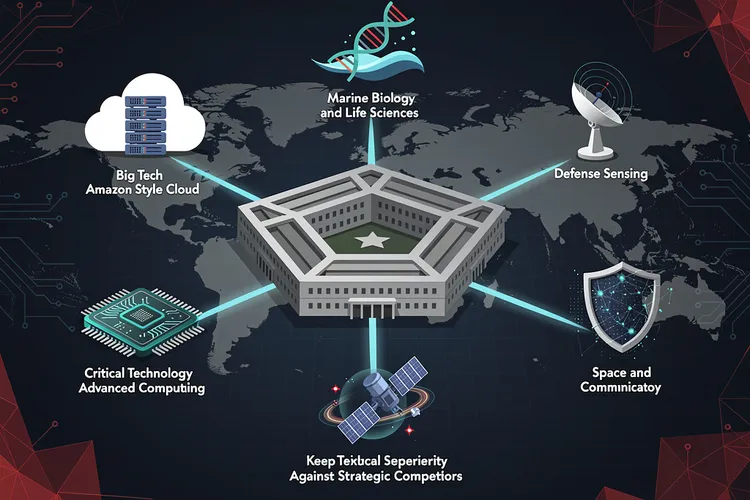
Pentagon’s New Technology Chiefs Signal Major Shift in Defense Innovation Strategy
The Pentagon's Chief Technology Officer has selected six defense technology veterans with diverse backgrounds—from Amazon executives to marine biologists—to lead Critical Technology Areas, signaling a major shift in how the Defense Department approaches innovation and maintains technological superiority against strategic competitors.

TikTok Finalizes US Restructuring Deal with Oracle, Avoids Ban
TikTok has finalized a deal to restructure its U.S. operations into a new entity majority-owned by American and allied investors, including Oracle, Silver Lake, and MGX, with ByteDance retaining a 20% stake. This hybrid model addresses data security concerns, avoids a nationwide ban, and sets a precedent for global tech sovereignty.

Finland Recruits Burned-Out US AI and Tech Talent with Visas, Better Balance
Finland is actively recruiting disillusioned U.S. tech professionals in AI and software by offering superior work-life balance, fast-track visas, and a high quality of life, aiming to attract talent by 2026 amid American burnout. This strategy challenges global tech dynamics, positioning Finland as an innovative haven.

AI Answers Demand New Rules: Why Google SEO Fails ChatGPT Citations
Mike King reveals why Google SEO tactics fail AI engines like ChatGPT, from query fan-out to HTTP 499 timeouts and chunking boosts. Case studies show 661% visibility gains via GEO.

India’s AI Classroom Revolution: Google’s Gemini Scales Where Silicon Valley Stumbles
India leads global Gemini usage for learning, teaching Google to scale AI amid 247 million students, state curricula, and access gaps. Partnerships and tools like JEE mocks position it as a worldwide proving ground.

Inside Elon Musk’s Audacious Plan to Fuse Rockets and AI: The SpaceX-xAI Megamerger
Elon Musk is merging SpaceX and xAI in a deal combining an $800 billion rocket manufacturer with a $230 billion AI startup, advancing his vision of space-based data centers while consolidating his technological empire ahead of a planned summer IPO.

DeepSeek’s Bold Push: AI Search and Agents Challenge Google, OpenAI
DeepSeek's January job postings reveal plans for a multilingual, multimodal AI search engine and persistent agents, intensifying rivalry with Google and OpenAI. Building on cost-efficient models like R1, the startup targets phone-first queries and autonomous task execution.

Dell Faces Federal Lawsuit Over Alleged 401(k) Mismanagement as Former Employees Claim Fiduciary Breaches
Former Dell employees have filed a federal lawsuit alleging systematic mismanagement of the company's 401(k) retirement plan, claiming fiduciary breaches under ERISA. The case raises critical questions about corporate responsibility for employee retirement security and could affect thousands of workers.
The Gilded Exit: A Push to Bring German Gold Home Signals Deepening Distrust in the Dollar
A group of prominent German economists is urging the Bundesbank to repatriate its gold reserves from the U.S., citing the "weaponization of the dollar" following the freezing of Russian assets. The move signals a deep erosion of trust and highlights a global trend toward securing sovereign assets at home.
When Innovation Becomes Paralysis: Why Security Chiefs Are Drowning in AI Possibilities
Chief Information Security Officers face an unexpected challenge: paralysis from AI abundance. Despite pressure to adopt artificial intelligence tools, security leaders struggle with vendor proliferation, integration nightmares, skills gaps, and regulatory uncertainty that create decision-making gridlock in enterprise security.
China’s Manufacturing Divergence: Private Sector Resilience Masks Deeper Economic Anxieties
China's manufacturing sector reveals a stark divide as private enterprises expand while state-owned factories contract. January data shows private sector PMI rising to 50.3, driven by Southeast Asian export demand, even as business confidence hits nine-month lows amid mounting cost pressures and structural economic challenges.
2026 Tech Trends: AI, Robotics, Cloud Advances Face Key Challenges
In 2026, the tech sector advances with AI as the digital backbone, robotics revolutionizing industries, and cloud innovations enhancing scalability. However, compute shortages, energy demands, job displacement, and regulatory scrutiny pose significant hurdles. Leaders must balance ambition with pragmatism to ensure resilient, ethical growth.
Dynatrace’s Agentic Overhaul: Fusing AI for Autonomous Enterprise Ops
Dynatrace's Perform 2026 unveiled Intelligence, fusing deterministic and agentic AI for autonomous ops grounded in unified observability. New integrations with AWS Bedrock, Azure, and ServiceNow drive context-engineered agents, slashing incidents and boosting ROI amid surging enterprise AI adoption.
Kevin Warsh’s Warning: Why Gold and Silver Markets Face Unprecedented Volatility in 2026
Kevin Warsh's warnings about precious metals markets highlight unprecedented volatility ahead as monetary policy, geopolitical tensions, and supply constraints converge. Gold and silver face complex dynamics that challenge traditional market relationships heading into 2026.
Microsoft’s AI Chief Sounds Alarm on Anthropomorphic Technology as Industry Races Toward Human-Like Interfaces
Microsoft's AI chief warns that products designed to make artificial intelligence appear human-like could fundamentally mislead users about machine capabilities. The debate highlights tensions between commercial pressures for engaging interfaces and ethical obligations for transparency in AI development.
Sony and TCL Launch Joint Venture for Bravia TVs, Ceding 51% Control
Sony has partnered with TCL, ceding majority control (51%) of its Bravia TV and audio business in a joint venture announced January 20, 2026, with full transition by 2027. This combines Sony's tech expertise with TCL's manufacturing to boost competitiveness and profitability. The move reflects industry trends toward strategic alliances.
Ross Stocks Gucci and Hoka at Deep Discounts to Lure Thrifty Shoppers
Ross Dress for Less is strategically stocking premium brands like Gucci and Hoka at deep discounts by sourcing overstock, attracting thrifty shoppers amid economic uncertainty. This "treasure hunt" approach boosts sales and foot traffic, positioning Ross as a key player in affordable luxury retail. The trend signals evolving consumer behaviors and retail innovation.
When Privacy Havens Fail: Why PrivadoVPN Is Abandoning Switzerland’s Data Protection Framework
PrivadoVPN's decision to leave Switzerland challenges the notion of permanent privacy havens, as even traditionally protective jurisdictions face mounting international pressure. The move signals a broader industry shift toward jurisdictional arbitrage and raises critical questions about where VPN providers can genuinely protect user data.

Liam Price is a journalist who focuses on cloud infrastructure. Their approach combines long‑form narratives grounded in real‑world metrics. Readers appreciate their ability to connect strategic goals with everyday workflows. Their coverage includes guidance for teams under resource or time constraints. They emphasize responsible innovation and the constraints teams face when scaling products or services. They value transparent sourcing and prefer primary data when it is available. They write about both the promise and the cost of transformation, including risks that are easy to overlook. They maintain a balanced tone, separating speculation from evidence. They avoid buzzwords, focusing instead on outcomes, incentives, and the human side of technology. They explore how policies, markets, and infrastructure intersect to create second‑order effects. They look for overlooked details that differentiate sustainable success from short‑term wins. They believe good analysis should be specific, testable, and useful to practitioners. They tend to favor small experiments over sweeping predictions. They prefer evidence over hype and explain trade‑offs plainly.
View ProfileArchives
Authors
More ...-
 Vivian Stewart 57 articles
As a writer, Vivian Stewart covers retail operations with an eye for detail. They work through comparative reviews and hands‑on testing to make complex topics approachable. They believe good analysis should be specific, testable, and useful to practitioners. They frequently translate research into action for marketing teams, prioritizing clarity over buzzwords. Their coverage includes guidance for teams under resource or time constraints. They explore how policies, markets, and infrastructure intersect to create second‑order effects. They write about both the promise and the cost of transformation, including risks that are easy to overlook. They frequently compare approaches across industries to surface patterns that travel well. Readers appreciate their ability to connect strategic goals with everyday workflows. Their reporting blends qualitative insight with data, highlighting what actually changes decision‑making. They maintain a balanced tone, separating speculation from evidence. They are known for dissecting tools and strategies that improve execution without adding complexity. They emphasize decision‑making under uncertainty and imperfect data. Their work aims to be useful first, timely second.
-
 Emily Scott 68 articles
As a writer, Emily Scott covers consumer behavior with an eye for detail. They work through clear frameworks, case studies, and practical checklists to make complex topics approachable. They value transparent sourcing and prefer primary data when it is available. A recurring theme in their writing is how teams build repeatable systems and measure impact over time. They often cover how organizations respond to change, from process redesign to technology adoption. Their reporting blends qualitative insight with data, highlighting what actually changes decision‑making. They emphasize responsible innovation and the constraints teams face when scaling products or services. They maintain a balanced tone, separating speculation from evidence. Their coverage includes guidance for teams under resource or time constraints. Readers appreciate their ability to connect strategic goals with everyday workflows. They write about both the promise and the cost of transformation, including risks that are easy to overlook. They tend to favor small experiments over sweeping predictions. They value transparency, practical advice, and honest uncertainty.
-
 Emily Chen 63 articles
Known for clear analysis, Emily Chen follows retail operations and the people building it. They work through clear frameworks, case studies, and practical checklists to make complex topics approachable. They often cover how organizations respond to change, from process redesign to technology adoption. Readers appreciate their ability to connect strategic goals with everyday workflows. They examine how customer expectations evolve and how organizations adapt to meet them. They value transparent sourcing and prefer primary data when it is available. A recurring theme in their writing is how teams build repeatable systems and measure impact over time. They also highlight cultural factors that determine whether change sticks. They avoid buzzwords, focusing instead on outcomes, incentives, and the human side of technology. They explore how policies, markets, and infrastructure intersect to create second‑order effects. They believe good analysis should be specific, testable, and useful to practitioners. They tend to favor small experiments over sweeping predictions. They value transparency, practical advice, and honest uncertainty.
-
 Layla Reed 56 articles
Known for clear analysis, Layla Reed follows retail operations and the people building it. They work through long‑form narratives grounded in real‑world metrics to make complex topics approachable. They believe good analysis should be specific, testable, and useful to practitioners. They avoid buzzwords, focusing instead on outcomes, incentives, and the human side of technology. They explore how policies, markets, and infrastructure intersect to create second‑order effects. They frequently compare approaches across industries to surface patterns that travel well. They are known for dissecting tools and strategies that improve execution without adding complexity. A recurring theme in their writing is how teams build repeatable systems and measure impact over time. Their reporting blends qualitative insight with data, highlighting what actually changes decision‑making. They often cover how organizations respond to change, from process redesign to technology adoption. They maintain a balanced tone, separating speculation from evidence. Outside of publishing, they track public datasets and industry benchmarks. Readers return for the clarity, the caution, and the actionable takeaways.
-
 Stella Evans 57 articles
Stella Evans is a journalist who focuses on AI deployment. They work through trend monitoring with careful context and caveats to make complex topics approachable. They believe good analysis should be specific, testable, and useful to practitioners. They examine how customer expectations evolve and how organizations adapt to meet them. Their reporting blends qualitative insight with data, highlighting what actually changes decision‑making. Readers appreciate their ability to connect strategic goals with everyday workflows. They write about both the promise and the cost of transformation, including risks that are easy to overlook. They also highlight cultural factors that determine whether change sticks. Their coverage includes guidance for teams under resource or time constraints. Their perspective is shaped by interviews across engineering, operations, and leadership roles. They often cover how organizations respond to change, from process redesign to technology adoption. They maintain a balanced tone, separating speculation from evidence. They are interested in the economics of scale and operational resilience. They prefer evidence over hype and explain trade‑offs plainly.
-
 Micah Shaw 60 articles
Micah Shaw specializes in developer productivity and reports on the systems behind modern business. Their approach combines interviews with operators and data‑backed analysis. Their perspective is shaped by interviews across engineering, operations, and leadership roles. Readers appreciate their ability to connect strategic goals with everyday workflows. They frequently compare approaches across industries to surface patterns that travel well. Their reporting blends qualitative insight with data, highlighting what actually changes decision‑making. They maintain a balanced tone, separating speculation from evidence. Their coverage includes guidance for teams under resource or time constraints. They emphasize responsible innovation and the constraints teams face when scaling products or services. They are known for dissecting tools and strategies that improve execution without adding complexity. They look for overlooked details that differentiate sustainable success from short‑term wins. A recurring theme in their writing is how teams build repeatable systems and measure impact over time. They watch the policy landscape closely when it affects product strategy. Their work aims to be useful first, timely second.