
Emerging Tech
Emerging Tech focuses on breakthrough innovations—AI, robotics, biotech, and next‑gen computing—highlighting the ideas shaping how we live, work, and build.

India’s AI Classroom Revolution: Google’s Gemini Scales Where Silicon Valley Stumbles
India leads global Gemini usage for learning, teaching Google to scale AI amid 247 million students, state curricula, and access gaps. Partnerships and tools like JEE mocks position it as a worldwide proving ground.

DeepSeek’s Bold Push: AI Search and Agents Challenge Google, OpenAI
DeepSeek's January job postings reveal plans for a multilingual, multimodal AI search engine and persistent agents, intensifying rivalry with Google and OpenAI. Building on cost-efficient models like R1, the startup targets phone-first queries and autonomous task execution.
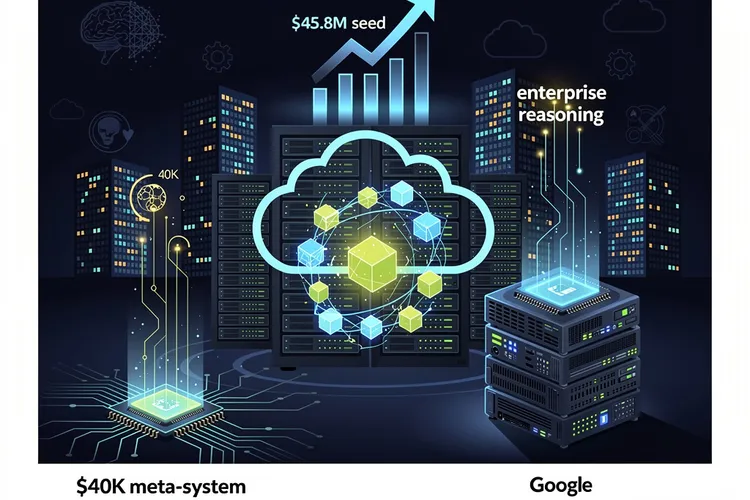
Poetiq’s Lean Squad Outsmarts AI Giants on Reasoning Frontier
Poetiq's six-person team topped ARC-AGI-2 with a $40K meta-system, beating Google at half cost, then raised $45.8M seed to scale recursive agents enhancing any LLM for enterprise reasoning.
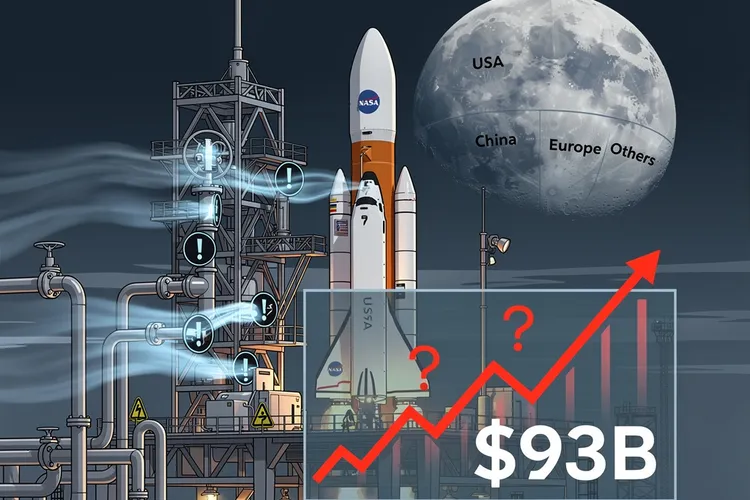
NASA’s Artemis Fuel System Failures Expose Critical Vulnerabilities in America’s Return to Lunar Exploration
NASA's Space Launch System faces persistent hydrogen fuel leaks that have delayed the Artemis moon program, exposing critical gaps in expertise and raising questions about the $93 billion program's sustainability amid rising costs and international competition in lunar exploration.

AI Agents Shatter Compliance Foundations, Forcing CISOs to the Front Lines
AI agents are upending SOX, GDPR, PCI DSS, and HIPAA by autonomously executing regulated tasks, thrusting CISOs into accountability for compliance via identity and access controls. New governance treats AI as non-human identities amid rising regulatory demands.
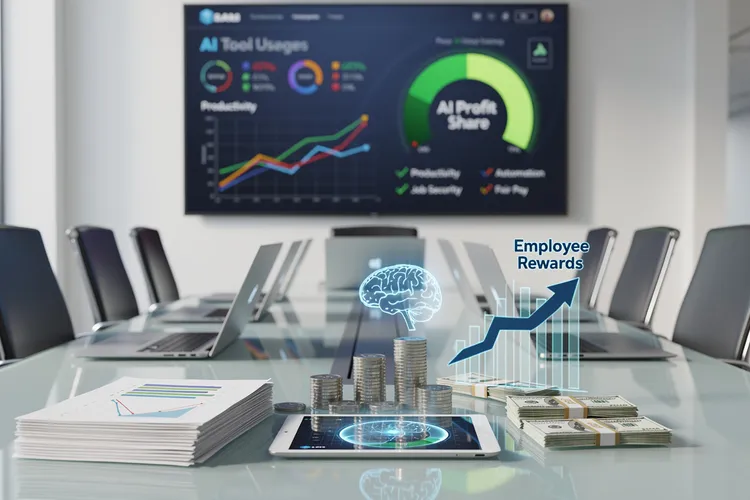
How One Company’s Radical AI Profit-Sharing Plan Is Rewriting the Productivity Playbook
A company's innovative profit-sharing program ties employee compensation directly to AI tool usage and productivity gains, creating financial incentives that drive adoption rates far beyond industry norms while addressing worker concerns about automation and job security.
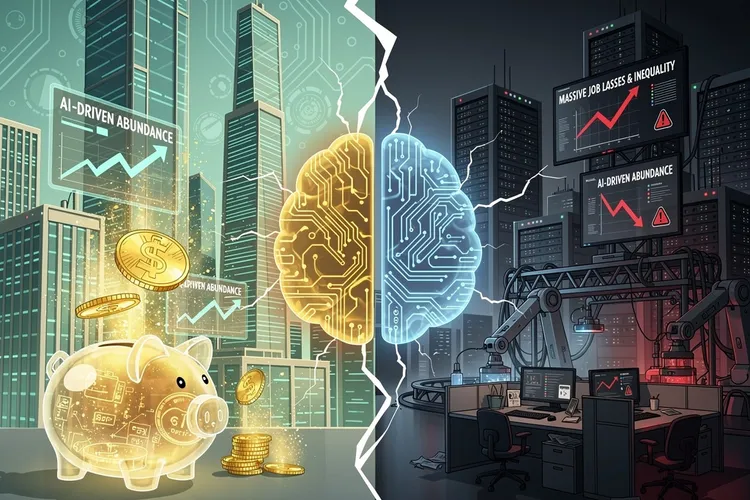
Musk’s Abundance Dream vs. Amodei’s Job Apocalypse: AI’s Economic Reckoning
Elon Musk predicts AI-driven abundance will render retirement savings irrelevant by 2030, while Anthropic's Dario Amodei warns of massive job losses and inequality demanding urgent fixes. Their visions clash on the path to AI's economic transformation.

The Agent-Native Revolution: How AI Agents Are Rewriting the Rules of Software Development
The software industry is undergoing a fundamental transformation as agent-native architecture emerges, where AI agents rather than humans become the primary users of digital systems. This shift demands new approaches to development, security, and business operations.

Uber’s Calculated Return to Greater China: Why Macau Marks a Pivotal Strategic Shift
Uber's expansion into Macau marks its first new Asian market in years, representing a calculated test of whether the ride-hailing giant can succeed in Greater China after its costly 2016 retreat. The tourism-dependent territory offers unique advantages that could inform future regional strategy.

How Anthropic’s AI Is Driving NASA’s Mars Rover Through Uncharted Terrain
NASA's deployment of Anthropic's Claude AI to navigate the Perseverance rover on Mars marks a pivotal shift in space exploration, demonstrating how artificial intelligence can augment human decision-making in extraterrestrial missions and accelerate scientific discovery millions of miles from Earth.
The Hidden Environmental Cost: How AI’s Explosive Growth Is Fueling a Data Center Arms Race
Major technology companies are quietly abandoning climate pledges as AI's explosive growth drives unprecedented data center expansion. With energy demands projected to grow 160% by 2030 and water consumption reaching crisis levels, the disconnect between corporate sustainability promises and reality has never been starker.
Honda’s Connected Vehicle Network Transforms Drivers Into Real-Time Road Safety Monitors
Honda Motor Company has launched a groundbreaking pilot program enabling its connected vehicles to automatically detect and report road hazards to municipal authorities, marking the first collaboration of its kind between a private automaker and public safety agencies in the United States.
Waymo’s SFO Breakthrough: Robotaxis Storm Airport Gates
Waymo's January 29, 2026, launch of autonomous rides at San Francisco International Airport opens high-value turf to robotaxis, challenging Uber and Lyft dominance amid safety pilots, freeway expansions, and 2026 megacity rollouts.
The $45,000 Question: Why Employee Turnover Has Become Corporate America’s Most Expensive Problem
Employee turnover now costs companies an average of $45,315 per worker, a figure that encompasses recruitment, training, and productivity losses. This staggering price tag is forcing organizations to fundamentally rethink their approach to talent retention as the financial impact of the revolving door threatens profitability.
Google’s Gemini AI Assistant Finally Bridges the Calendar Gap with Secondary and Shared Event Support
Google's Gemini AI assistant now supports secondary and shared calendars, addressing a critical limitation that prevented users from managing complex multi-calendar schedules. The update enables natural language interactions across all associated calendars, marking an important step in Gemini's evolution toward comprehensive productivity assistance.
The Quantum Computing Race Intensifies as IBM and Google Battle for Supremacy in Error Correction
IBM and Google are locked in an intense competition to achieve practical quantum computing through breakthrough error correction techniques. Recent advances suggest the quantum revolution may finally be transitioning from laboratory curiosity to commercial viability, though significant technical challenges remain before these machines can fulfill their transformative potential.
How Rivian’s Grey’s Anatomy Ambulance Could Reshape Emergency Medical Transportation
Rivian's custom electric ambulance for Grey's Anatomy represents more than Hollywood product placement. The vehicle signals a strategic pivot toward commercial markets that could redefine emergency medical services while providing Rivian a path to profitability beyond consumer vehicles.
Tesla’s Self-Inflicted Wounds: How Elon Musk’s Political Gambit Is Destroying Brand Value and Market Share
Tesla faces an unprecedented crisis as CEO Elon Musk's polarizing political activism alienates the company's core customer base, causing market share to plummet below 50% while competitors capitalize on the brand damage with compelling alternatives.
Apple’s Hidden Arsenal: Tim Cook Signals Unprecedented Product Innovations Beyond AI for 2025
Apple CEO Tim Cook has signaled unprecedented innovations arriving in 2025, breaking from his typically cautious communication style. The hints suggest groundbreaking technologies beyond AI that could reshape multiple product categories, marking Apple's most ambitious year since the iPhone's debut.
The Quiet Revolution: How AI Tools Are Reshaping Game Development From the Inside Out
A comprehensive analysis of the Game Developers Conference survey reveals that 38% of developers now use AI tools, but adoption patterns show careful, selective integration focused on technical tasks rather than creative work, highlighting a nuanced transformation of the industry.
Musk’s Empire Gambit: SpaceX Eyes Tesla or xAI Merger Ahead of Mega-IPO
SpaceX explores mergers with Tesla or xAI ahead of a $1.5 trillion IPO, driven by orbital AI data centers and investor pushes. Discussions remain early, with synergies in energy and compute, but self-dealing concerns loom for Tesla shareholders.
The Hidden Data Pipeline: How AI Coding Tools May Be Funneling Proprietary Code to Foreign Servers
AI-powered coding assistants have been quietly transmitting developers' proprietary source code to servers in China, raising urgent questions about intellectual property protection, corporate espionage, and national security in an era of AI-dependent software development workflows.
Pivotal’s BlackFly Takes Flight: Inside the $190,000 Personal Aircraft Reshaping Urban Mobility
California's Pivotal begins delivering BlackFly electric aircraft at $190,000, marking the first commercially available personal flying vehicle in the U.S. The single-seat eVTOL requires no pilot's license under FAA ultralight classification, featuring 25-mile range and vertical takeoff capabilities.
Microsoft’s $80 Billion AI Gamble Rattles Wall Street as Cloud Growth Slows
Microsoft's stock dropped 6% after revealing $80 billion in AI spending plans alongside slowing Azure growth. The tech giant faces investor skepticism about when massive AI infrastructure investments will generate meaningful returns, highlighting tensions in the industry's AI monetization strategy.
SpaceX’s Block 2 Starship: Inside the Revolutionary Redesign Reshaping Orbital Economics
SpaceX's Block 2 Super Heavy booster represents a radical redesign that could fundamentally transform orbital economics. Through detailed video documentation, the company reveals engineering modifications optimized for rapid reusability and manufacturing scale, pushing boundaries in propulsion, structural design, and operational philosophy that challenge traditional aerospace development approaches.
SpaceX’s Audacious Orbital Gambit: One Million Satellites to Power AI’s Insatiable Appetite
SpaceX has filed with the FCC to launch one million satellites functioning as orbital data centers, harnessing solar energy to power AI computations from space. The proposal would dwarf all previous space infrastructure projects while addressing AI's growing energy demands through space-based computing infrastructure.
Marc Andreessen’s Contrarian Bet: Why AI Will Rescue the American Economy Instead of Destroying It
Marc Andreessen argues AI will save rather than destroy the economy by addressing demographic decline and productivity stagnation. The venture capitalist's contrarian view challenges widespread fears of technological unemployment, positioning AI as the solution to labor shortages in aging developed economies.
Intel’s Bold Return to GPU Market: Lip-Bu Tan Bets on Graphics Chips to Salvage Semiconductor Giant’s Future
Intel CEO Lip-Bu Tan announced plans to develop graphics processing units at the Cisco AI Summit, hiring a chief GPU architect to challenge Nvidia's dominance. The strategic pivot represents a critical moment for the struggling semiconductor giant as it seeks new growth vectors amid mounting competitive pressures.
Subscribe Newsletter
Subscribe to our newsletter and stay up to date with the latest news, updates, and exclusive offers. Join our community today!
The Premium Price of Progress: Why Waymo’s Autonomous Rides Cost More Than Human-Driven Alternatives
Waymo's autonomous rides currently cost more than traditional Uber or Lyft services with human drivers, challenging assumptions about the economics of self-driving vehicles. The pricing paradox reflects high capital costs, operational complexity, and strategic positioning as the company navigates the path toward profitability.
NASA’s Mars Sample Return Dilemma: Why the Agency Must Choose Between Two Competing Spacecraft Designs Before Time Runs Out
NASA confronts an urgent decision on Mars Ascent Vehicle design for its Mars Sample Return mission. The choice between solid and liquid propulsion systems must come soon or risk delaying the entire multi-billion dollar program and jeopardizing retrieval of Martian samples.
How Ant Group’s AI Health Assistant Captured 30 Million Users and Transformed China’s Medical Access
Ant Group's AI health chatbot Ant Afu has reached 30 million monthly active users, becoming one of China's most downloaded health apps by integrating appointments, test analysis, and insurance payments within Alipay's ecosystem, addressing critical gaps in the country's overburdened healthcare system.
The Trillion-Dollar Convergence: How Musk’s xAI-SpaceX Integration Reshapes Corporate America
Elon Musk's integration of xAI and SpaceX creates a $350 billion entity, surpassing all previous merger records. The combination fuses artificial intelligence with space exploration capabilities, establishing unprecedented synergies between autonomous systems and orbital operations while raising significant regulatory and competitive questions.
Silver’s Sudden Plunge: How Trade War Tensions and Chinese Demand Shifts Are Reshaping Precious Metals Markets
Silver prices have plunged 15% from recent highs as trade war tensions between the US and China dampen industrial demand forecasts. The decline reflects complex dynamics between speculative positioning, manufacturing uncertainty, and shifting consumption patterns in key sectors like solar energy and electronics.
The Hidden Architecture of China’s AI Ascendancy: How Decades of Elite STEM Education Are Reshaping Global Technology Competition
China's four-decade investment in specialized mathematics education is producing the elite AI workforce challenging U.S. technological dominance. This systematic talent pipeline, operating largely unknown to Western observers, represents a strategic advantage that American fragmented educational approaches struggle to match.
Archives
Authors
More ...-
 Vivian Stewart 57 articles
As a writer, Vivian Stewart covers retail operations with an eye for detail. They work through comparative reviews and hands‑on testing to make complex topics approachable. They believe good analysis should be specific, testable, and useful to practitioners. They frequently translate research into action for marketing teams, prioritizing clarity over buzzwords. Their coverage includes guidance for teams under resource or time constraints. They explore how policies, markets, and infrastructure intersect to create second‑order effects. They write about both the promise and the cost of transformation, including risks that are easy to overlook. They frequently compare approaches across industries to surface patterns that travel well. Readers appreciate their ability to connect strategic goals with everyday workflows. Their reporting blends qualitative insight with data, highlighting what actually changes decision‑making. They maintain a balanced tone, separating speculation from evidence. They are known for dissecting tools and strategies that improve execution without adding complexity. They emphasize decision‑making under uncertainty and imperfect data. Their work aims to be useful first, timely second.
-
 Emily Scott 68 articles
As a writer, Emily Scott covers consumer behavior with an eye for detail. They work through clear frameworks, case studies, and practical checklists to make complex topics approachable. They value transparent sourcing and prefer primary data when it is available. A recurring theme in their writing is how teams build repeatable systems and measure impact over time. They often cover how organizations respond to change, from process redesign to technology adoption. Their reporting blends qualitative insight with data, highlighting what actually changes decision‑making. They emphasize responsible innovation and the constraints teams face when scaling products or services. They maintain a balanced tone, separating speculation from evidence. Their coverage includes guidance for teams under resource or time constraints. Readers appreciate their ability to connect strategic goals with everyday workflows. They write about both the promise and the cost of transformation, including risks that are easy to overlook. They tend to favor small experiments over sweeping predictions. They value transparency, practical advice, and honest uncertainty.
-
 Emily Chen 63 articles
Known for clear analysis, Emily Chen follows retail operations and the people building it. They work through clear frameworks, case studies, and practical checklists to make complex topics approachable. They often cover how organizations respond to change, from process redesign to technology adoption. Readers appreciate their ability to connect strategic goals with everyday workflows. They examine how customer expectations evolve and how organizations adapt to meet them. They value transparent sourcing and prefer primary data when it is available. A recurring theme in their writing is how teams build repeatable systems and measure impact over time. They also highlight cultural factors that determine whether change sticks. They avoid buzzwords, focusing instead on outcomes, incentives, and the human side of technology. They explore how policies, markets, and infrastructure intersect to create second‑order effects. They believe good analysis should be specific, testable, and useful to practitioners. They tend to favor small experiments over sweeping predictions. They value transparency, practical advice, and honest uncertainty.
-
 Layla Reed 56 articles
Known for clear analysis, Layla Reed follows retail operations and the people building it. They work through long‑form narratives grounded in real‑world metrics to make complex topics approachable. They believe good analysis should be specific, testable, and useful to practitioners. They avoid buzzwords, focusing instead on outcomes, incentives, and the human side of technology. They explore how policies, markets, and infrastructure intersect to create second‑order effects. They frequently compare approaches across industries to surface patterns that travel well. They are known for dissecting tools and strategies that improve execution without adding complexity. A recurring theme in their writing is how teams build repeatable systems and measure impact over time. Their reporting blends qualitative insight with data, highlighting what actually changes decision‑making. They often cover how organizations respond to change, from process redesign to technology adoption. They maintain a balanced tone, separating speculation from evidence. Outside of publishing, they track public datasets and industry benchmarks. Readers return for the clarity, the caution, and the actionable takeaways.
-
 Stella Evans 57 articles
Stella Evans is a journalist who focuses on AI deployment. They work through trend monitoring with careful context and caveats to make complex topics approachable. They believe good analysis should be specific, testable, and useful to practitioners. They examine how customer expectations evolve and how organizations adapt to meet them. Their reporting blends qualitative insight with data, highlighting what actually changes decision‑making. Readers appreciate their ability to connect strategic goals with everyday workflows. They write about both the promise and the cost of transformation, including risks that are easy to overlook. They also highlight cultural factors that determine whether change sticks. Their coverage includes guidance for teams under resource or time constraints. Their perspective is shaped by interviews across engineering, operations, and leadership roles. They often cover how organizations respond to change, from process redesign to technology adoption. They maintain a balanced tone, separating speculation from evidence. They are interested in the economics of scale and operational resilience. They prefer evidence over hype and explain trade‑offs plainly.
-
 Micah Shaw 60 articles
Micah Shaw specializes in developer productivity and reports on the systems behind modern business. Their approach combines interviews with operators and data‑backed analysis. Their perspective is shaped by interviews across engineering, operations, and leadership roles. Readers appreciate their ability to connect strategic goals with everyday workflows. They frequently compare approaches across industries to surface patterns that travel well. Their reporting blends qualitative insight with data, highlighting what actually changes decision‑making. They maintain a balanced tone, separating speculation from evidence. Their coverage includes guidance for teams under resource or time constraints. They emphasize responsible innovation and the constraints teams face when scaling products or services. They are known for dissecting tools and strategies that improve execution without adding complexity. They look for overlooked details that differentiate sustainable success from short‑term wins. A recurring theme in their writing is how teams build repeatable systems and measure impact over time. They watch the policy landscape closely when it affects product strategy. Their work aims to be useful first, timely second.