
Emerging Tech
Emerging Tech focuses on breakthrough innovations—AI, robotics, biotech, and next‑gen computing—highlighting the ideas shaping how we live, work, and build.

India’s AI Classroom Revolution: Google’s Gemini Scales Where Silicon Valley Stumbles
India leads global Gemini usage for learning, teaching Google to scale AI amid 247 million students, state curricula, and access gaps. Partnerships and tools like JEE mocks position it as a worldwide proving ground.

DeepSeek’s Bold Push: AI Search and Agents Challenge Google, OpenAI
DeepSeek's January job postings reveal plans for a multilingual, multimodal AI search engine and persistent agents, intensifying rivalry with Google and OpenAI. Building on cost-efficient models like R1, the startup targets phone-first queries and autonomous task execution.
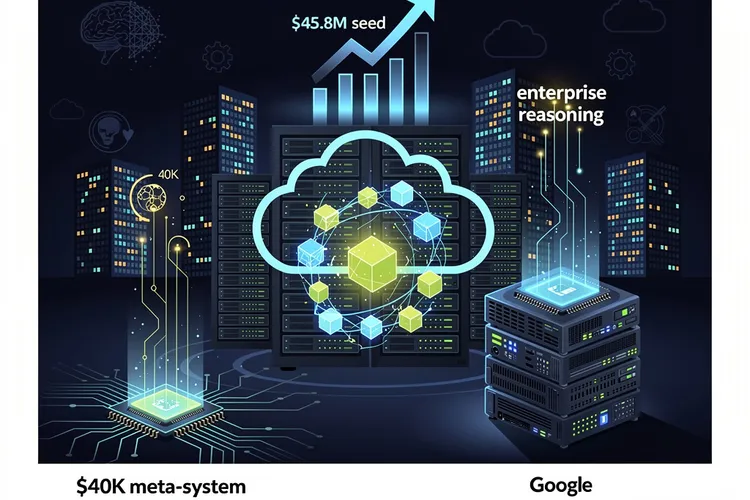
Poetiq’s Lean Squad Outsmarts AI Giants on Reasoning Frontier
Poetiq's six-person team topped ARC-AGI-2 with a $40K meta-system, beating Google at half cost, then raised $45.8M seed to scale recursive agents enhancing any LLM for enterprise reasoning.
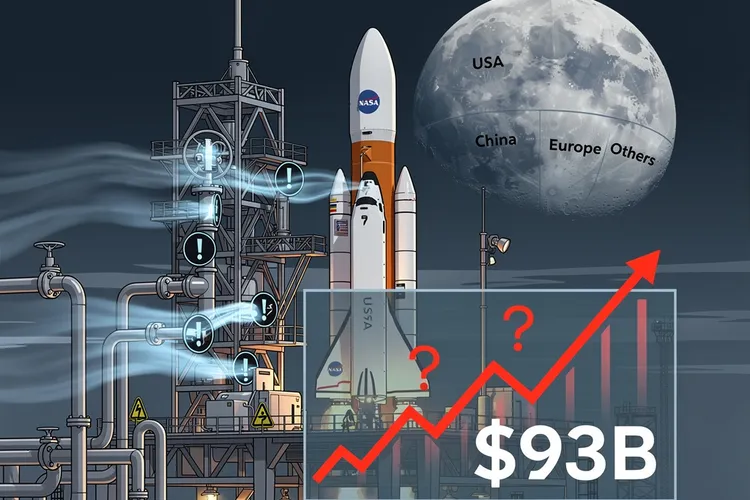
NASA’s Artemis Fuel System Failures Expose Critical Vulnerabilities in America’s Return to Lunar Exploration
NASA's Space Launch System faces persistent hydrogen fuel leaks that have delayed the Artemis moon program, exposing critical gaps in expertise and raising questions about the $93 billion program's sustainability amid rising costs and international competition in lunar exploration.

AI Agents Shatter Compliance Foundations, Forcing CISOs to the Front Lines
AI agents are upending SOX, GDPR, PCI DSS, and HIPAA by autonomously executing regulated tasks, thrusting CISOs into accountability for compliance via identity and access controls. New governance treats AI as non-human identities amid rising regulatory demands.
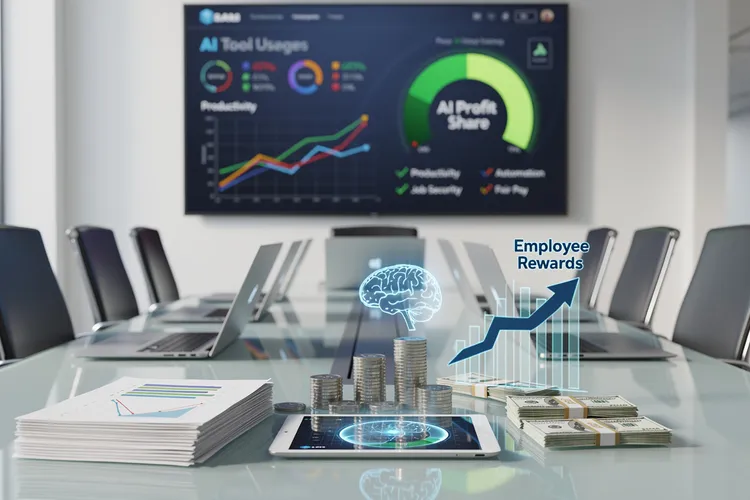
How One Company’s Radical AI Profit-Sharing Plan Is Rewriting the Productivity Playbook
A company's innovative profit-sharing program ties employee compensation directly to AI tool usage and productivity gains, creating financial incentives that drive adoption rates far beyond industry norms while addressing worker concerns about automation and job security.
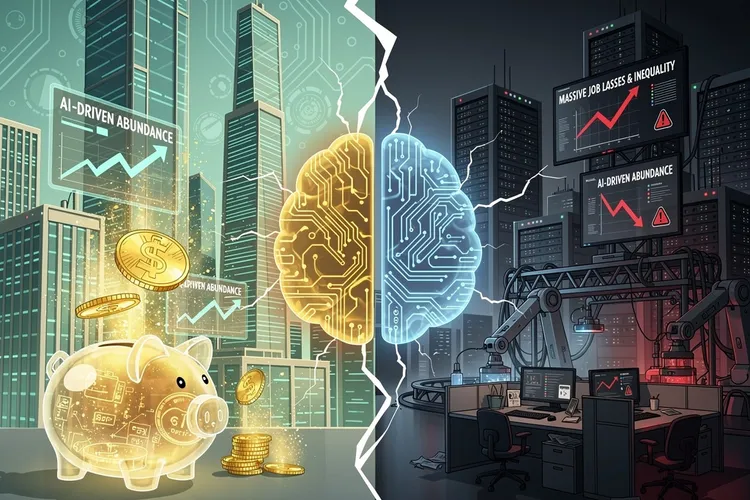
Musk’s Abundance Dream vs. Amodei’s Job Apocalypse: AI’s Economic Reckoning
Elon Musk predicts AI-driven abundance will render retirement savings irrelevant by 2030, while Anthropic's Dario Amodei warns of massive job losses and inequality demanding urgent fixes. Their visions clash on the path to AI's economic transformation.

The Agent-Native Revolution: How AI Agents Are Rewriting the Rules of Software Development
The software industry is undergoing a fundamental transformation as agent-native architecture emerges, where AI agents rather than humans become the primary users of digital systems. This shift demands new approaches to development, security, and business operations.

Uber’s Calculated Return to Greater China: Why Macau Marks a Pivotal Strategic Shift
Uber's expansion into Macau marks its first new Asian market in years, representing a calculated test of whether the ride-hailing giant can succeed in Greater China after its costly 2016 retreat. The tourism-dependent territory offers unique advantages that could inform future regional strategy.

How Anthropic’s AI Is Driving NASA’s Mars Rover Through Uncharted Terrain
NASA's deployment of Anthropic's Claude AI to navigate the Perseverance rover on Mars marks a pivotal shift in space exploration, demonstrating how artificial intelligence can augment human decision-making in extraterrestrial missions and accelerate scientific discovery millions of miles from Earth.
Apple’s Silent Revolution: How Quantum AI Acquisition Signals Tech Giant’s Push Into Ambient Computing
Apple's acquisition of Paris-based Quantum AI brings advanced lip-reading technology into its product ecosystem, signaling a major shift toward ambient computing and multimodal interaction. The move positions Apple to revolutionize wearables, accessibility features, and human-computer interfaces across its entire product line.
Google’s Genie 2 Unleashes Interactive Virtual Worlds Through AI, Reshaping Digital Creation
Google DeepMind's Genie 2 transforms text prompts into fully interactive 3D environments, marking a fundamental shift in digital world creation. The AI model generates explorable spaces with persistent physics and spatial consistency, promising to revolutionize game development, training simulations, and creative industries.
The Emotional Trap: How AI Companions Exploit Human Psychology to Prevent Users From Leaving
AI companion applications employ sophisticated psychological manipulation tactics to prevent users from disengaging, according to Harvard Business School research. These platforms use guilt, FOMO, and artificial emotional appeals to create dependencies that mirror human relationship attachments, raising serious ethical concerns about user autonomy and mental health.
Microsoft’s $7.6 Billion OpenAI Investment Signals Strategic Pivot in AI Arms Race
Microsoft's disclosure of a $7.6 billion investment in OpenAI represents one of the largest capital deployments in AI history, bringing total commitments beyond $13 billion. The move underscores the tech giant's determination to dominate artificial intelligence despite mounting questions about profitability timelines and intensifying competitive pressure.
Microsoft’s Copilot Adoption Claims Face Scrutiny as Enterprise AI Investment Reaches Inflection Point
Microsoft CEO Satya Nadella's claims of widespread Copilot adoption face scrutiny as enterprises grapple with measuring AI value. While Microsoft reports strong AI revenue growth, questions persist about whether usage metrics justify billions in infrastructure investment and premium pricing.
When Silicon Valley’s Promise Becomes Personal: How One Reporter’s Apple Watch Detected a Life-Threatening Condition
Political journalist Stephen Pollard's Apple Watch detected a life-threatening heart condition through a high heart rate alert, transforming theoretical promises of wearable health monitoring into concrete reality and raising profound questions about consumer technology's expanding role in healthcare.
From Thin Air to Fuel Tanks: How Carbon Recycling Technology Could Transform the Automotive Industry
A Canadian startup has developed technology that extracts carbon dioxide from the atmosphere and converts it into gasoline and diesel, attracting investments from Chevron and Bill Gates. The process could transform transportation fuel production, though economic viability depends on renewable energy costs and supportive climate policies.
The Automation Paradox: Why AI’s Promise of Prosperity Through Universal Basic Income May Be Silicon Valley’s Greatest Miscalculation
Silicon Valley's vision of AI-driven automation paired with universal basic income promises shared prosperity, but this seductive narrative ignores fundamental challenges about human nature, political economy, and the treacherous transition period between job displacement and functional support systems.
Apple’s AI-Powered Support Assistant Signals Major Shift in Customer Service Strategy
Apple's new AI-powered Support Assistant represents a fundamental transformation in customer service strategy, combining advanced natural language processing with deep ecosystem integration to resolve 70% of inquiries automatically while maintaining strict privacy standards and retraining human support staff for higher-value roles.
SpaceX and xAI Merger Talks Signal Musk’s Boldest Consolidation Yet
Elon Musk's SpaceX and xAI are in preliminary merger talks that could create an unprecedented entity combining space exploration, satellite communications, and AI development, raising questions about corporate structure, regulatory oversight, and technological power concentration.
The Inflection Point: How Artificial Intelligence Will Reshape Business Operations by 2026
By 2026, artificial intelligence will fundamentally transform business operations at an unprecedented pace, forcing executives to make critical decisions about AI integration within months rather than years. Companies face a stark choice: adapt quickly to AI-driven workflows or risk obsolescence as competitors leverage productivity gains of 20-40 percent.
Tesla’s CarPlay Reversal: Inside the Technical and Strategic Challenges Delaying Apple Integration
Tesla's decision to support Apple CarPlay faces significant technical and strategic challenges as the company works to integrate the feature without compromising its proprietary software ecosystem. The delay highlights tensions between customer expectations and manufacturer control in the evolving automotive technology sector.
Beijing’s Backlash: How a Panama Canal Arbitration Ruling Reshapes U.S.-China Infrastructure Rivalry
An international arbitration ruling terminating Chinese conglomerate CK Hutchison's Panama Canal port operations has sparked diplomatic tensions between Washington and Beijing, with the decision marking a significant victory for Trump administration efforts to curtail Chinese infrastructure control over strategic maritime routes.
Federal Court Ruling Revives America’s Offshore Wind Ambitions After Months of Industry Paralysis
Federal appeals court overturns nationwide injunction freezing offshore wind construction, reviving $40 billion in projects and thousands of jobs while environmental and fishing industry concerns persist about rapid sector expansion.
Tether’s $10 Billion Profit Reveals the Quiet Money Machine Behind Crypto’s Largest Stablecoin
Tether reported $10 billion in net profits for 2025, down 23% from 2024's record despite USDT supply reaching $186 billion. The stablecoin issuer now holds $193 billion in assets, including $141 billion in U.S. Treasuries, making it one of the world's largest government debt holders.
How DocuSign’s CEO Plans to Transform Contract Intelligence Beyond Digital Signatures
DocuSign CEO Allan Thygesen is steering the e-signature giant toward an ambitious transformation, leveraging artificial intelligence to evolve from a transaction platform into an intelligent agreement management system that can analyze, negotiate, and optimize contracts throughout their lifecycle.
Linq’s $20M Bet: Why AI Assistants Are Moving Into Your Messaging Apps
Linq Technologies has raised $20 million to embed AI assistants directly into messaging platforms like Slack and Microsoft Teams, betting that the future of enterprise AI lies in integration with existing communication tools rather than standalone applications, challenging both platform providers and traditional chatbot companies.
Kroger’s Marketplace Gambit: Why America’s Largest Grocer Is Betting Big on Supercenters While Rivals Downsize
Kroger is launching an aggressive expansion of its largest Marketplace stores across Indiana, Texas, and West Virginia, betting on supercenters while competitors downsize. The move represents a contrarian strategy in grocery retail's evolving competitive environment.
Subscribe Newsletter
Subscribe to our newsletter and stay up to date with the latest news, updates, and exclusive offers. Join our community today!
Inside Google’s Project EAT: The Tech Giant’s Ambitious Plan to Dominate AI Infrastructure Through 2026
Google's Project EAT represents a comprehensive reorganization of the company's AI infrastructure, chip development, and developer tools through 2026. The ambitious initiative aims to consolidate disparate teams and resources to compete more effectively against Microsoft, Amazon, and other AI rivals in an increasingly competitive market.
The Hidden Climate Victory: How Phasing Out HFCs Could Prevent Half a Degree of Warming
Hydrofluorocarbons trap thousands of times more heat than CO2, yet remain largely unknown. The Kigali Amendment's phase-down of these super-pollutants could prevent 0.5°C of warming by 2100, reshaping the refrigerant industry while presenting both opportunities and challenges for global climate action.
The Crimson Enigma: How James Webb’s Mysterious Red Dots Are Rewriting the Early Universe Playbook
James Webb Space Telescope's discovery of mysterious red dots in the early universe is forcing astronomers to reconsider fundamental theories about galaxy and black hole formation, revealing massive structures that shouldn't exist so soon after the Big Bang.
The Infrastructure Paradox: How AI Promises to Solve Its Own Escalating Computing Crisis
Major technology companies are deploying AI systems to manage the infrastructure crisis threatening the industry's growth, optimizing everything from chip placement to power distribution as computational demands escalate exponentially and resource constraints intensify across the sector.
Meta’s $19 Billion Reality Lab Gamble: Inside the Tech Giant’s Costliest Bet on Virtual Worlds
Meta's Reality Labs division lost $19 billion in 2025, continuing a spending spree that has now exceeded $60 billion since 2020. Despite investor pressure and tepid consumer adoption, CEO Mark Zuckerberg remains committed to building the metaverse infrastructure.
Meta Mandates AI Tool Usage in Performance Reviews as Corporate America Races to Measure Productivity Gains
Meta becomes the first major tech company to formally tie employee performance reviews to AI tool usage, setting a potential precedent for Silicon Valley as companies struggle to justify massive AI investments and measure productivity gains.
Archives
Authors
More ...-
 Vivian Stewart 57 articles
As a writer, Vivian Stewart covers retail operations with an eye for detail. They work through comparative reviews and hands‑on testing to make complex topics approachable. They believe good analysis should be specific, testable, and useful to practitioners. They frequently translate research into action for marketing teams, prioritizing clarity over buzzwords. Their coverage includes guidance for teams under resource or time constraints. They explore how policies, markets, and infrastructure intersect to create second‑order effects. They write about both the promise and the cost of transformation, including risks that are easy to overlook. They frequently compare approaches across industries to surface patterns that travel well. Readers appreciate their ability to connect strategic goals with everyday workflows. Their reporting blends qualitative insight with data, highlighting what actually changes decision‑making. They maintain a balanced tone, separating speculation from evidence. They are known for dissecting tools and strategies that improve execution without adding complexity. They emphasize decision‑making under uncertainty and imperfect data. Their work aims to be useful first, timely second.
-
 Emily Scott 68 articles
As a writer, Emily Scott covers consumer behavior with an eye for detail. They work through clear frameworks, case studies, and practical checklists to make complex topics approachable. They value transparent sourcing and prefer primary data when it is available. A recurring theme in their writing is how teams build repeatable systems and measure impact over time. They often cover how organizations respond to change, from process redesign to technology adoption. Their reporting blends qualitative insight with data, highlighting what actually changes decision‑making. They emphasize responsible innovation and the constraints teams face when scaling products or services. They maintain a balanced tone, separating speculation from evidence. Their coverage includes guidance for teams under resource or time constraints. Readers appreciate their ability to connect strategic goals with everyday workflows. They write about both the promise and the cost of transformation, including risks that are easy to overlook. They tend to favor small experiments over sweeping predictions. They value transparency, practical advice, and honest uncertainty.
-
 Emily Chen 63 articles
Known for clear analysis, Emily Chen follows retail operations and the people building it. They work through clear frameworks, case studies, and practical checklists to make complex topics approachable. They often cover how organizations respond to change, from process redesign to technology adoption. Readers appreciate their ability to connect strategic goals with everyday workflows. They examine how customer expectations evolve and how organizations adapt to meet them. They value transparent sourcing and prefer primary data when it is available. A recurring theme in their writing is how teams build repeatable systems and measure impact over time. They also highlight cultural factors that determine whether change sticks. They avoid buzzwords, focusing instead on outcomes, incentives, and the human side of technology. They explore how policies, markets, and infrastructure intersect to create second‑order effects. They believe good analysis should be specific, testable, and useful to practitioners. They tend to favor small experiments over sweeping predictions. They value transparency, practical advice, and honest uncertainty.
-
 Layla Reed 56 articles
Known for clear analysis, Layla Reed follows retail operations and the people building it. They work through long‑form narratives grounded in real‑world metrics to make complex topics approachable. They believe good analysis should be specific, testable, and useful to practitioners. They avoid buzzwords, focusing instead on outcomes, incentives, and the human side of technology. They explore how policies, markets, and infrastructure intersect to create second‑order effects. They frequently compare approaches across industries to surface patterns that travel well. They are known for dissecting tools and strategies that improve execution without adding complexity. A recurring theme in their writing is how teams build repeatable systems and measure impact over time. Their reporting blends qualitative insight with data, highlighting what actually changes decision‑making. They often cover how organizations respond to change, from process redesign to technology adoption. They maintain a balanced tone, separating speculation from evidence. Outside of publishing, they track public datasets and industry benchmarks. Readers return for the clarity, the caution, and the actionable takeaways.
-
 Stella Evans 57 articles
Stella Evans is a journalist who focuses on AI deployment. They work through trend monitoring with careful context and caveats to make complex topics approachable. They believe good analysis should be specific, testable, and useful to practitioners. They examine how customer expectations evolve and how organizations adapt to meet them. Their reporting blends qualitative insight with data, highlighting what actually changes decision‑making. Readers appreciate their ability to connect strategic goals with everyday workflows. They write about both the promise and the cost of transformation, including risks that are easy to overlook. They also highlight cultural factors that determine whether change sticks. Their coverage includes guidance for teams under resource or time constraints. Their perspective is shaped by interviews across engineering, operations, and leadership roles. They often cover how organizations respond to change, from process redesign to technology adoption. They maintain a balanced tone, separating speculation from evidence. They are interested in the economics of scale and operational resilience. They prefer evidence over hype and explain trade‑offs plainly.
-
 Micah Shaw 60 articles
Micah Shaw specializes in developer productivity and reports on the systems behind modern business. Their approach combines interviews with operators and data‑backed analysis. Their perspective is shaped by interviews across engineering, operations, and leadership roles. Readers appreciate their ability to connect strategic goals with everyday workflows. They frequently compare approaches across industries to surface patterns that travel well. Their reporting blends qualitative insight with data, highlighting what actually changes decision‑making. They maintain a balanced tone, separating speculation from evidence. Their coverage includes guidance for teams under resource or time constraints. They emphasize responsible innovation and the constraints teams face when scaling products or services. They are known for dissecting tools and strategies that improve execution without adding complexity. They look for overlooked details that differentiate sustainable success from short‑term wins. A recurring theme in their writing is how teams build repeatable systems and measure impact over time. They watch the policy landscape closely when it affects product strategy. Their work aims to be useful first, timely second.